
Now Reading: Watch the ‘blood moon’ total lunar eclipse on March 3 with these free livestreams
-
01
Watch the ‘blood moon’ total lunar eclipse on March 3 with these free livestreams


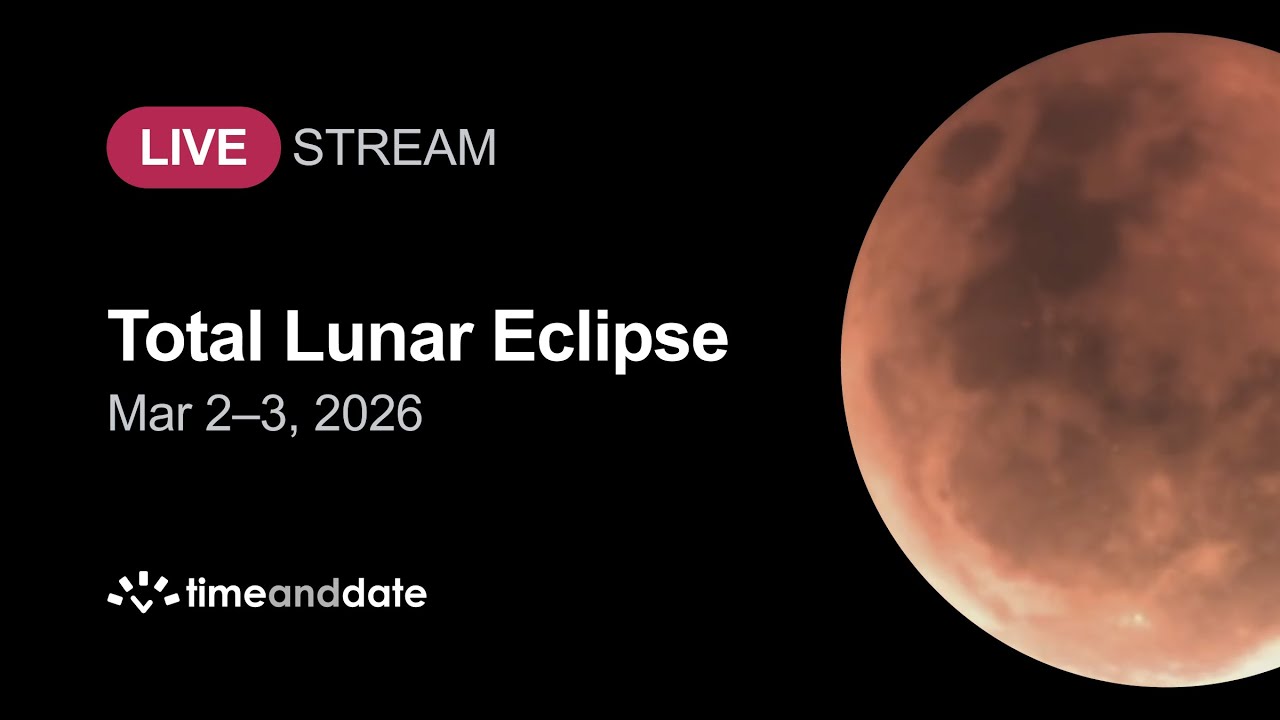
Stargazers across the U.S. will be treated to a dramatic orbital display in the early hours of March 3, as Earth’s shadow falls across its natural satellite, giving rise to a“blood moon” total lunar eclipse.
Over 3.3 billion people across the Americas, Asia and Oceania will get a glimpse of the climactic blood moon phase, as the lunar disk — fully immersed in Earth‘s inner shadow — is bathed in sunlight filtered by our atmosphere, turning it a coppery red hue.
Time and Date
Time and Date will host live coverage of the March 3 total lunar eclipse on its YouTube channel, starting at 4:30 a.m. EST (0930 GMT). The stream will feature live views from Los Angeles, Western Australia and potentially more, with expert commentary provided by journalist Anne Buckle and astrophysicist Graham Jones.
Virtual Telescope Project
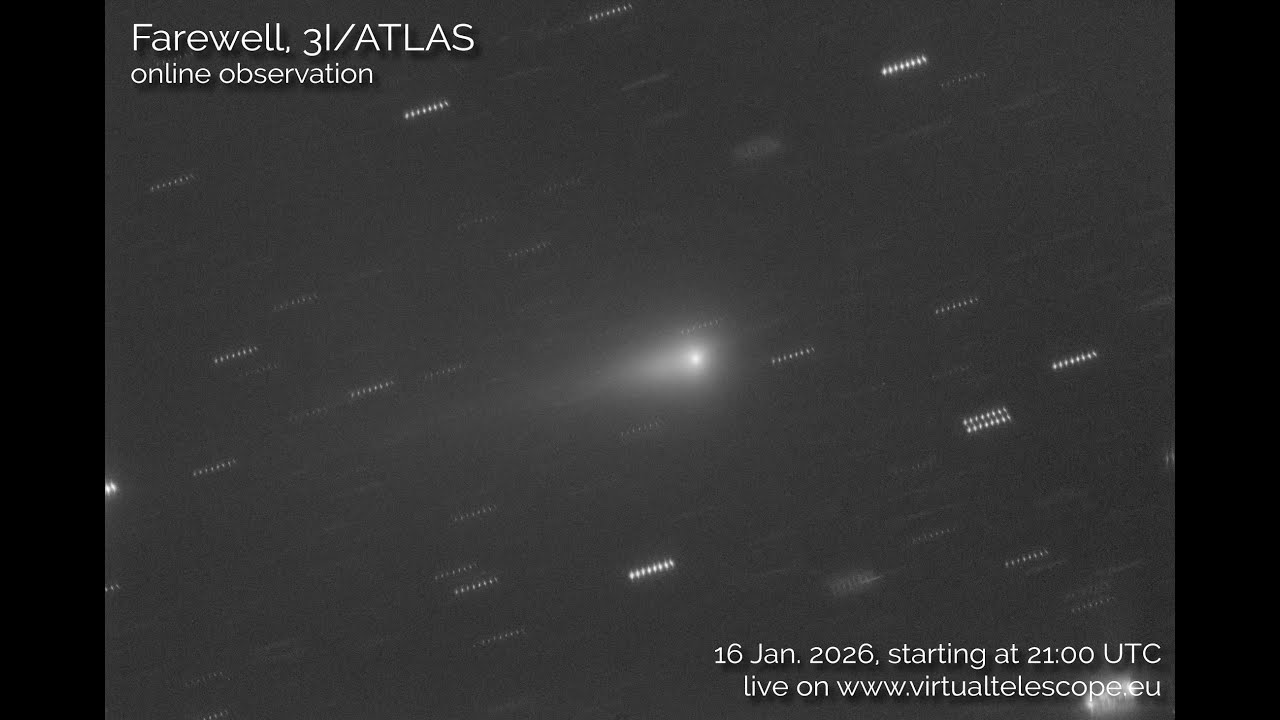
The Virtual Telescope Project will host a livestream of its own, providing a global perspective of the eclipse starting at 3:30 a.m. EST (0830 GMT), with live views coming from a team of astrophotographers in Australia, the United States and Canada. Gianluca Masi, the organization’s founder, will provide live commentary.
Griffith Observatory
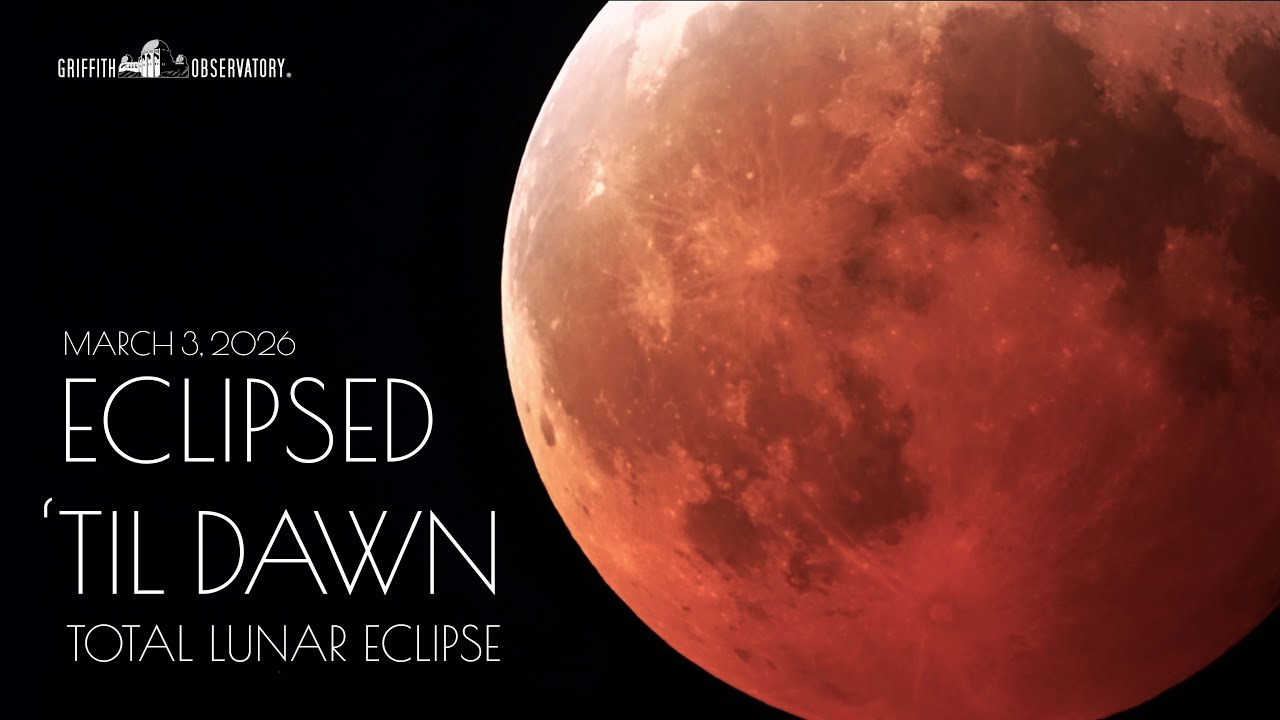
Our final livestream comes courtesy of the Griffith Observatory in Los Angeles, which will stream views of the eclipse on its YouTube channel beginning at 3:37 a.m. EST (0837 GMT). From its vantage point on the west coast of America, the observatory will be perfectly positioned to provide coverage throughout the eclipse, running from the penumbral phase through totality and beyond, as Earth’s shadow retreats from the lunar disk.
Photographers hoping to immortalize their own views of the blood moon should read our expert’s guide to capturing a total lunar eclipse, along with our roundups of the best cameras and lenses for astrophotography.
Editor’s Note: If you would like to share your blood moon photos with Space.com’s readers, then please send your photo(s), comments, and your name and location to spacephotos@space.com.










Related Posts
Stay Informed With the Latest & Most Important News
Previous Post
Next Post


Advertisement
-
 01Two Black Holes Observed Circling Each Other for the First Time
 -
 02From Polymerization-Enabled Folding and Assembly to Chemical Evolution: Key Processes for Emergence of Functional Polymers in the Origin of Life
 -
 03Astronomy 101: From the Sun and Moon to Wormholes and Warp Drive, Key Theories, Discoveries, and Facts about the Universe (The Adams 101 Series)
 -
 04True Anomaly hires former York Space executive as chief operating officer
 -
 05Φsat-2 begins science phase for AI Earth images
 -
 06Hurricane forecasters are losing 3 key satellites ahead of peak storm season − a meteorologist explains why it matters
 -
 07Binary star systems are complex astronomical objects − a new AI approach could pin down their properties quickly