
Now Reading: SLS upper stage helium flow problem fixed
-
01
SLS upper stage helium flow problem fixed


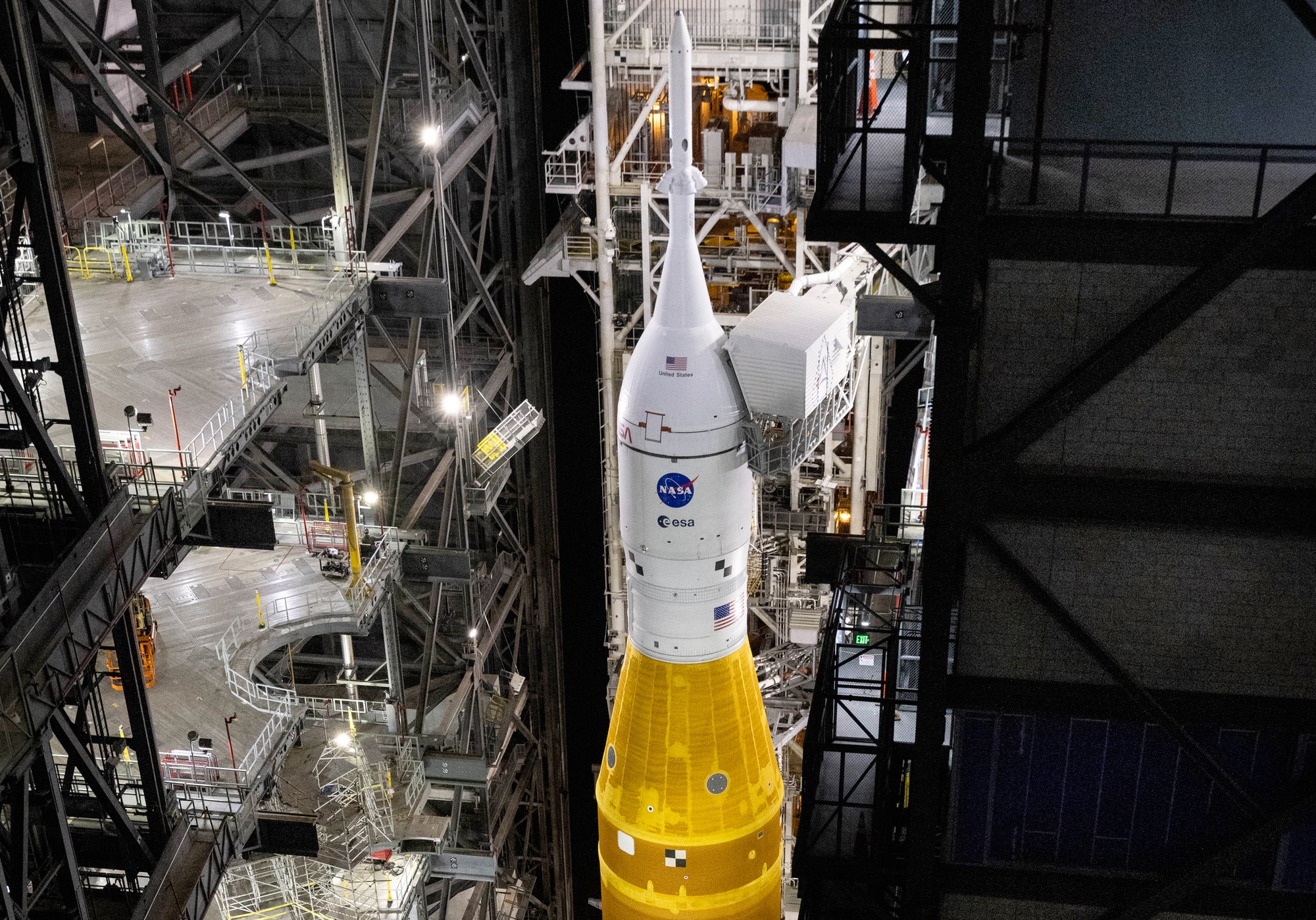

WASHINGTON — Workers have completed repairs to the helium pressurization system in the upper stage of the Space Launch System, keeping a potential April launch of the Artemis 2 mission on track.
In a March 3 statement, NASA said engineers traced a blockage in helium flow in the Interim Cryogenic Propulsion Stage, or ICPS, to a seal in a quick-disconnect line feeding helium from ground equipment into the stage. The seal had become dislodged, blocking helium flow.
Technicians removed the quick-disconnect fitting, reassembled it with the seal properly positioned and reinstalled it. Tests confirmed that helium was flowing into the stage after the repairs.
The quick-disconnect line was one of the leading suspected causes of the blockage, along with a check valve inside the stage. NASA said Feb. 21 that neither issue could be addressed at the launch pad, requiring the agency to roll the vehicle back to the Vehicle Assembly Building for repairs.
While addressing the helium issue, workers also performed maintenance on other parts of the SLS. That included replacing batteries in the core stage, ICPS and boosters, as well as replacing batteries in the rocket’s flight termination system ahead of end-to-end testing required by the Eastern Range.
NASA also said it is replacing a seal in a line that feeds liquid oxygen into the core stage. That seal is separate from those in liquid hydrogen lines that caused leaks during a wet dress rehearsal in early February and were replaced at the pad. NASA did not disclose why it is replacing the liquid oxygen seal, as there were no reports of leaks during the two fueling tests conducted last month.
NASA said the repairs and maintenance keep the vehicle on schedule to roll back out to the pad later this month for a launch attempt in early April. Two-hour launch windows are available on the evenings of April 1, 3, 4, 5 and 6 during the next launch period. The following opportunity opens April 30.
The agency did not disclose when it plans to roll the SLS and Orion spacecraft back to the pad. At a Feb. 27 briefing, Lori Glaze, acting associate administrator for the Exploration Systems Development Mission Directorate, said teams would need “at least a week and a half or so” at the pad after rollout to complete preparations for a launch attempt.










Related Posts

Stay Informed With the Latest & Most Important News
Previous Post
Next Post
Previous Post
Next Post



Advertisement
-
 01Two Black Holes Observed Circling Each Other for the First Time
 -
 02From Polymerization-Enabled Folding and Assembly to Chemical Evolution: Key Processes for Emergence of Functional Polymers in the Origin of Life
 -
 03Astronomy 101: From the Sun and Moon to Wormholes and Warp Drive, Key Theories, Discoveries, and Facts about the Universe (The Adams 101 Series)
 -
 04True Anomaly hires former York Space executive as chief operating officer
 -
 05Φsat-2 begins science phase for AI Earth images
 -
 06Hurricane forecasters are losing 3 key satellites ahead of peak storm season − a meteorologist explains why it matters
 -
 07Binary star systems are complex astronomical objects − a new AI approach could pin down their properties quickly