
Now Reading: Cosmic Hawk spreads its wings| Space photo of the day for March 6, 2026
-
01
Cosmic Hawk spreads its wings| Space photo of the day for March 6, 2026


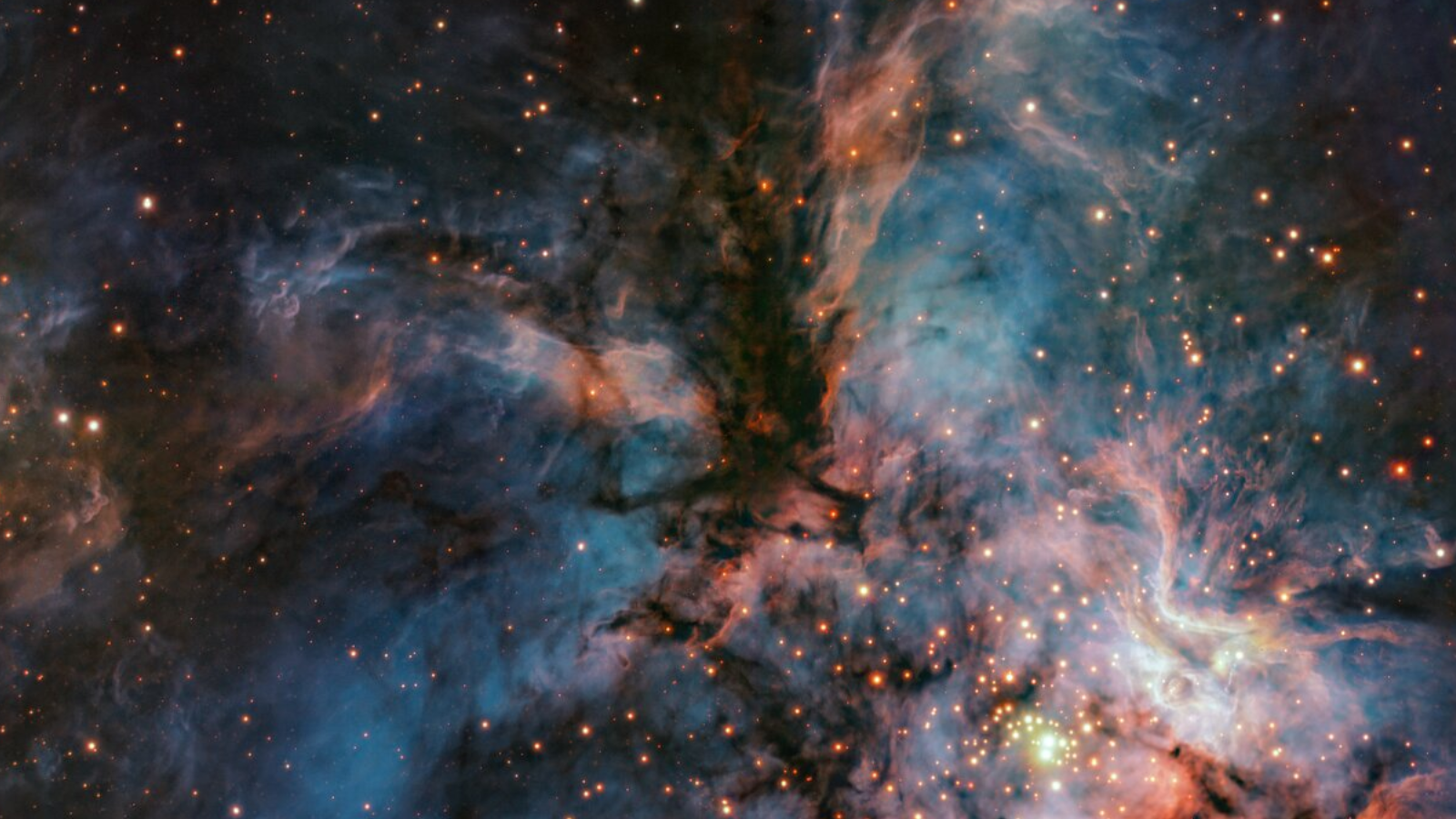

Using the Very Large Telescope (VLT), astronomers have captured a stunning image of a glowing nebula in the Milky Way that resembles a vast cosmic hawk swooping down on its prey.
What is it?
The nebula in question is RCW 36, located around 2,300 light-years away from Earth in the Vela constellation.
The head and body of this hawk are composed of dark clouds and filaments of gas and dust. Below the hawk-outline is a blue stellar nursery packed with newborn massive blue stars.
Why is it special?
You may find it surprising to learn that it isn’t the newborn stars in RCW 36 that scientists are really fascinated by.
Astronomers believe that this nebula is filled with dim stellar bodies called brown dwarfs.
These objects have been labelled with the unfortunate nickname “failed stars.” This is because, despite forming like stars from collapsing patches of overdense and cool gas, brown dwarfs fail to gather the mass needed to generate the temperatures and pressures in their cores needed to fuse hydrogen to helium. That’s the process that defines what a main-sequence star is.
This image of RCW 36 was ironically and coincidentally captured by the VLT instrument HAWK-I.










Related Posts


Stay Informed With the Latest & Most Important News
Previous Post
Next Post





Advertisement
-
 01Two Black Holes Observed Circling Each Other for the First Time
 -
 02From Polymerization-Enabled Folding and Assembly to Chemical Evolution: Key Processes for Emergence of Functional Polymers in the Origin of Life
 -
 03Astronomy 101: From the Sun and Moon to Wormholes and Warp Drive, Key Theories, Discoveries, and Facts about the Universe (The Adams 101 Series)
 -
 04True Anomaly hires former York Space executive as chief operating officer
 -
 05Φsat-2 begins science phase for AI Earth images
 -
 06Hurricane forecasters are losing 3 key satellites ahead of peak storm season − a meteorologist explains why it matters
 -
 07Binary star systems are complex astronomical objects − a new AI approach could pin down their properties quickly