
Now Reading: Landspace tests 220-ton methane engine for future heavy-lift launchers
-
01
Landspace tests 220-ton methane engine for future heavy-lift launchers


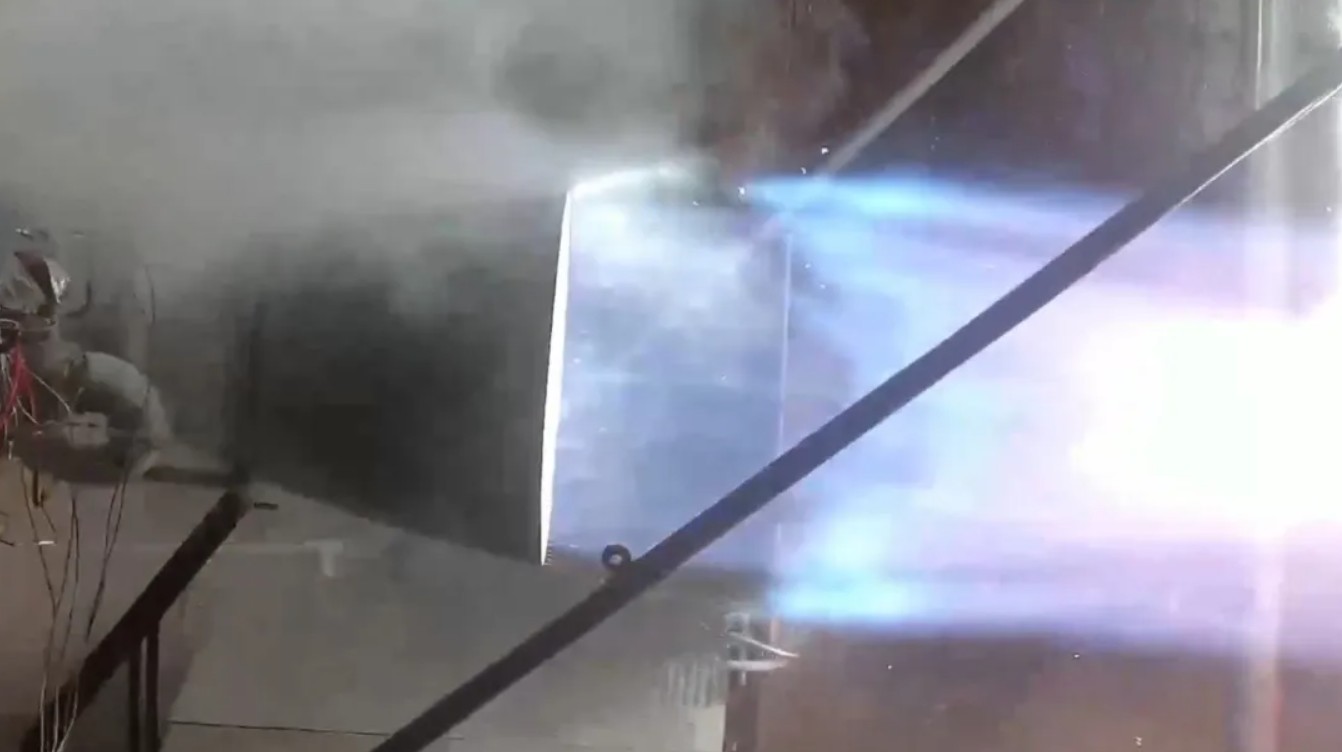

HELSINKI — Chinese launch startup Landspace says it has completed a long-duration full-system hot-fire test of its new 220-ton-class methane rocket engine for new-generation launchers.
Landspace made China’s first orbital booster recovery attempt in December 2025 with the debut launch of its stainless steel Zhuque-3 rocket. While the second stage with a mass simulator payload successfully reached orbit, the first stage failed shortly after initiation of the landing burn.
The company is planning another attempt for the second quarter of this year and aims to demonstrate reuse in the fourth quarter, but is meanwhile also making progress on an engine to power new, larger and more powerful launchers.
Landspace announced March 6 that it had recently completed a long-duration test firing of its BF (Lanyan, meaning “Blue Flame”) full-flow staged combustion (FFSC) cycle methane-liquid oxygen rocket engine. The test followed more than 100 full-system ignition tests since the program’s first integrated hot fire in May 2025.
The BF engine is designed to produce roughly 220 metric tons of thrust and is intended as a core propulsion element for Landspace’s next-generation heavy-lift launch vehicles. The company said the latest test validated the engine’s integrated systems and demonstrated continued progress in key technologies required for high-performance methane propulsion.
“These advances further improve the engine’s technical maturity and lay a solid foundation for future development. The BF engine will serve as a critical propulsion building block for the next generation of large to heavy-lift launch vehicles, supporting the development of high-efficiency and reusable heavy-lift propulsion systems,” the Landspace statement read.
The FFSC architecture offers higher propellant utilization efficiency, increased thrust-to-weight ratio and improved engine lifetime compared with more traditional cycles. However, the design also brings significant engineering challenges, including complex system interactions, high internal pressures and demanding thermal environments. This architecture is, however, seen as the future of partially and fully-reusable heavy-lift launch vehicles. The most prominent example is SpaceX’s Raptor engine, developed to power the company’s Starship launch system.
Landspace did not disclose details of the test, such as duration of the hot fire and the thrust levels demonstrated. A short clip of the test appeared on China Central Television news reports.
The company already operates the Zhuque-2 and Zhuque-3 rockets. The latter has secured the company contracts to launch batches of satellites for the national Guowang communications megaconstellation. Successful development of the BF engine would further cement Landspace’s position in a crowded Chinese commercial launch ecosystem. The company also saw its application for an initial public offering accepted by the Shanghai Stock Exchange’s STAR Market in late December, with Landspace seeking to raise around $1 billion (7.5 billion yuan).
China’s state-owned main space contractor, the China Aerospace Science and Technology Corp. (CASC), is alsodeveloping an FFSC engine. Clusters of these engines, sometimes referred to as the YF-215, are expected to power the first stage of China’s Long March 9 super heavy-lift launcher. Landspace’s commercial rival Space Pioneer has also stated its intention to develop an FFSC engine, while newer, much less established entrants Welight and Arktech have also put forward concepts for FFSC-powered rockets.
The country’s annual political sessions are currently ongoing in the capital Beijing, with a draft of the 15th Five-year plan being debated ahead of expected approval. The plan will set national priorities and strategic goals for the period 2026-2030. The draft notes the development of reusable heavy-lift launch vehicles as a priority. Boosting launch capabilities will be crucial to achieving other noted space sector objectives, such as satellite internet constellations and a lunar research station.










Related Posts

Stay Informed With the Latest & Most Important News
Previous Post
Next Post



Advertisement
-
 01Two Black Holes Observed Circling Each Other for the First Time
 -
 02From Polymerization-Enabled Folding and Assembly to Chemical Evolution: Key Processes for Emergence of Functional Polymers in the Origin of Life
 -
 03Astronomy 101: From the Sun and Moon to Wormholes and Warp Drive, Key Theories, Discoveries, and Facts about the Universe (The Adams 101 Series)
 -
 04True Anomaly hires former York Space executive as chief operating officer
 -
 05Φsat-2 begins science phase for AI Earth images
 -
 06Hurricane forecasters are losing 3 key satellites ahead of peak storm season − a meteorologist explains why it matters
 -
 07Binary star systems are complex astronomical objects − a new AI approach could pin down their properties quickly