
Now Reading: NASA inspector general assesses agency’s management of moon lander risk
-
01
NASA inspector general assesses agency’s management of moon lander risk

NASA inspector general assesses agency’s management of moon lander risk

NASA is working to reduce the risks of upcoming Artemis moon missions, but there are “gaps” in the agency’s approach, including in planned tests of some critical lander systems, the agency’s Office of Inspector General said in a report released Tuesday.
The OIG also noted that, like the Apollo landing missions more than 50 years ago, if Artemis astronauts “encounter a life-threatening emergency in space or on the lunar surface, NASA does not have the capability to rescue the stranded crew.”
The OIG said that while NASA is working to “mitigate and prevent hazards” associated with lunar landers being built by SpaceX and Blue Origin, “there are currently gaps in the agency’s approach, including in its testing posture and crew survival analyses,” including what might happen after a catastrophic but non-fatal event.
NASA is currently working to ready a Space Launch System rocket and Orion crew capsule — Integrity — for launch by around April 1 on the Artemis II mission. The nine-day flight will carry four astronauts around the moon and back.
The mission originally was planned for early February, but it has been delayed by hydrogen propellant leaks and, more recently, by problems with its upper stage propellant pressurization system that forced NASA to haul the rocket back to its processing hangar for repairs.
That issue has been resolved, and NASA plans to hold a flight readiness review Wednesday and Thursday. If all goes well, the SLS rocket will be hauled back out to pad 39B at the Kennedy Space Center around March 19 or 20 for final launch preparations.
In the meantime, NASA announced a major overhaul of the Artemis program on Feb. 27. The agency now plans to launch an additional mission next year — Artemis III — sending an Orion capsule into Earth orbit to carry out rendezvous and checkout operations with one or both of the moon landers now under development.
Based in part on lessons learned, the agency hopes to launch two lunar-landing missions in 2028 using one or both landers if both are deemed ready to fly. Those missions will be preceded by unpiloted lunar landing test flights.
The OIG report released Tuesday was completed before the revised mission architecture was announced by NASA Administrator Jared Isaacman. As such, it mostly concentrated on SpaceX’s lander, which was to make the first two Artemis moon landings with Blue Origin following after. As it now stands, NASA plans to use whichever lander is ready when it’s needed.
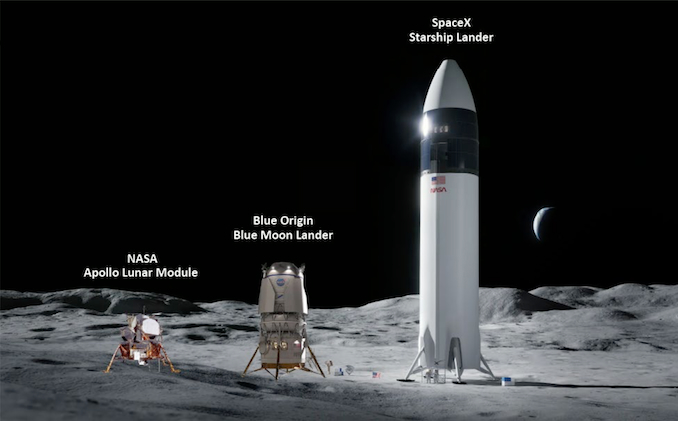
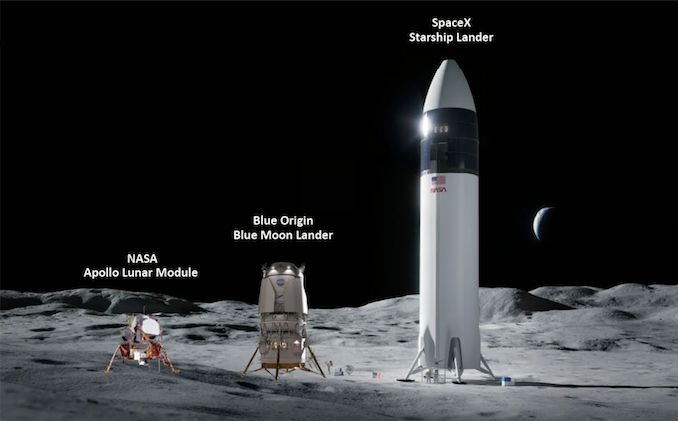
SpaceX’s lander is a variant of the company’s Starship, which normally serves as the second stage of its gargantuan Super Heavy-Starship rocket. To reach the moon, the 171-foot-tall HLS must be refueled in low-Earth orbit by an estimated 10-to-20 Starship tanker flights.
The OIG said the company plans to launch a propellant depot ship well ahead of a moon landing mission. The depot will be filled with propellants by a steady stream of Super Heavy-tanker flights taking off every week or so from launch pads in Florida and Texas.
Orbital refueling at that scale has never been attempted. Complicating the picture, it’s not yet publicly known how SpaceX will mitigate the constant loss of cryogenic propellants as they warm up and evaporate.
In any case, when the depot has been topped off, the lander will be launched, autonomously reloaded with propellants and then fired off to the moon where it will enter orbit and await the arrival of Artemis astronauts aboard an Orion crew ship.
Blue Origin plans to follow a somewhat similar strategy, refueling its lander in Earth orbit to provide the propellant needed to reach the moon. Once in lunar orbit, a tanker will top off its tanks again before carrying astronauts down to the lunar surface.
The OIG noted that the established loss-of-crew threshold faced by Artemis astronauts in the first two moon landings was expected to be in 1-in-40 range for lunar operations and 1-in-30 overall, from launch to splashdown. For comparison, Apollo astronauts faced 1-in-10 odds of a crew loss while space shuttle crews flew with an actual 1-in-70 risk.
Before any moonwalkers are launched, both landers will be put through an exhaustive series of tests in lunar orbit to verify their operational readiness. After docking with a given lander, astronauts will descend to the surface while the Orion remains in orbit awaiting their return.
Landing near the moon’s south pole poses more severe challenges than Apollo crews faced when landing near the lunar equator.
“Steep slopes of up to 20 degrees on the lunar South Pole present navigation and landing challenges,” the OIG said. “Given Starship’s height of 171 feet — about the equivalent of a 14-story tall commercial building — there is a risk that its momentum will continue after landing causing it to tip over.”
NASA’s requirement for “tilt tolerance” is a slope of just 8 degrees.
“Blue Moon — standing at 53 feet tall — also faces landing risks, including exceeding the lander’s tilt tolerance for safe and effective execution of critical crew functions. Surpassing the tilt tolerance for either lander … could impact the operation of equipment such as the hatch used by the crew to exit and enter the vehicle.”
For comparison, the Apollo lunar modules, which carried 12 astronauts to the moon’s surface in six flights, were half the height of Blue Moon’s and seven times shorter than SpaceX’s.
Unlike astronauts aboard Blue Origin’s lander, who can use stairs to reach the surface six feet below, crews aboard SpaceX’s lander will have to ride an external elevator some 10 stories down the side of their rocket. While that might seem a minor engineering issue given the challenges of orbital refueling and propellant boil off, program managers view it as an issue worth close attention.
“Starship’s elevator sits just below the crew compartment and is approximately 115 feet above the ground,” the inspector general wrote. “Currently, there is no other method for the crew to enter the vehicle from the lunar surface in the event of an elevator failure.”
NASA requires “at least single failure tolerance to catastrophic events, meaning the ability of a system to sustain a single failure and not have it affect the design goal. SpaceX is focused on building a robust standard elevator design with redundant mechanisms.”
“However, the HLS Program is tracking the elevator as a top risk and is actively working with SpaceX to develop alternate means of vehicle ingress should the elevator become stuck or fail while the crew is on the lunar surface.”










Related Posts

Stay Informed With the Latest & Most Important News
Previous Post
Next Post


Advertisement
-
 01Two Black Holes Observed Circling Each Other for the First Time
 -
 02From Polymerization-Enabled Folding and Assembly to Chemical Evolution: Key Processes for Emergence of Functional Polymers in the Origin of Life
 -
 03Astronomy 101: From the Sun and Moon to Wormholes and Warp Drive, Key Theories, Discoveries, and Facts about the Universe (The Adams 101 Series)
 -
 04True Anomaly hires former York Space executive as chief operating officer
 -
 05Φsat-2 begins science phase for AI Earth images
 -
 06Hurricane forecasters are losing 3 key satellites ahead of peak storm season − a meteorologist explains why it matters
 -
 07Binary star systems are complex astronomical objects − a new AI approach could pin down their properties quickly