
Now Reading: The perils of political impatience in the Artemis program
-
01
The perils of political impatience in the Artemis program


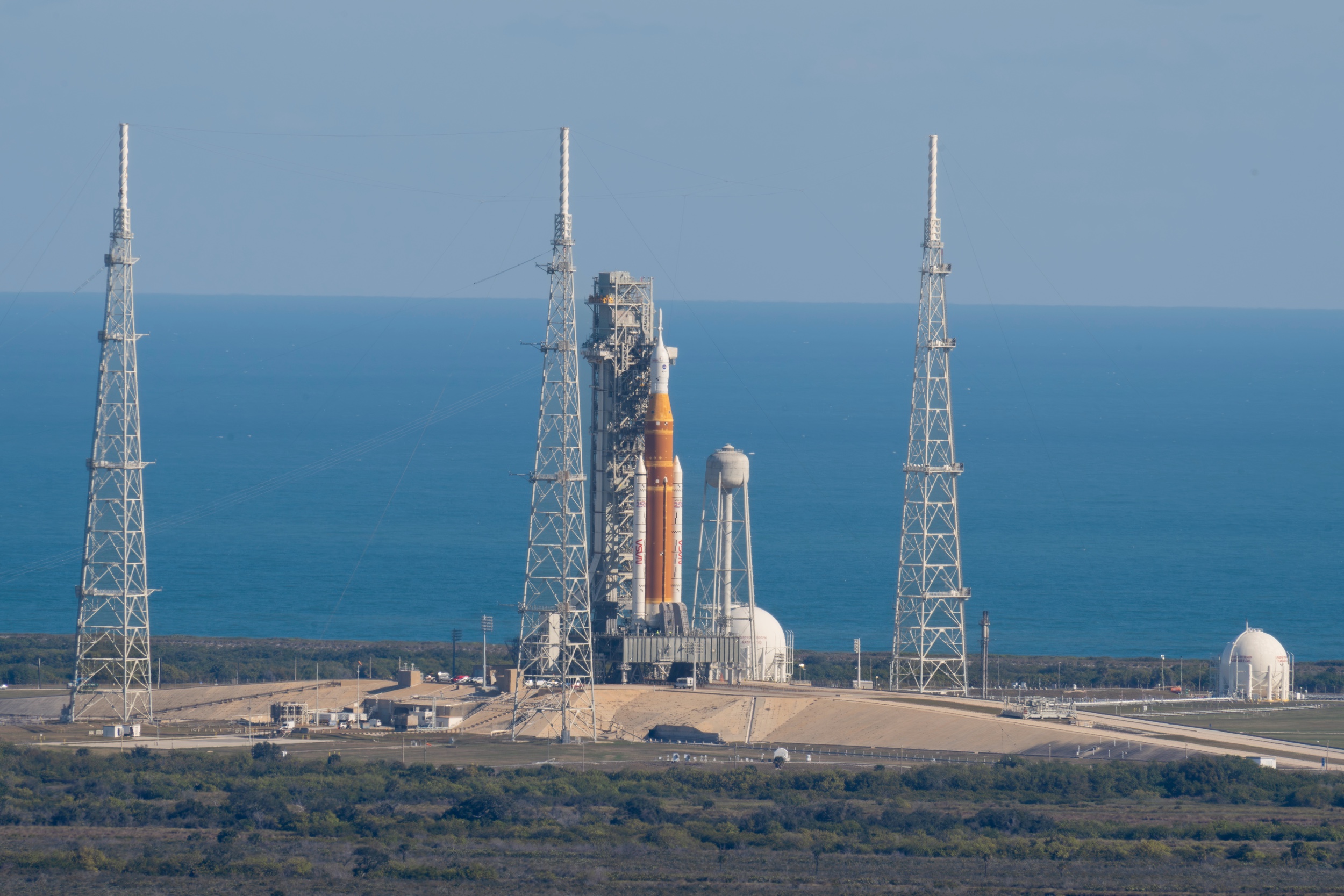

Recent engineering setbacks, specifically regarding helium system issues associated with the improper flow of helium into the Space Launch System (SLS) rocket’s upper stage, and persistent hydrogen leaks, have forced NASA to delay the crewed Artemis 2 mission to no earlier than April. While frustrating for the public, these delays are a necessary byproduct of returning to human deep-space exploration after a 50-year hiatus. However, the tone from Washington is shifting from one of methodical engineering to geopolitical anxiety.
In the pursuit of returning to the moon, we must ensure we are not sacrificing long-term sustainability for short-term political wins. The history of spaceflight is littered with examples of the catastrophic consequences of schedule pressure.
The ghosts of schedule pressure
The catastrophic loss of the Space Shuttle Challenger in 1986 remains the definitive lesson on the dangers of political urgency. Despite warnings from engineers regarding the cold temperatures and the vulnerability of the O-ring seals, pressure to maintain a high flight cadence and meet a launch window led to a fatal decision. A nation watched in horror as seven astronauts were lost 73 seconds after liftoff.
Similarly, in 2003, the loss of Columbia during re-entry highlighted a “normalization of deviance” within NASA’s safety culture — specifically, the overlooking of foam shed during launch because previous flights had survived similar events. Both tragedies were preceded by immense pressure to meet deadlines set by political leaders, not engineers.
The geopolitical pivot
Today, the pressure is different, but the motivation is the same. Current United States space leadership is vocal about the competitive threat posed by China. NASA and political leadership has frequently said that the U.S. is in a space race with Beijing, warning that China could claim resource-rich areas of the moon under the guise of scientific research if they arrive first.
Former NASA Administrator Jim Bridenstine recently testified to Congress that it is “highly unlikely” the U.S. will land humans on the moon before China, citing the immense technical hurdles still facing the Starship Human Landing System (HLS).
In my opinion, the current quest for the U.S. to place humans on the moon before China is creating a dangerous rift. Within the space science and engineering community, there is a group hell-bent on meeting deadlines, while the other calls for caution. While competition drives funding, it also creates a hazardous environment where schedule pressure can dominate engineering reality.
Winning the long game
The anxiety over China reaching the lunar surface first ignores a fundamental lesson from the original Space Race. Throughout the 1950s and early 1960s, the Soviet Union achieved almost every significant milestone: the first satellite (Sputnik), the first animal in orbit (Laika) and the first human in space (Yuri Gagarin).
The Soviet Union “won” the first race, but the U.S. laughed last because it focused on developing a comprehensive, sustainable and robust industrial architecture. The Apollo program was was about building a capability that redefined engineering standards for a generation, not setting quick records.
If China lands humans on the moon in 2029 while NASA is still conducting risk-reduction tests for Orion or Starship, it will be a public relations challenge, not a strategic catastrophe. The moon has been there for billions of years; it can wait another 24 months for American boots.
NASA must remain cautious and safety-driven, not schedule-driven. We should not be in a hurry to win a race if it means risking the lives of the astronauts who make the victory worth it. The goal is a sustained presence on the moon, not just another flag and footprints.
Amadi Brians Chinonso is a space weather scientist and former graduate visiting fellow at NASA Goddard, NCAR and Los Alamos National Laboratory, specializing in ionospheric disturbances that affect GNSS integrity. As the founder of BrianSpace, he focuses on bridging the gap between advanced space physics and the practical needs of satellite navigation in emerging economies.
SpaceNews is committed to publishing our community’s diverse perspectives. Whether you’re an academic, executive, engineer or even just a concerned citizen of the cosmos, send your arguments and viewpoints to opinion (at) spacenews.com to be considered for publication online or in our next magazine. If you have something to submit, read some of our recent opinion articles and our submission guidelines to get a sense of what we’re looking for. The perspectives shared in these opinion articles are solely those of the authors and do not necessarily represent their employers or professional affiliations.










Related Posts

Stay Informed With the Latest & Most Important News
Previous Post
Next Post

Advertisement
-
 01Two Black Holes Observed Circling Each Other for the First Time
 -
 02From Polymerization-Enabled Folding and Assembly to Chemical Evolution: Key Processes for Emergence of Functional Polymers in the Origin of Life
 -
 03Astronomy 101: From the Sun and Moon to Wormholes and Warp Drive, Key Theories, Discoveries, and Facts about the Universe (The Adams 101 Series)
 -
 04True Anomaly hires former York Space executive as chief operating officer
 -
 05Φsat-2 begins science phase for AI Earth images
 -
 06Hurricane forecasters are losing 3 key satellites ahead of peak storm season − a meteorologist explains why it matters
 -
 07Binary star systems are complex astronomical objects − a new AI approach could pin down their properties quickly