
Now Reading: Large Series C signals scale-up of China’s laser satellite communications sector
-
01
Large Series C signals scale-up of China’s laser satellite communications sector


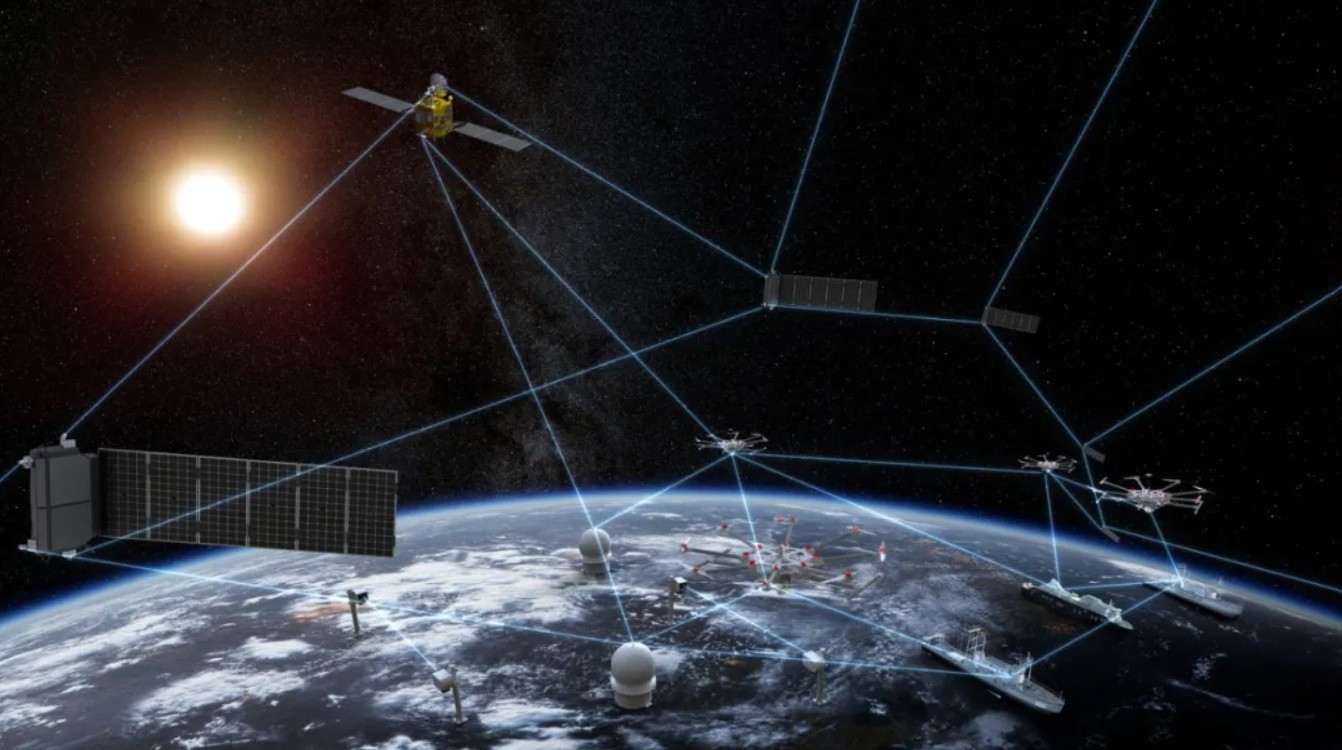

HELSINKI — Shanghai-based laser communications startup BlueStar Optical Domain has raised funding in the region of $70 million, highlighting growing demand from China’s emerging satellite internet constellations.
Blue Star Optical Domain (Shanghai) Aerospace Technology Co., Ltd., also known as BlueStar Optical Domain or Laser Link, announced Series C financing of nearly 500 million Chinese yuan ($72 million) March 9. Participants in the round included Yuekai Capital, Galaxy Innovation Capital, Jiangsu Venture Capital, Saizhi Bole, and Hangzhou High-tech Investment Group.
The funds raised will be mainly used for expanding manufacturing capacity and production facilities, as well as continued product research and development and iteration, according to Laser Link. The company says it expects future demand for large-scale production and aims to complete a “production line upgrade” enabling an annual capacity of 1,000 units by the first half of 2026.
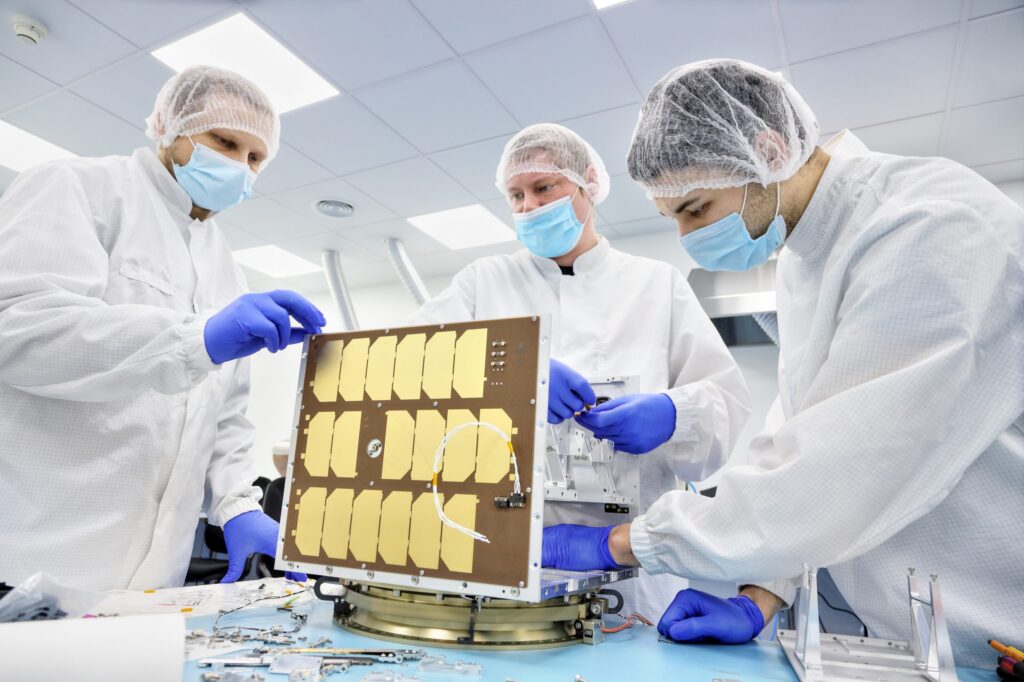
A number of startups and research spin-offs working on space laser communication have emerged in recent years. Laser communication terminals enable high-speed data transmission using lasers instead of radio frequencies.
This growth may largely be driven by China’s planned low Earth orbit internet constellations, notably the national Guowang and Shanghai-backed Thousand Sails projects, each planning to place more than 10,000 satellites in orbit. These constellations will also rely on optical inter-satellite links so satellites can route traffic globally without relying on dense ground station networks, which can pose geopolitical and regulatory challenges to establish internationally.
Laser Link says it is focusing on tackling key technologies and overcoming “bottleneck” areas such as high-end chips and high-power lasers. The company aims to increase the proportion of self-developed core components and promote localization across the supply chain.
The size of this latest round signals Laser Link aims to be a mass-production supplier of laser communication terminals targeting China’s upcoming megaconstellations, and the scale of the backing suggests strong confidence from investors.
Participants in the Series C round included both venture capital and regional industrial funds, allowing for a mix of growth funding and support for industrialization and infrastructure. Such a funding mix has become typical in recent years following China’s government signaling the growing importance of commercial space, both strategically and for high-end development.
China is currently holding its annual political sessions in Beijing, which this year include deliberation and expected approval of a new, 15th Five-year plan. The plan will determine China’s national, strategic, economic and other goals for the period 2026-2030.
A draft of the plan includes satellite internet constellations and a lunar research station. Noted space-related goals include comprehensively advancing satellite internet, including launch segment and satellite constellations, and constructing what was described as an integrated sky-Earth-ground, communication-navigation-sensing-computing fused comprehensive service system. The founder of Laser Link alluded to this project in the funding announcement, stating a strategic vision of building a “full-domain wireless optical network ecosystem.”
“As we enter the opening year of the 15th Five-Year Plan, laser communications, as the ‘neural network’ connecting space and Earth, are ushering in a historic surge,” Yan Zhixin, founder and CEO of Laser Link, said in a statement.
“Taking this round of financing as a new starting point, BlueStar Optical Domain will accelerate the construction of an integrated space-air-ground information network, playing a core role in the strategic emerging industries that the country is vigorously developing, including aerospace, the low-altitude economy, and 6G.”
Laser Link’s initial team was formed in 2018 and officially established in 2021. It saw two of its payloads launched on a Long March 2C in May 2022 which sent three communications test satellites into orbit, marking what appears to have been the company’s first in-orbit technology verification.
China has seen a pause in launch activities in recent weeks due to the Chinese New Year celebrations in February and the ongoing political sessions in Beijing. Launches are expected to resume March 12 from the commercial spaceport on Hainan island, with a Long March 8A rocket expected to launch a new batch of satellites for the Thousand Sails constellation.










Related Posts


Stay Informed With the Latest & Most Important News
Previous Post
Next Post


Advertisement
-
 01Two Black Holes Observed Circling Each Other for the First Time
 -
 02From Polymerization-Enabled Folding and Assembly to Chemical Evolution: Key Processes for Emergence of Functional Polymers in the Origin of Life
 -
 03Astronomy 101: From the Sun and Moon to Wormholes and Warp Drive, Key Theories, Discoveries, and Facts about the Universe (The Adams 101 Series)
 -
 04True Anomaly hires former York Space executive as chief operating officer
 -
 05Φsat-2 begins science phase for AI Earth images
 -
 06Hurricane forecasters are losing 3 key satellites ahead of peak storm season − a meteorologist explains why it matters
 -
 07Binary star systems are complex astronomical objects − a new AI approach could pin down their properties quickly