
Now Reading: The March full moon glows red through Saharan dust in eerie composite view
-
01
The March full moon glows red through Saharan dust in eerie composite view


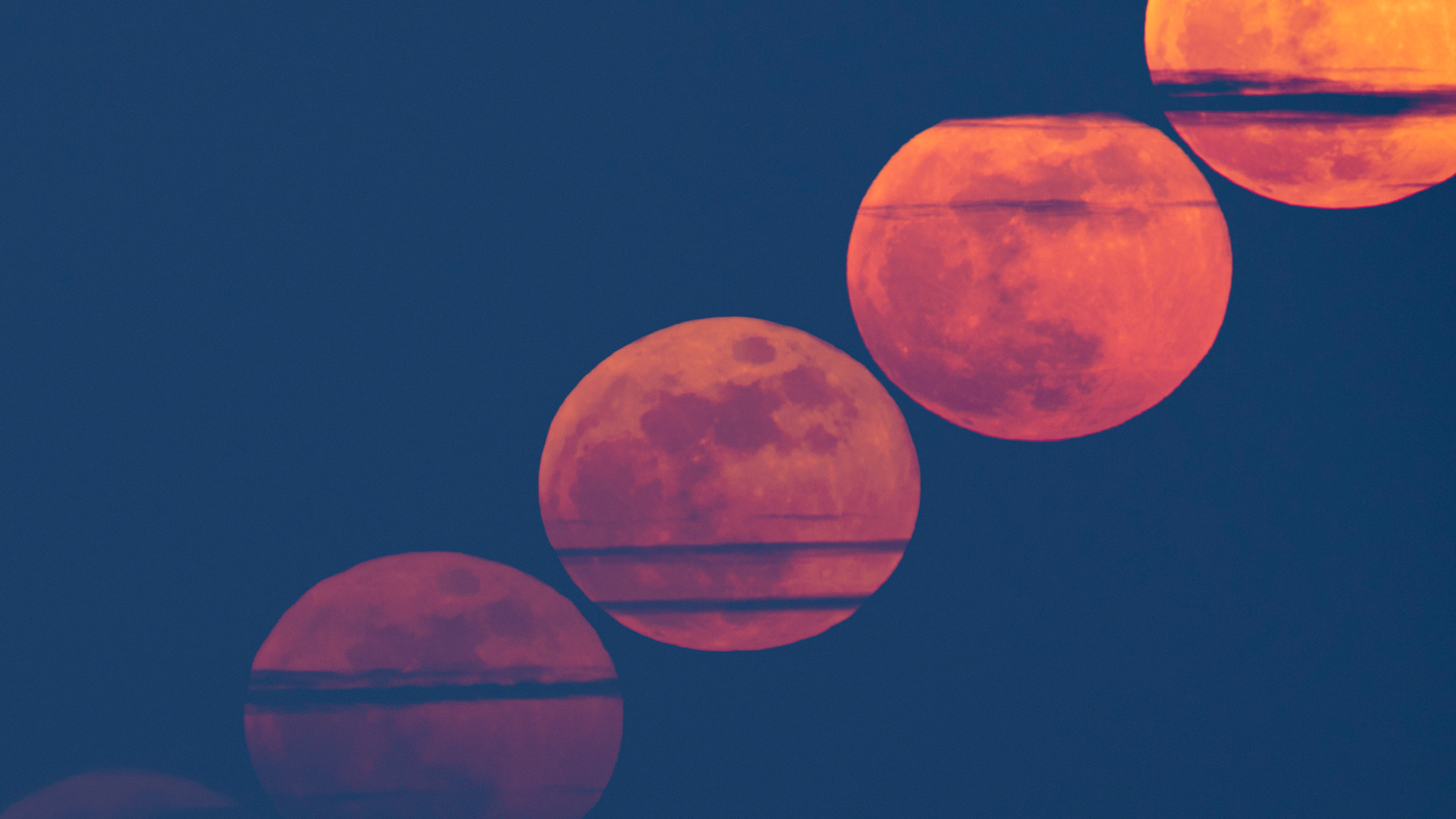

Astrophotographer Josh Dury captured a gorgeous composite view of the March full moon as it rose off the coast of the United Kingdom mere hours after a dramatic blood moon total lunar eclipse.
The March full moon is known as the Worm Moon to reference the time of year when the ground softens enough to allow Earthworms and beetles to emerge into the open. The 2026 Worm Moon happened to coincide with a total lunar eclipse, when the lunar disk passed within the inner part of our planet’s shadow known as its umbra, causing it to turn a rusty red color as the light of every sunrise and sunset on Earth was refracted onto its surface.
Article continues below
Dury captured several moody shots of the cloud-streaked Worm Moon rising on the night of March 3 using a telephoto lens, before combining them into a single visually stunning composition during the post-processing stage, which charted its path through the evening sky.
The distinctive red of the moon in Dury’s image had nothing to do with the eclipse itself — which had occurred hours earlier — but rather resulted from an atmospheric phenomenon called Rayleigh scattering.
As the moon’s reflected sunlight makes a prolonged journey through Earth’s atmosphere while close to the horizon, bluer wavelengths are filtered and blocked by particles in our atmosphere, while longer red wavelengths are able to pass through relatively unperturbed. This effect gave the moon a rusty hue, which was made all the more spectacular by the presence of airborne dust, which had been carried by atmospheric currents thousands of miles north from the Sahara Desert.
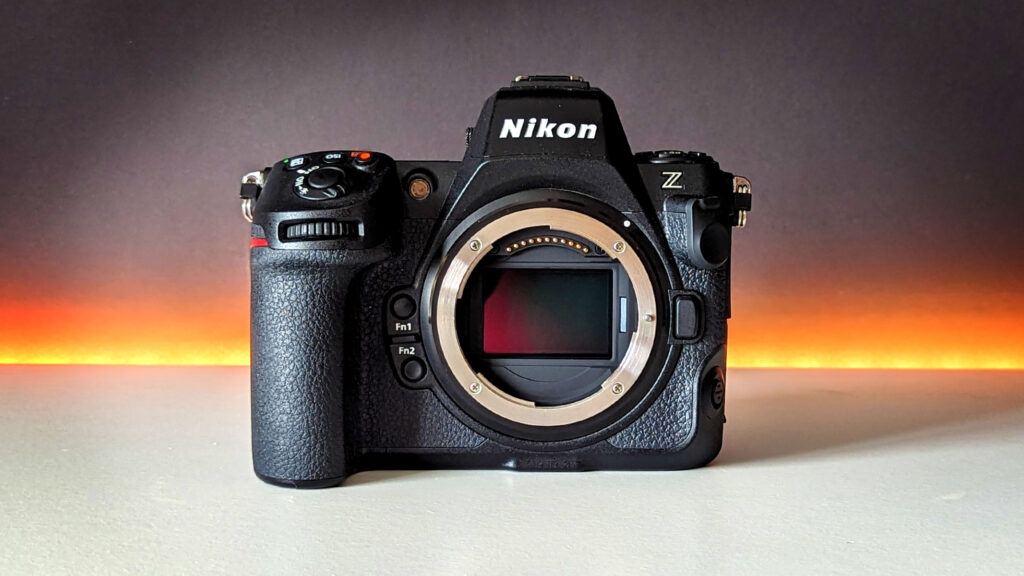
Inspired to take your own shots of the moon? Then be sure to read our expert’s guide to photographing the lunar surface, written by Dury, along with our roundups of the best lenses and camera bodies for capturing the post-sunset sky.
Editor’s Note: If you would like to share your lunar photography with Space.com’s readers, then please send your photo(s), comments, and your name and location to spacephotos@space.com.










Related Posts

Stay Informed With the Latest & Most Important News
Previous Post
Next Post


Advertisement
-
 01Two Black Holes Observed Circling Each Other for the First Time
 -
 02From Polymerization-Enabled Folding and Assembly to Chemical Evolution: Key Processes for Emergence of Functional Polymers in the Origin of Life
 -
 03Astronomy 101: From the Sun and Moon to Wormholes and Warp Drive, Key Theories, Discoveries, and Facts about the Universe (The Adams 101 Series)
 -
 04True Anomaly hires former York Space executive as chief operating officer
 -
 05Φsat-2 begins science phase for AI Earth images
 -
 06Hurricane forecasters are losing 3 key satellites ahead of peak storm season − a meteorologist explains why it matters
 -
 07Binary star systems are complex astronomical objects − a new AI approach could pin down their properties quickly