
Now Reading: Rare daytime fireball spotted from orbit as residents report powerful sonic boom
-
01
Rare daytime fireball spotted from orbit as residents report powerful sonic boom


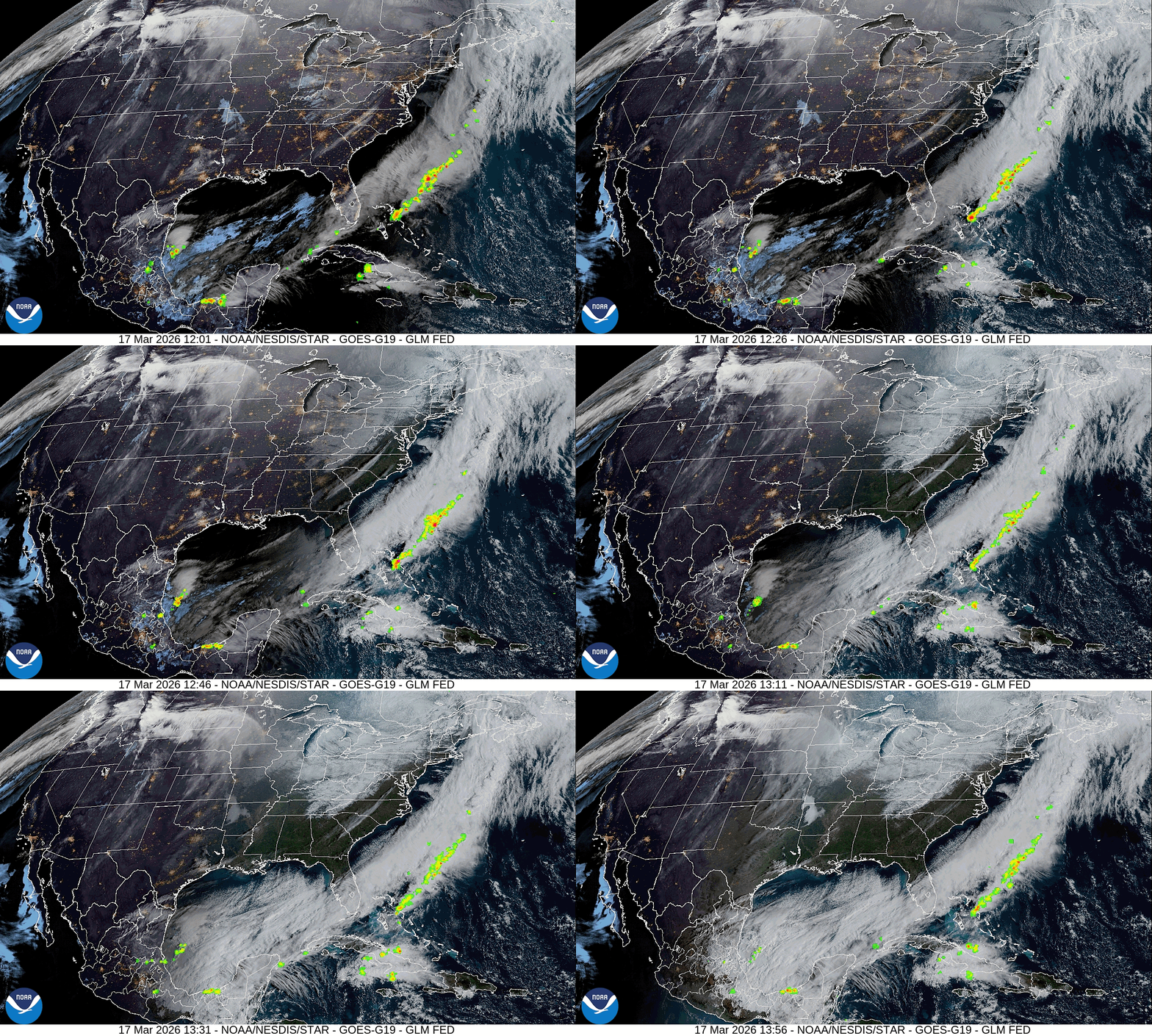
Residents in the midwestern U.S. reported hearing a powerful sonic boom that has since been attributed to a potential daytime meteor, whose dramatic demise may have been witnessed by a satellite from geostationary orbit over 22,000 miles (35,000 kilometers) above Earth.
“The latest GLM imagery (1301Z) does suggest that the boom was a result of a meteor,” wrote the official account for the Cleveland National Weather Service in an X post responding to a curious user. The explosion heard over northern Ohio may have been a sonic boom, produced as the interplanetary visitor passed through Earth’s atmosphere at supersonic speeds.
Article continues below
Video from our bus garage camera. A meteor in the sky. This is authentic. pic.twitter.com/8XhvovGh1zMarch 17, 2026
Another view was captured by Pittsburgh National Weather Service employee Jared Rackley, once again revealing a fireball tearing through the morning sky. Others reported that their homes physically shook as a result of the loud boom.
One of our employees, Jared Rackley, caught this morning’s meteor on camera from the Pittsburgh area. pic.twitter.com/2LdqOpChtiMarch 17, 2026
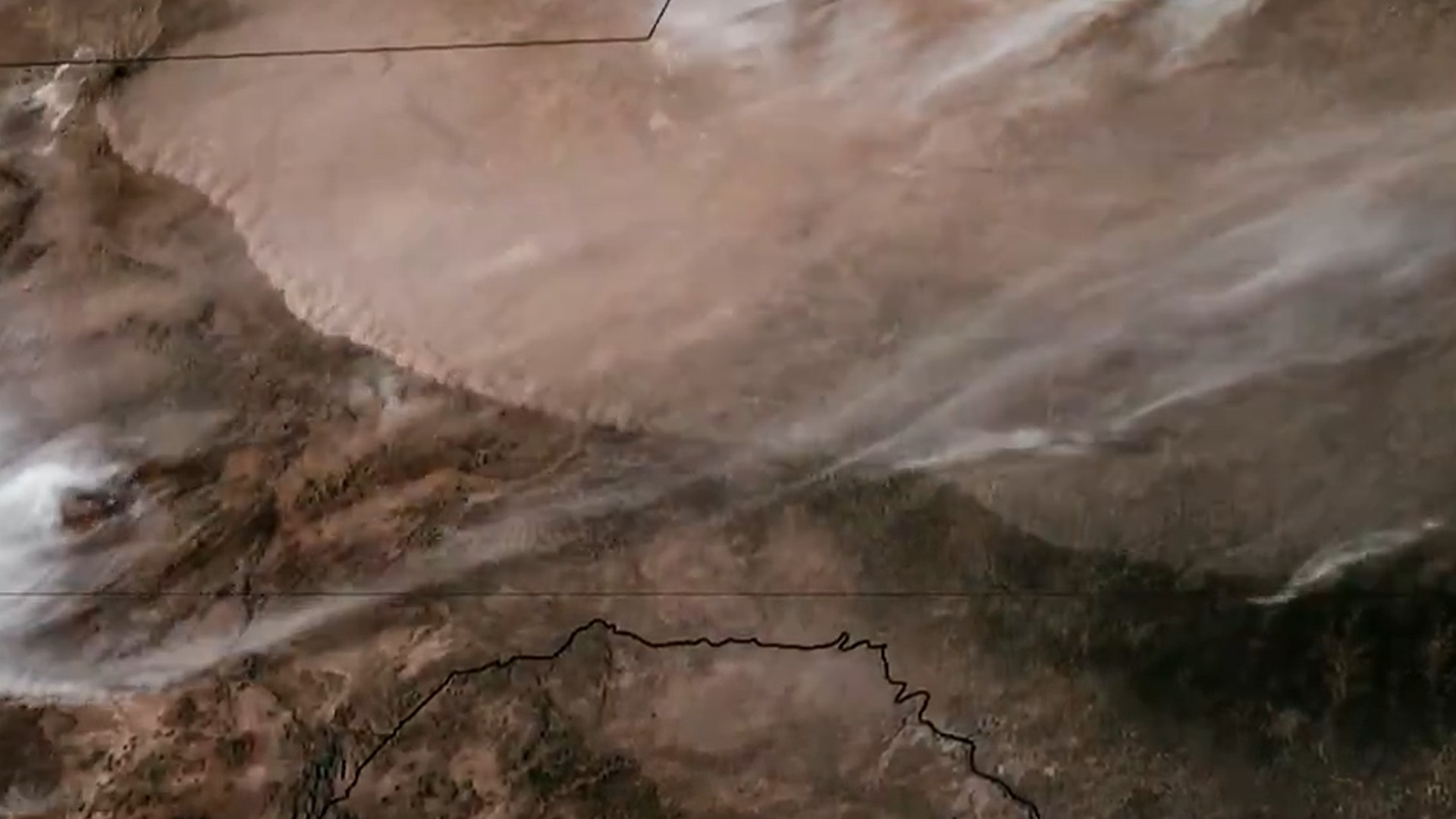
The meteor’s passage was also seemingly captured from orbit by the National Oceanic & Atmospheric Administration’s GOES-19 satellite, which recorded a bright flash of light above northern Ohio in its Geostationary Lightning Mapper instrument.
Did anything make it to the surface?
It takes a significantly large chunk of space debris — sometimes larger than a beachball — to create a fireball meteor that can be seen in the daytime sky. As such, they are exceedingly rare.
“Being much larger than your average meteor also means that it has a better chance of producing fragments on the ground,” Robert Lunsford of the American Meteor Society told Space.com about a 2025 daytime fireball event.
“We look for reports of sound such as thunder or sonic booms to have confidence that fragments of the original fireball survived down to the lower atmosphere and perhaps all the way to the ground.”










Related Posts

Stay Informed With the Latest & Most Important News
Previous Post
Next Post



Advertisement
-
 01Two Black Holes Observed Circling Each Other for the First Time
 -
 02From Polymerization-Enabled Folding and Assembly to Chemical Evolution: Key Processes for Emergence of Functional Polymers in the Origin of Life
 -
 03Astronomy 101: From the Sun and Moon to Wormholes and Warp Drive, Key Theories, Discoveries, and Facts about the Universe (The Adams 101 Series)
 -
 04True Anomaly hires former York Space executive as chief operating officer
 -
 05Φsat-2 begins science phase for AI Earth images
 -
 06Hurricane forecasters are losing 3 key satellites ahead of peak storm season − a meteorologist explains why it matters
 -
 07Binary star systems are complex astronomical objects − a new AI approach could pin down their properties quickly