
Now Reading: Holistic space observation: the shift from SSA to SDA
-
01
Holistic space observation: the shift from SSA to SDA


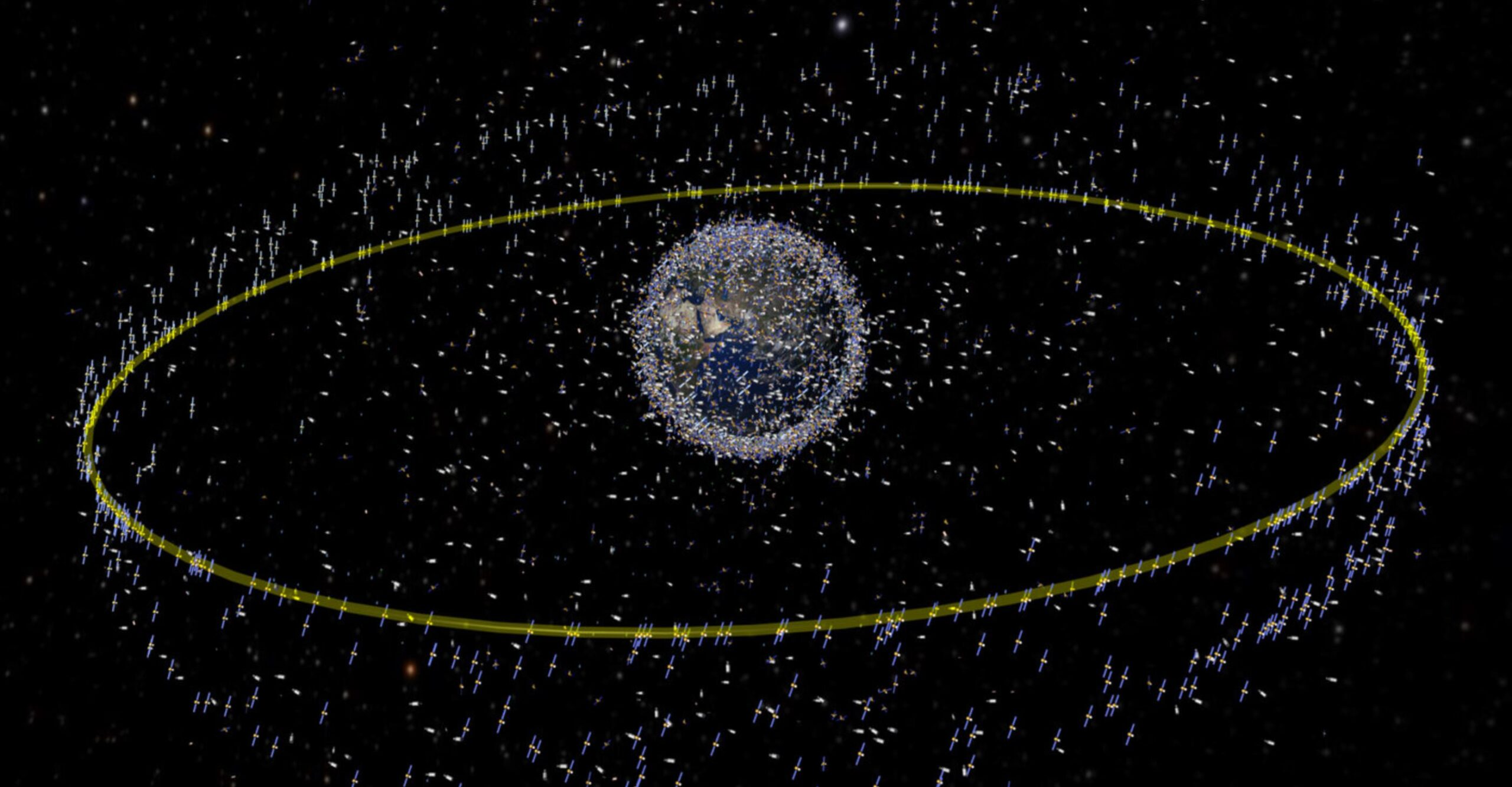

Recent reporting on SpaceX’s proposal to deploy up to one million satellites in low Earth orbit — paired with a vision of AI-enabled, autonomous orbital infrastructure — marks a decisive moment for the space community. Regardless of whether these numbers ultimately materialize, the direction is unmistakable: space is moving toward unprecedented scale, autonomy and strategic importance.
That reality demands a fundamental reassessment of what space awareness really means.
For decades, space situational awareness (SSA) focused on orbital mechanics: where an object is, where it will be and whether it might collide with something else. That model is now insufficient. Satellites are no longer passive nodes governed primarily by physics; they are software-defined, networked systems deeply integrated with terrestrial cyber infrastructure, global supply chains and increasingly AI-driven decision loops.
As space evolves into a fully contested and operational domain, awareness must evolve with it. The transition from SSA to space domain awareness (SDA) represents a shift toward holistic space observation: integrating physical, cyber, supply chain, spectrum and autonomous system visibility into a unified understanding of the domain.That shift will not occur organically, it must be driven by the constellation operators and reinforced by acquisition and regulatory frameworks.
The convergence problem in space
Modern space threats do not arrive neatly categorized. Cyber compromise, RF interference, supply-chain manipulation, electronic interference and orbital overcrowding increasingly overlap, often reinforcing one another in subtle, difficult-to-detect ways. A satellite experiencing anomalous behavior may not be “broken” in a traditional sense. It may be degraded, influenced or quietly manipulated.
At mega-constellation scale, these risks compound. Interference no longer needs to be destructive to be effective. Small timing shifts, corrupted updates, spectrum contamination or compromised components can undermine trust and performance across entire fleets. In this environment, risk emerges not from any single domain, but from their interaction.
Traditional SSA was never designed to observe this kind of convergence.
From positional awareness to behavioral awareness
What’s required now is a shift from positional awareness to behavioral awareness, understanding not just where a satellite is or whether it’s communicating, but what is actually happening across its cyber, RF and operational layers.
For decades, knowing where an object was and where it might go was sufficient to maintain order in space. In a congested, autonomous environment, that logic no longer holds. Orbital data alone cannot explain system behavior. It must be correlated with RF activity, operational telemetry and environmental demand signals to identify patterns that traditional SSA cannot see.
Without this broader lens, critical anomalies remain invisible until they propagate into larger failures.
This evolution in observation enables operators to answer far more consequential questions:
- Is this satellite behaving within its expected operational profile?
- Are anomalies isolated or correlated across systems and domains?
- Is degradation driven by congestion, benign failure or interference?
Answering these questions helps preserve mission integrity, reduce unnecessary maneuvering reactions, and sustain trust across increasingly congested constellations.
Early detection in an autonomous domain
As satellites evolve into AI-enabled, autonomous nodes, the pace of on-orbit activity increasingly outstrips human-in-the-loop response. Failures and interference propagate faster than operators can react. In this environment, post-event analysis is not enough.
Observation must move toward pattern-of-life baselining and real-time correlation that allow deviations to be detected early, risk to be assessed accurately and action to be taken before localized issues become systemic failures.
That holistic transition will not happen by default. It must be driven by the operators deploying large, autonomous constellations. They control the architecture, the telemetry and the decision loops. Behavioral awareness must become part of core mission operations rather than an overlay added after launch.
SSA providers will need to extend beyond object tracking into integrated, multi-domain analytics. Regulators, in turn, will increasingly demand evidence that operators can distinguish benign anomalies from systemic risk or hostile interference.
That expectation must be embedded early in acquisition strategy and reflected in procurement requirements that prioritize cross-domain telemetry integration, behavioral baselining, and anomaly discrimination as core performance criteria rather than optional enhancements.
Statutory oversight, acquisition, and the structural challenge – why this is hard
Responsibility for space security, regulation and procurement is distributed across multiple institutions. National security space operations, civil oversight, spectrum management and commercial licensing are governed by separate authorities, each operating under distinct mandates and incentives.
This fragmentation mirrors the technical problem itself. Space awareness has historically been segmented: orbital tracking in one lane, cyber defense in another, spectrum management in a third, just as acquisition, operations and regulatory oversight are divided institutionally. Threats converge in orbit, but authority remains separated on the ground.
That structural separation makes holistic observation difficult not because the technology is unattainable, but because budgets, telemetry standards, reporting frameworks, and operational control are rarely aligned. Integrating behavioral awareness across domains requires coordination among institutions that were never designed to function as a fused system.
Progress will depend less on creating entirely new authorities and more on aligning incentives. Acquisition frameworks must account for resilience and cross-domain telemetry, not just launch timelines. Regulatory processes must recognize behavioral anomaly detection as part of mission assurance. Operators must treat integrated observation as operational infrastructure rather than discretionary overhead.
A good place to start would be establishing minimum standards through cross-agency pilot programs integrating orbital, cyber and RF telemetry; standardizing shared data schemas; aligning acquisition incentives that are not entirely tied to meeting arbitrary launch windows and scaling proven analytics rapidly through phased operational deployments.
Without that alignment, behavioral awareness will remain conceptual rather than operational.
Restoring order in a complex domain
Order in space has always depended on predictability. In the past, that predictability came primarily from physics. In an era defined by large-scale, autonomous systems, it comes from insight, understanding how complex systems behave under stress, scale and interference.
Constellation operators must lead the development of fleet-wide behavioral baselines and anomaly detection frameworks. SSA providers must expand beyond orbital tracking into cross-domain correlation and risk modeling. Regulators must establish reporting standards that distinguish benign degradation from nefarious activity.
Without clear ownership, behavioral awareness will remain conceptual rather than operational. Whether order can be maintained in an increasingly complex domain will depend on how quickly that responsibility is recognized and acted upon.
Paul Maguire is the CEO and co-founder of Knowmadics, an innovative solutions provider addressing critical security requirements for both terrestrial and space-based assets. He is a former Naval Intelligence Officer specializing in Space Collections, and civilian Program Manager for the Air Force Space and Reconnaissance Office involved with the design of future National space systems. Maguire has also co-authored papers on Multi-Spectral Imagery and Imagery Exploitation.
SpaceNews is committed to publishing our community’s diverse perspectives. Whether you’re an academic, executive, engineer or even just a concerned citizen of the cosmos, send your arguments and viewpoints to opinion (at) spacenews.com to be considered for publication online or in our next magazine. If you have something to submit, read some of our recent opinion articles and our submission guidelines to get a sense of what we’re looking for. The perspectives shared in these opinion articles are solely those of the authors and do not necessarily represent their employers or professional affiliations.










Related Posts
Stay Informed With the Latest & Most Important News
Previous Post
Next Post



Advertisement
-
 01Two Black Holes Observed Circling Each Other for the First Time
 -
 02From Polymerization-Enabled Folding and Assembly to Chemical Evolution: Key Processes for Emergence of Functional Polymers in the Origin of Life
 -
 03Astronomy 101: From the Sun and Moon to Wormholes and Warp Drive, Key Theories, Discoveries, and Facts about the Universe (The Adams 101 Series)
 -
 04True Anomaly hires former York Space executive as chief operating officer
 -
 05Φsat-2 begins science phase for AI Earth images
 -
 06Hurricane forecasters are losing 3 key satellites ahead of peak storm season − a meteorologist explains why it matters
 -
 07Binary star systems are complex astronomical objects − a new AI approach could pin down their properties quickly