
Now Reading: Building A Roadmap For Hubble Science Into The 2030s
-
01
Building A Roadmap For Hubble Science Into The 2030s


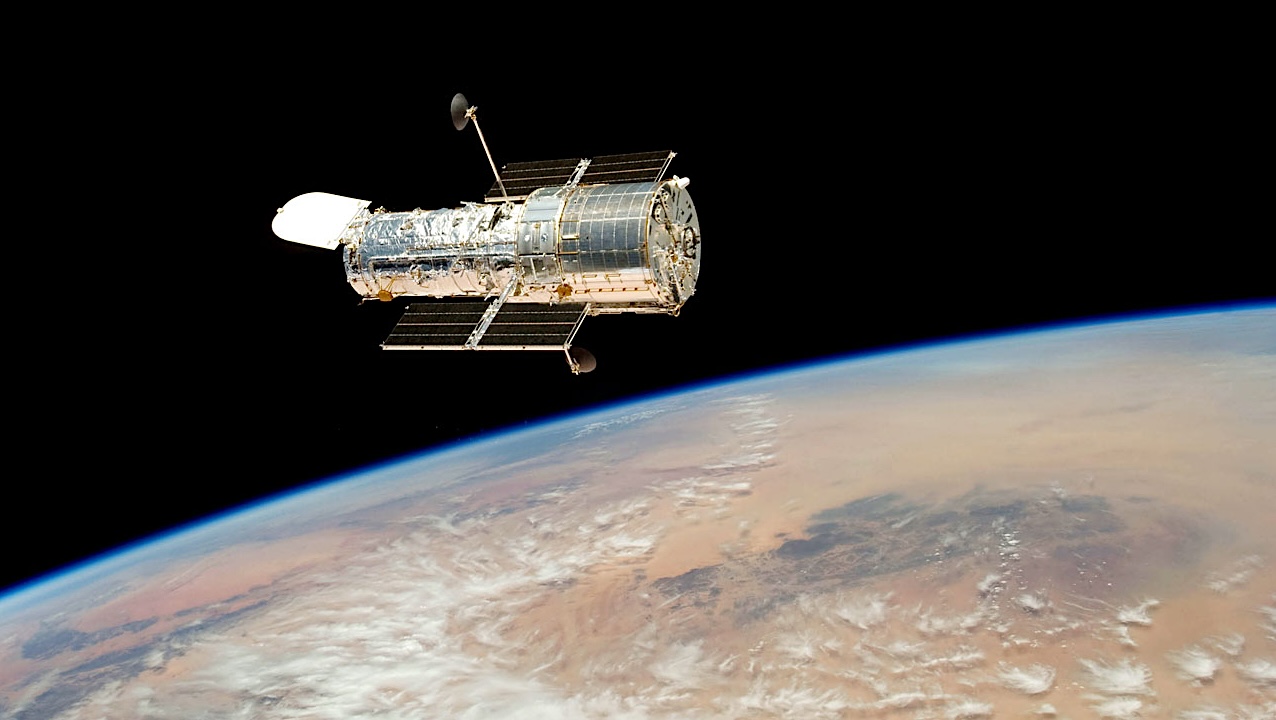
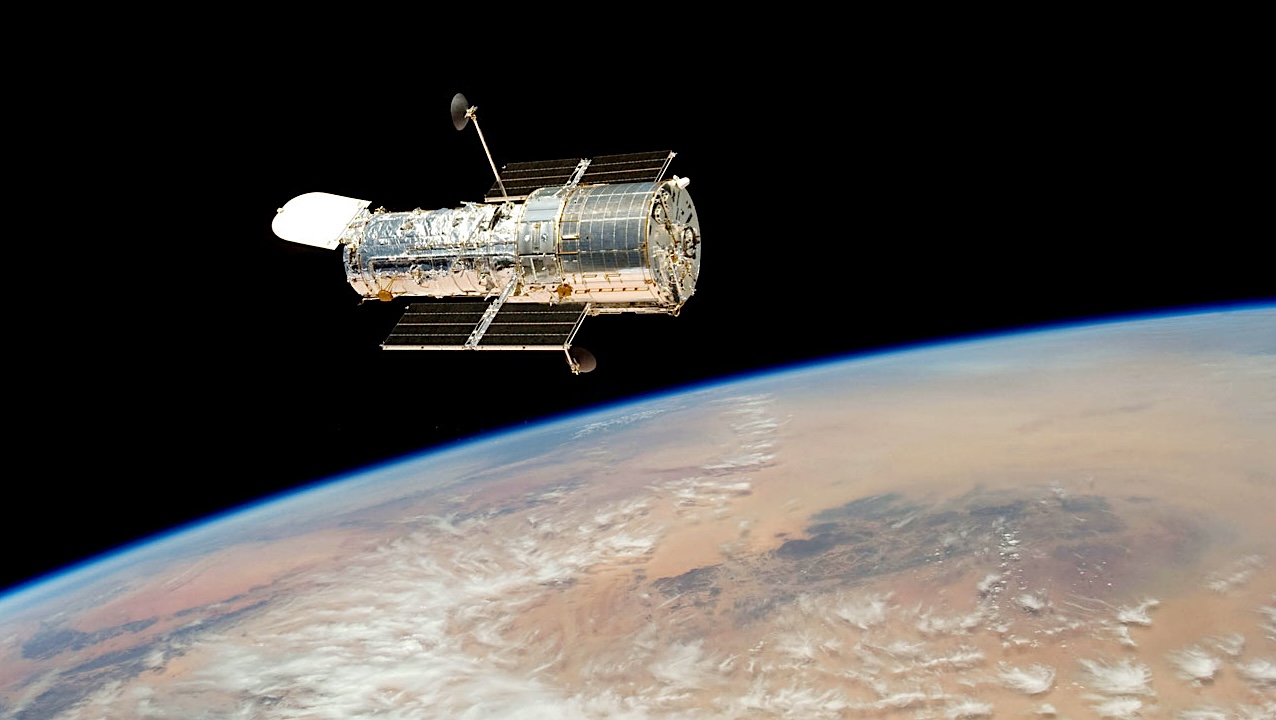
Hubble remains an indispensable resource for the astronomy and planetary science community as it approaches the end of its fourth decade in operations. The dynamic astronomical landscape, with facilities with complementary and synergistic capabilities (e.g. JWST, Roman, UVEX, Lazuli) and evolving funding constraints, motivates an examination of Hubble’s science priorities to maximize the use of its unique capabilities and its science output into the 2030s.
Estimates of Hubble’s current orbital evolution point to a likely atmospheric re-entry in 2033. The possibility of a boost, which would require planning and funding to start in FY27, could expand Hubble’s lifetime into a fifth decade, and support the astrophysics and planetary science communities with unparalleled high resolution, high sensitivity ultraviolet-optical capabilities through the 2030s.
Broad, timely community input is crucial. Therefore, STScI is engaging with users now to help focus Hubble’s future scientific portfolio.
Specifically, STScI is requesting community input in the form of white papers, which address the following questions:
- What key science questions require Hubble’s unique capabilities, either on their own or in synergy with other missions, over the next 10-15 years?
- What instrument capabilities and operational requirements (e.g., resolution, observing mode, calibration accuracy etc.) are required to answer these questions? This includes changes to current operational constraints (e.g. explicit focus on particular science areas, such as exoplanets or transient phenomena).
- How can Hubble best help prepare for and support the development of the next super-Hubble, the Habitable Worlds Observatory (HWO)?
- Are there major initiatives and large-scale observing programs that would be particularly scientifically powerful in the coming years for providing important data to the community?
A page summarizing the current status of HST’s capabilities can be found here.
The submitted white papers will assist STScI and the HST Project Office at the NASA Goddard Space Flight Center (GSFC) in working with the community to implement trade-offs that maintain a high level of cost-effective scientific productivity and impact. The outcome will be a roadmap for the programmatic, operational, and scientific future of Hubble through the 2030s.
White papers should be limited to no more than 5 pages and submitted here as a PDF. The deadline for submission is 22 May 2026.
Contacts
Chris Evans
ESA/HST & ESA/JWST
Project Scientist ESA Office, STScI Baltimore, USA
Email: [email protected]
Astrobiology,











Related Posts
Stay Informed With the Latest & Most Important News
Previous Post
Next Post



Advertisement
-
 01Two Black Holes Observed Circling Each Other for the First Time
 -
 02From Polymerization-Enabled Folding and Assembly to Chemical Evolution: Key Processes for Emergence of Functional Polymers in the Origin of Life
 -
 03Astronomy 101: From the Sun and Moon to Wormholes and Warp Drive, Key Theories, Discoveries, and Facts about the Universe (The Adams 101 Series)
 -
 04True Anomaly hires former York Space executive as chief operating officer
 -
 05Φsat-2 begins science phase for AI Earth images
 -
 06Hurricane forecasters are losing 3 key satellites ahead of peak storm season − a meteorologist explains why it matters
 -
 07Binary star systems are complex astronomical objects − a new AI approach could pin down their properties quickly