
Now Reading: Another GPS launch shifts from ULA to SpaceX as Vulcan investigation continues
-
01
Another GPS launch shifts from ULA to SpaceX as Vulcan investigation continues

Another GPS launch shifts from ULA to SpaceX as Vulcan investigation continues

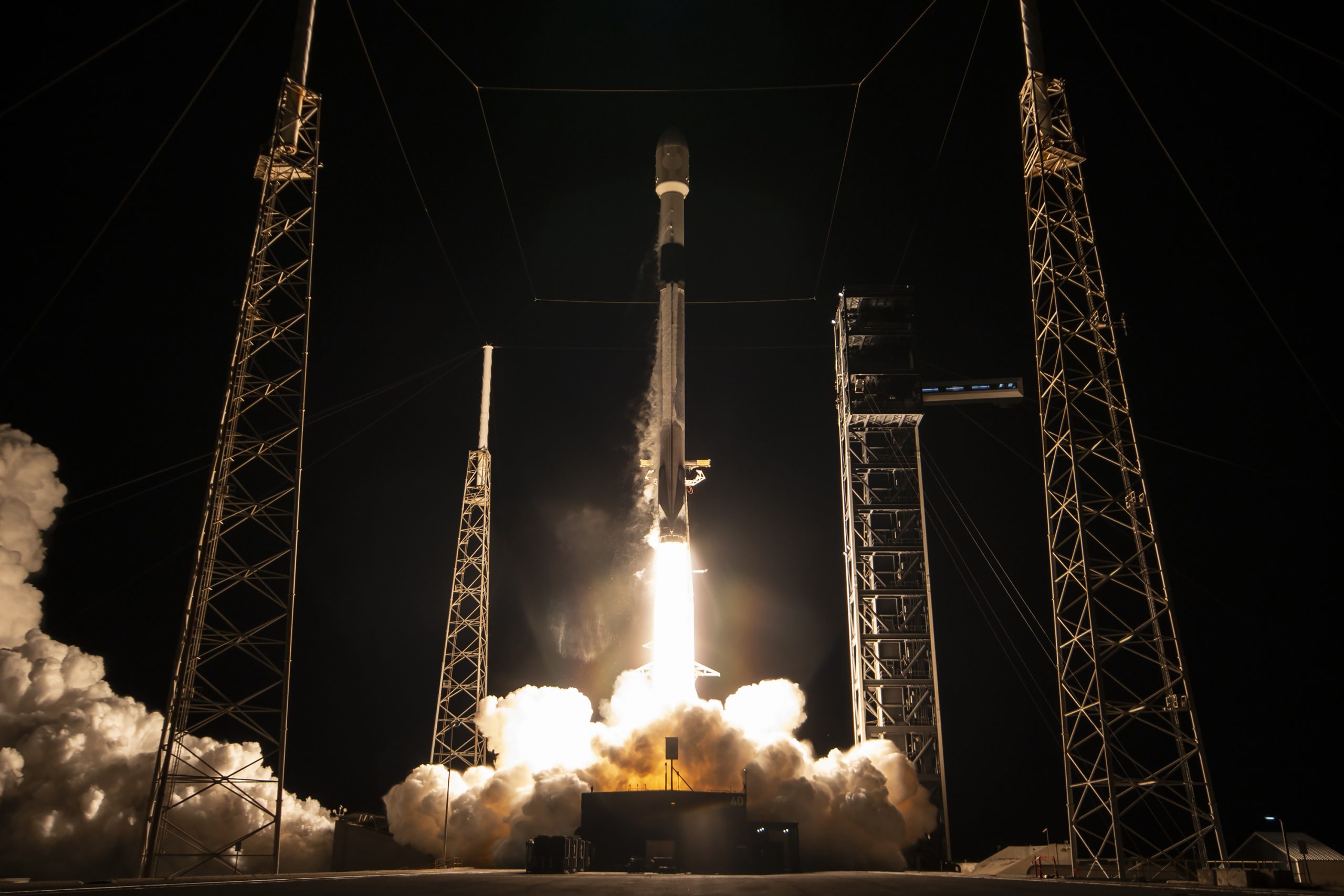

WASHINGTON — The U.S. Space Force has reassigned another GPS satellite launch from United Launch Alliance to SpaceX, marking the fourth consecutive shift of a Global Positioning System mission between the two providers.
The change affects the GPS III SV-10 satellite, which had been slated to launch on ULA’s Vulcan Centaur rocket. The mission is now scheduled to fly no earlier than late April aboard a SpaceX rocket from Space Launch Complex 40 at Cape Canaveral Space Force Station.
In a March 20 statement, the Space Systems Command said the reassignment stems from an ongoing pause in Vulcan operations following a solid rocket booster anomaly observed during the Feb. 12 USSF-87 mission.
“The change ensures continued delivery of this critical system through responsive and reliable launch capabilities while the investigation into the Vulcan anomaly continues,” the command said.
The move underscores the Space Force’s priority to maintain deployment schedules for GPS satellites, which provide positioning, navigation and timing services used by military systems and civilian infrastructure worldwide. It also highlights the near-term loss of redundancy in the National Security Space Launch program, which is structured around two independent providers.
Col. Ryan Hiserote, director of the national security launch program, said the reassignment “once again demonstrates our team’s flexibility.”
Under the terms of the NSSL Phase 2 contract, ULA and SpaceX were awarded a roughly 60/40 split of missions over five years. As part of the adjustment, ULA’s Vulcan rocket has been assigned the USSF-70 mission, now scheduled for no earlier than the summer of 2028.
SpaceX has launched almost all the GPS III satellites. The SV-10 reassignment follows similar shifts for three earlier missions, including GPS III SV-09, which launched Jan. 28 after being moved from ULA to SpaceX. SpaceX also launched SV-07 in December 2024 and SV-08 in May 2025 after those missions were reassigned.
The Space Force has not said how long the Vulcan investigation could take or whether additional missions may be reassigned. Vulcan has completed two national security launches so far as ULA works to transition from its Atlas 5 rocket and establish a steady launch cadence with its new vehicle.










Related Posts
Stay Informed With the Latest & Most Important News
Previous Post
Next Post

Advertisement
-
 01Two Black Holes Observed Circling Each Other for the First Time
 -
 02From Polymerization-Enabled Folding and Assembly to Chemical Evolution: Key Processes for Emergence of Functional Polymers in the Origin of Life
 -
 03Astronomy 101: From the Sun and Moon to Wormholes and Warp Drive, Key Theories, Discoveries, and Facts about the Universe (The Adams 101 Series)
 -
 04True Anomaly hires former York Space executive as chief operating officer
 -
 05Φsat-2 begins science phase for AI Earth images
 -
 06Hurricane forecasters are losing 3 key satellites ahead of peak storm season − a meteorologist explains why it matters
 -
 07Binary star systems are complex astronomical objects − a new AI approach could pin down their properties quickly