
Now Reading: NASA’s Artemis II rocket successfully rolls out for first crewed Moon mission in over 50 years
-
01
NASA’s Artemis II rocket successfully rolls out for first crewed Moon mission in over 50 years

NASA’s Artemis II rocket successfully rolls out for first crewed Moon mission in over 50 years

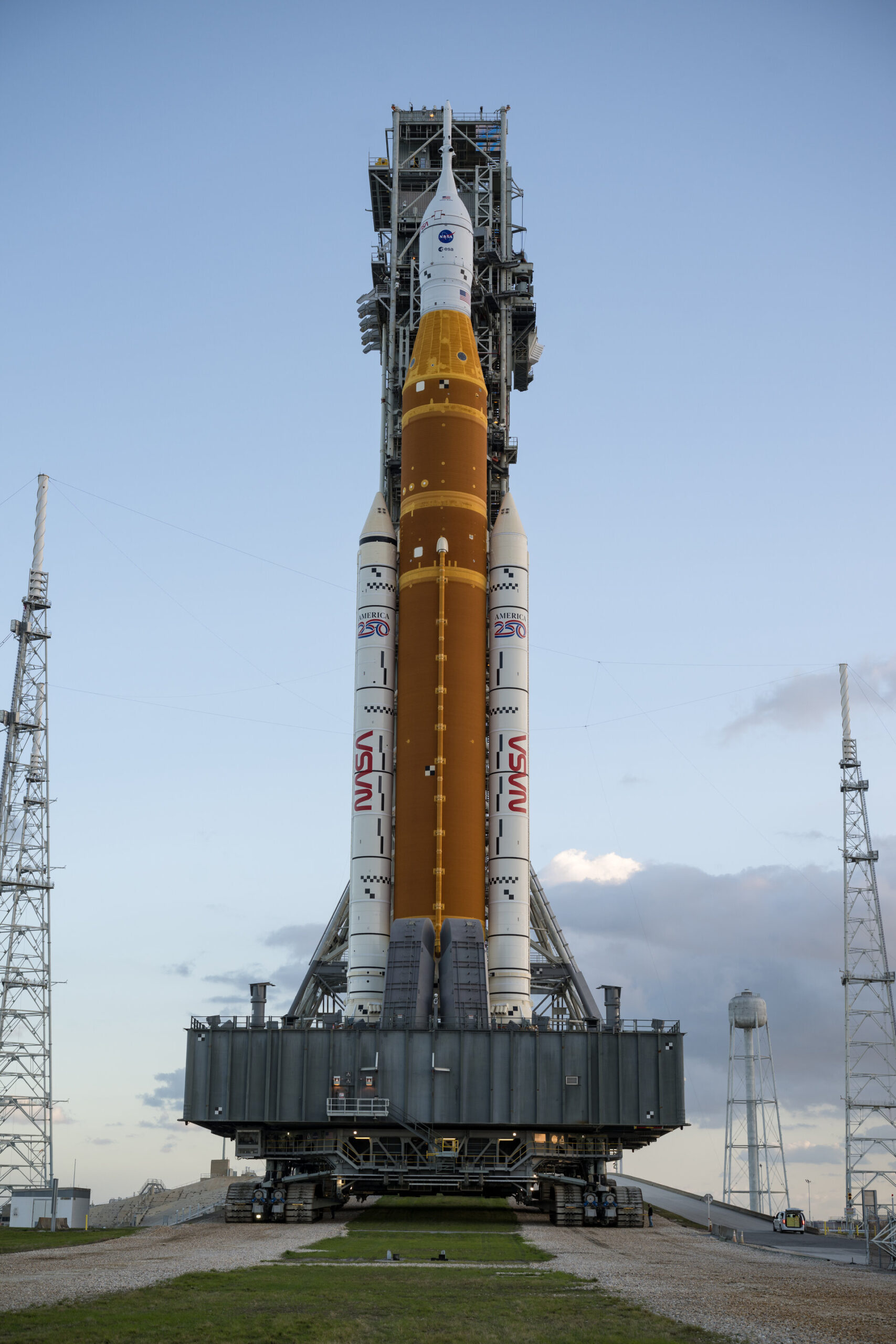

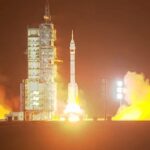
NASA’s Artemis II mission has taken a significant step forward today as the Space Launch System rocket, accompanied by the Orion spacecraft, successfully rolled out from the Vehicle Assembly Building at the Kennedy Space Center in Florida. This marks the rocket’s return to its launch pad, laying the groundwork for the first crewed mission to the Moon in more than half a century. The journey, supported by a mobile launcher, was closely monitored, covering a distance of 6.5 kilometers in approximately 12 hours.
This marks the second time the Artemis II rocket has made the trip to the pad, with its initial rollout occurring in January. Following that event, mission teams conducted rehearsals for critical launch operations, including fueling procedures and a practice countdown. A comprehensive wet dress rehearsal was successfully executed in February when the rocket was fully loaded with cryogenic fuel. However, post-rehearsal assessments uncovered a technical issue in the rocket’s upper stage helium system, vital for propellant tank pressurization. As a result, the vehicle was returned to the Vehicle Assembly Building for necessary inspections and repairs.
Safety remains the foremost priority as teams work diligently to ensure the rocket’s systems are fully operational ahead of the launch. Recent weeks have seen the resolution of the identified issue, alongside additional system checks and battery replacements. After a successful flight readiness review in mid-March, NASA announced that all program partners, including the European Space Agency, were cleared for a launch window slated to begin in early April.
The upcoming launch opportunities for the Artemis II mission are as follows (in Central European Summer Time): 2 April at 00:24, 3 April at 01:22, 4 April at 02:00, 5 April at 02:53, 6 April at 03:40, and 7 April at 04:36.
Central to the Orion spacecraft’s operations during this groundbreaking mission is the European Service Module, built by a consortium of over 20 companies from 10 ESA Member States, under the leadership of Airbus. This module is important for powering the spacecraft as it navigates deep space, ensuring the provision of air, water, and climate control for the four astronauts aboard. Engineers from ESA will continue to support the mission from their centers in the Netherlands and Germany, as well as from NASA’s Johnson Space Center in Houston, reflecting nearly a decade of collaborative efforts.










Related Posts

Stay Informed With the Latest & Most Important News
Previous Post
Next Post

Advertisement
-
 01Two Black Holes Observed Circling Each Other for the First Time
 -
 02From Polymerization-Enabled Folding and Assembly to Chemical Evolution: Key Processes for Emergence of Functional Polymers in the Origin of Life
 -
 03Astronomy 101: From the Sun and Moon to Wormholes and Warp Drive, Key Theories, Discoveries, and Facts about the Universe (The Adams 101 Series)
 -
 04True Anomaly hires former York Space executive as chief operating officer
 -
 05Φsat-2 begins science phase for AI Earth images
 -
 06Hurricane forecasters are losing 3 key satellites ahead of peak storm season − a meteorologist explains why it matters
 -
 07Binary star systems are complex astronomical objects − a new AI approach could pin down their properties quickly