
Now Reading: Artificial Intelligence uncovers more than 100 new worlds in NASA data
-
01
Artificial Intelligence uncovers more than 100 new worlds in NASA data


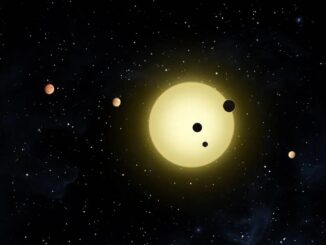
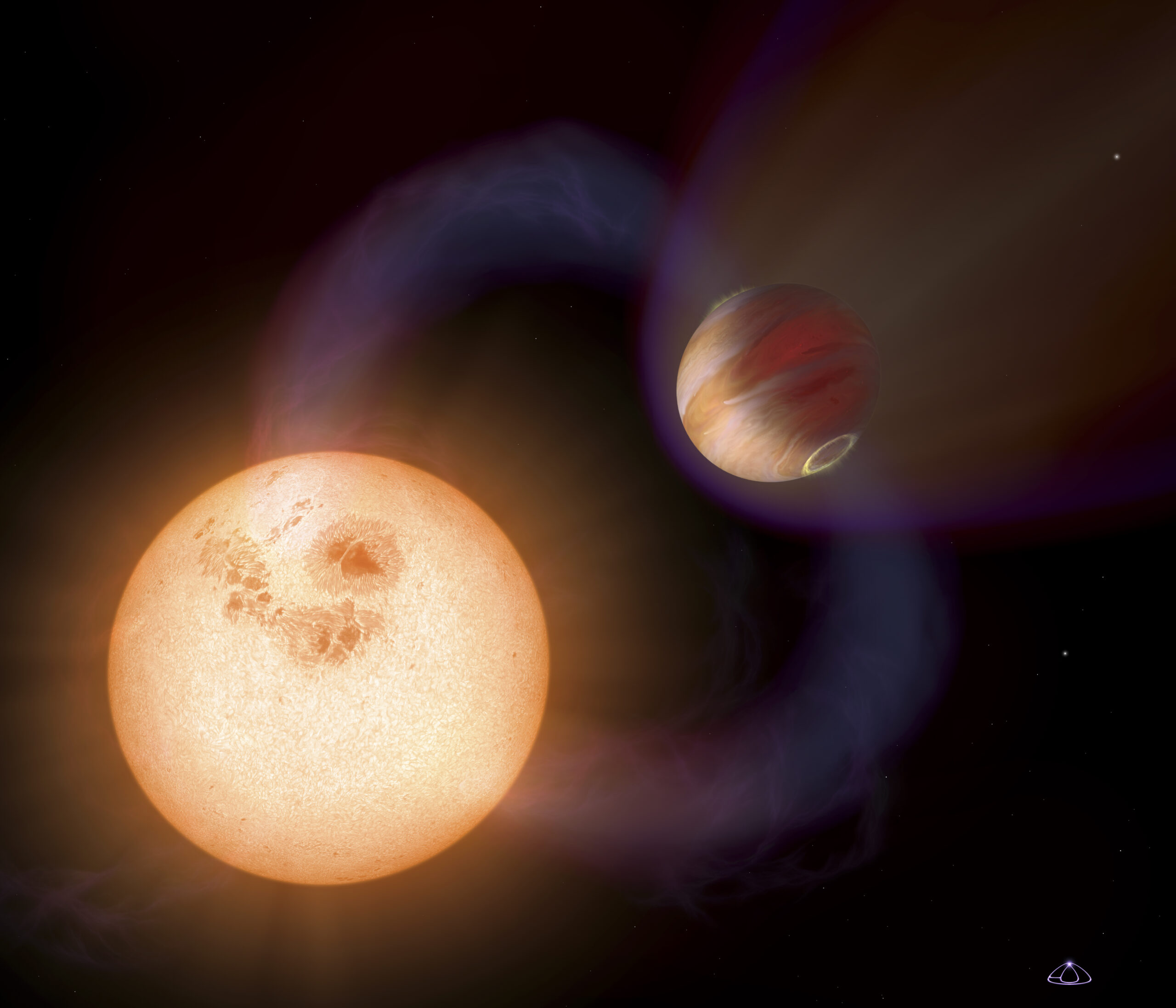
An artificial intelligence tool developed at the University of Warwick has uncovered a rich haul of previously hidden exoplanets in data from NASA’s Transiting Exoplanet Survey Satellite (TESS), validating more than 100 worlds and identifying thousands more candidates.
The new system, called RAVEN (RAnking and Validation of ExoplaNets), was applied to observations of more than 2.2 million stars collected during the first four years of the TESS mission. By combining automated detection, machine learning and statistical validation into a single pipeline, the team has produced one of the most comprehensive catalogues of close orbiting planets to date.
“Using our newly developed RAVEN pipeline, we were able to validate 118 new planets, and over 2,000 high-quality planet candidates, nearly 1,000 of them entirely new,” says Dr Marina Lafarga Magro, a postdoctoral researcher at the University of Warwick, UK, and lead author of the study. “This represents one of the best characterised samples of close in planets and will help us identify the most promising systems for future study.”
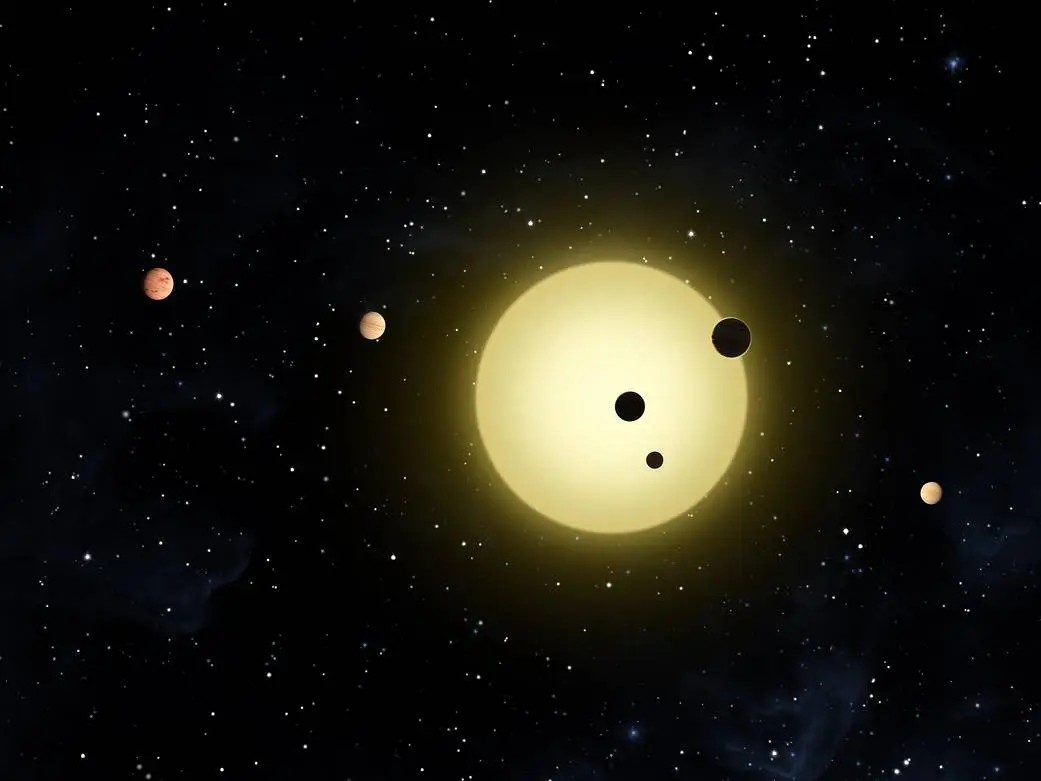
TESS searches for planets by detecting tiny dips in a star’s brightness as an orbiting world passes in front of it, a technique known as the transit method. But such signals can be mimicked by other astrophysical phenomena, including eclipsing binary stars, making it difficult to distinguish genuine planets from false positives.
RAVEN is designed to address that problem by analysing each signal within a unified framework. It draws on extensive libraries of simulated planetary transits and impostor signals, allowing it to identify subtle differences that would otherwise be missed.
“In addition, RAVEN is designed to handle the whole process in one go, from detecting the signal, to vetting it with machine learning and statistically validating it. This gives the pipeline an additional edge over contemporary tools that only focus on specific parts of the workflow,” says Dr Andreas Hadjigeorghiou, who led the pipeline’s development.
Among the newly validated planets are several particularly intriguing classes. These include ultra-short-period planets that orbit their stars in less than 24 hours. They found that around 9–10 per cent of Sun-like stars host a close orbiting planet. This is consistent with earlier measurements from NASA’s Kepler mission, but with uncertainties up to ten times smaller.
The analysis also provides the first direct measurement of how rare ‘Neptunian desert’ planets are. The Neptunian desert’ is a region close to stars where planets of Neptune-like size are thought to be scarce. This work confirms that, showing that such worlds occur in around just 0.08 per cent of Sun-like stars.
“For the first time, we can put a precise number on just how empty this ‘desert’ is,” said Dr Kaiming Cui, a postdoctoral researcher at the University of Warwick, UK, and lead author of the population study.
Finally, the survey also uncovered previously unknown multi-planet systems, in which two or more worlds circle the same star at close range. Because RAVEN produces a clean, well characterised sample, it also allows astronomers to move beyond individual discoveries and study planetary populations as a whole. In a companion study, the team measured how frequently close orbiting planets occur around Sun-like stars, mapping their distribution across orbital period and size with improved precision.
In addition to the results, the team has also released interactive catalogues and tools so that other researchers can explore the newly identified systems and select promising targets for follow-up observations. Future missions, including the European Space Agency’s PLATO telescope, are expected to benefit from this groundwork.
What is the ‘Neptunian desert’?
The ‘Neptunian desert’ refers to a puzzling gap in the population of exoplanets found very close to their host stars. While astronomers have discovered many large, Jupiter-sized ‘hot Jupiters’ and numerous smaller, rocky worlds in tight orbits, planets with sizes and masses similar to Neptune appear to be rare in this region.
The leading explanation is that such planets struggle to survive so close to their stars. Intense radiation can strip away their atmospheres over time, particularly if they are less massive than gas giants. Alternatively, the processes that form and migrate planets may simply make it difficult for Neptune-sized worlds to end up on such short-period orbits in the first place.
By measuring how frequently these planets occur, which according this new study is around just 0.08 percent of Sun-like stars, astronomers can test these ideas and better understand how planetary systems evolve.
Read More:
Demographics of Close-In TESS Exoplanets Orbiting FGK Main-sequence Stars.










Related Posts
Stay Informed With the Latest & Most Important News
Previous Post
Next Post


Advertisement
-
 01Two Black Holes Observed Circling Each Other for the First Time
 -
 02From Polymerization-Enabled Folding and Assembly to Chemical Evolution: Key Processes for Emergence of Functional Polymers in the Origin of Life
 -
 03Astronomy 101: From the Sun and Moon to Wormholes and Warp Drive, Key Theories, Discoveries, and Facts about the Universe (The Adams 101 Series)
 -
 04True Anomaly hires former York Space executive as chief operating officer
 -
 05Φsat-2 begins science phase for AI Earth images
 -
 06Hurricane forecasters are losing 3 key satellites ahead of peak storm season − a meteorologist explains why it matters
 -
 07Binary star systems are complex astronomical objects − a new AI approach could pin down their properties quickly