
Now Reading: Varda flies navigation payload, heat shield tests on sixth reentry mission
-
01
Varda flies navigation payload, heat shield tests on sixth reentry mission


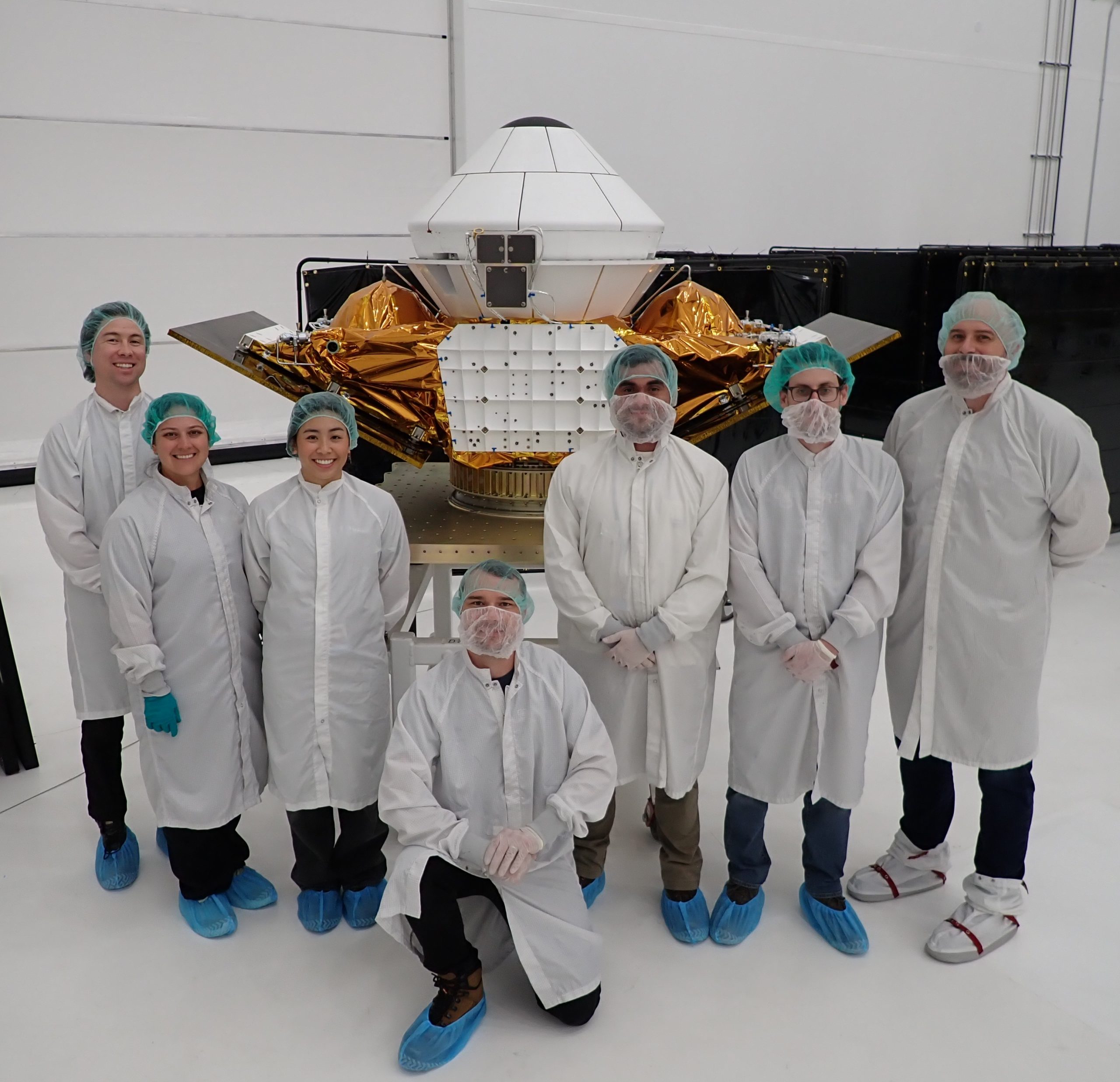

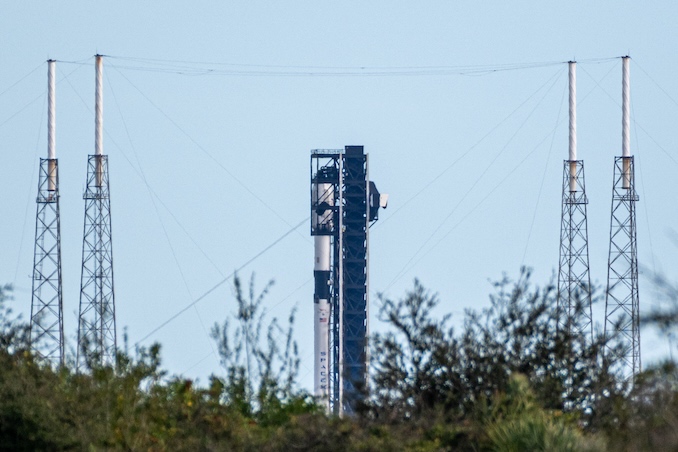
WASHINGTON — Varda Space Industries on March 30 launched its sixth reentry capsule carrying U.S. government-funded experiments designed to operate under the extreme conditions of hypersonic flight.
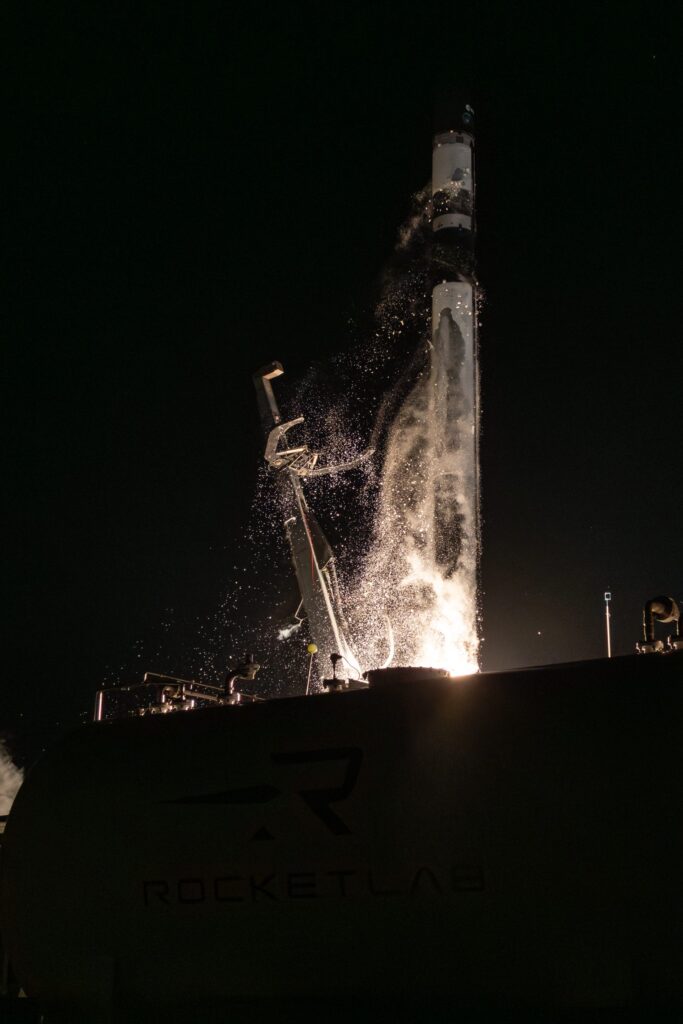
The W-6 mission lifted off from Vandenberg Space Force Base in California aboard the SpaceX Transporter-16 rideshare, which carried 119 payloads. Those included satellites deployed directly from the Falcon 9 as well as hosted payloads aboard orbital transfer vehicles.
Based in El Segundo, California, Varda operates a line of spacecraft intended to manufacture materials in microgravity and return them to Earth. Its W-Series capsules orbit for weeks or months before reentering the atmosphere at speeds exceeding Mach 25, exposing onboard hardware to temperatures and stresses comparable to those experienced by advanced missile systems.
That profile has attracted U.S. defense customers. The W-6 capsule carries government-backed payloads, including an autonomous navigation system developed by Rhea Space Activity with funding from the Space Force and the Air Force Research Laboratory.
The system is designed to determine the vehicle’s position during reentry, when a plasma sheath forms around the spacecraft and blocks GPS signals and radio communications. The blackout period has long been a challenge for vehicles returning from space.
“Comprising two cameras and a flight computer, the unit will collect imagery during the hypersonic flight,” Rhea Space Activity said. “The launch will allow RSA to test its proprietary algorithm, AutoNav, on a hypersonic vehicle.”
The software uses onboard cameras to observe objects in low Earth orbit and match them against cataloged objects in the U.S. Space Force’s Unified Data Library to estimate position. The company said collecting imagery during reentry is particularly difficult because the plasma sheath obscures visibility.
Rhea Space Activity said its navigation system offers an alternative to satellite-based navigation. “Celestial navigation through the plasma sheath is a reliable way for reentry systems to navigate during GPS and radio blackout periods,” said Elliott Sanders, the company’s national security coordinator.
Also mounted on the exterior of the capsule are thermal protection materials from Sandia National Laboratories and heat shield tiles from NASA, both instrumented to collect performance data during descent.
The Air Force Research Laboratory has awarded Varda a multi-year contract to fly government payloads, allowing the agency to test materials, sensors and components at high speed and recover them for analysis.
Varda is aiming to increase flight cadence with its W-Series vehicles, positioning its capsules as a repeatable test platform.










Related Posts
Stay Informed With the Latest & Most Important News
Previous Post
Next Post


Advertisement
-
 01Two Black Holes Observed Circling Each Other for the First Time
 -
 02From Polymerization-Enabled Folding and Assembly to Chemical Evolution: Key Processes for Emergence of Functional Polymers in the Origin of Life
 -
 03Astronomy 101: From the Sun and Moon to Wormholes and Warp Drive, Key Theories, Discoveries, and Facts about the Universe (The Adams 101 Series)
 -
 04True Anomaly hires former York Space executive as chief operating officer
 -
 05Φsat-2 begins science phase for AI Earth images
 -
 06Hurricane forecasters are losing 3 key satellites ahead of peak storm season − a meteorologist explains why it matters
 -
 07Binary star systems are complex astronomical objects − a new AI approach could pin down their properties quickly