
Now Reading: SpaceX launches Transporter-16 rideshare mission
-
01
SpaceX launches Transporter-16 rideshare mission


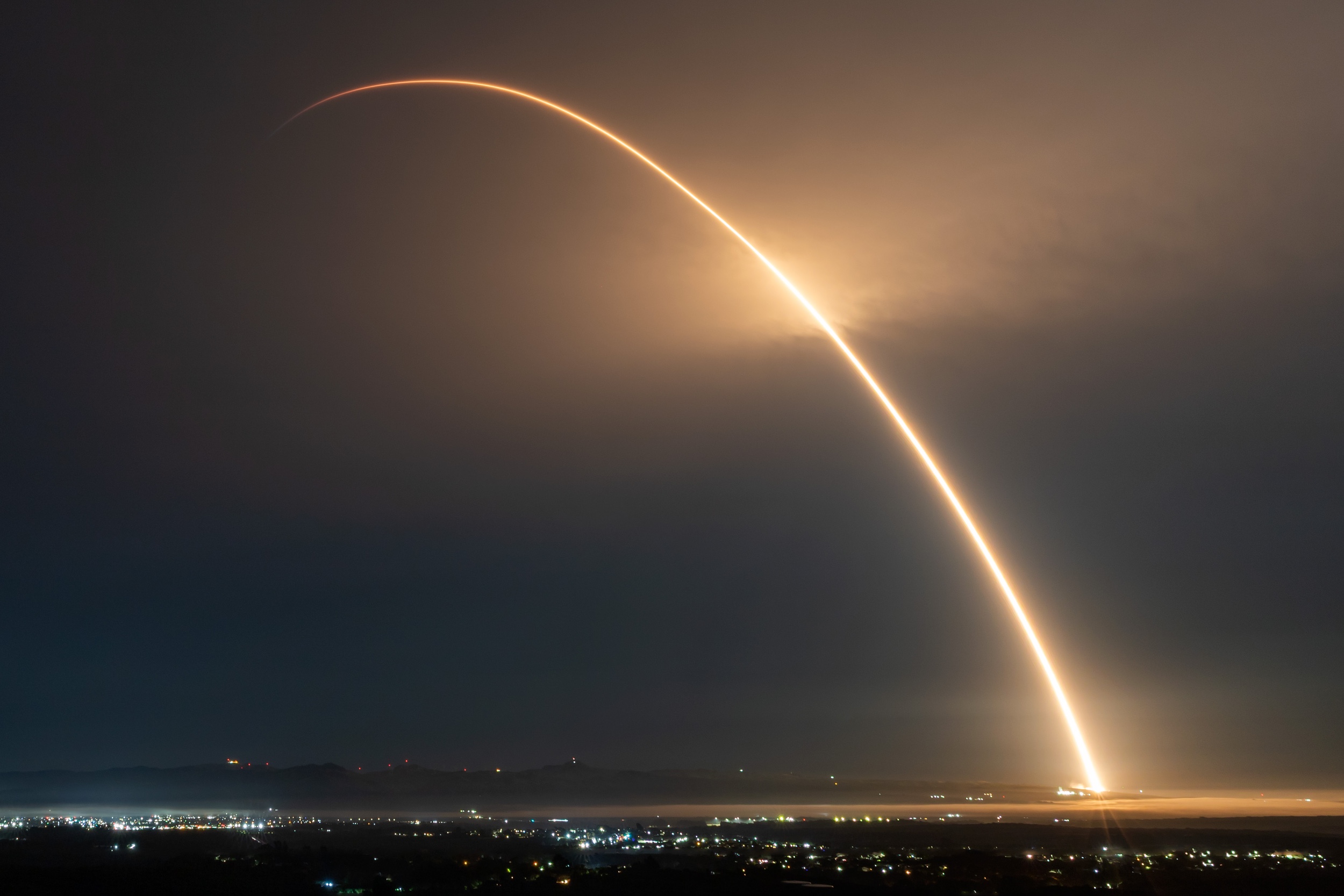

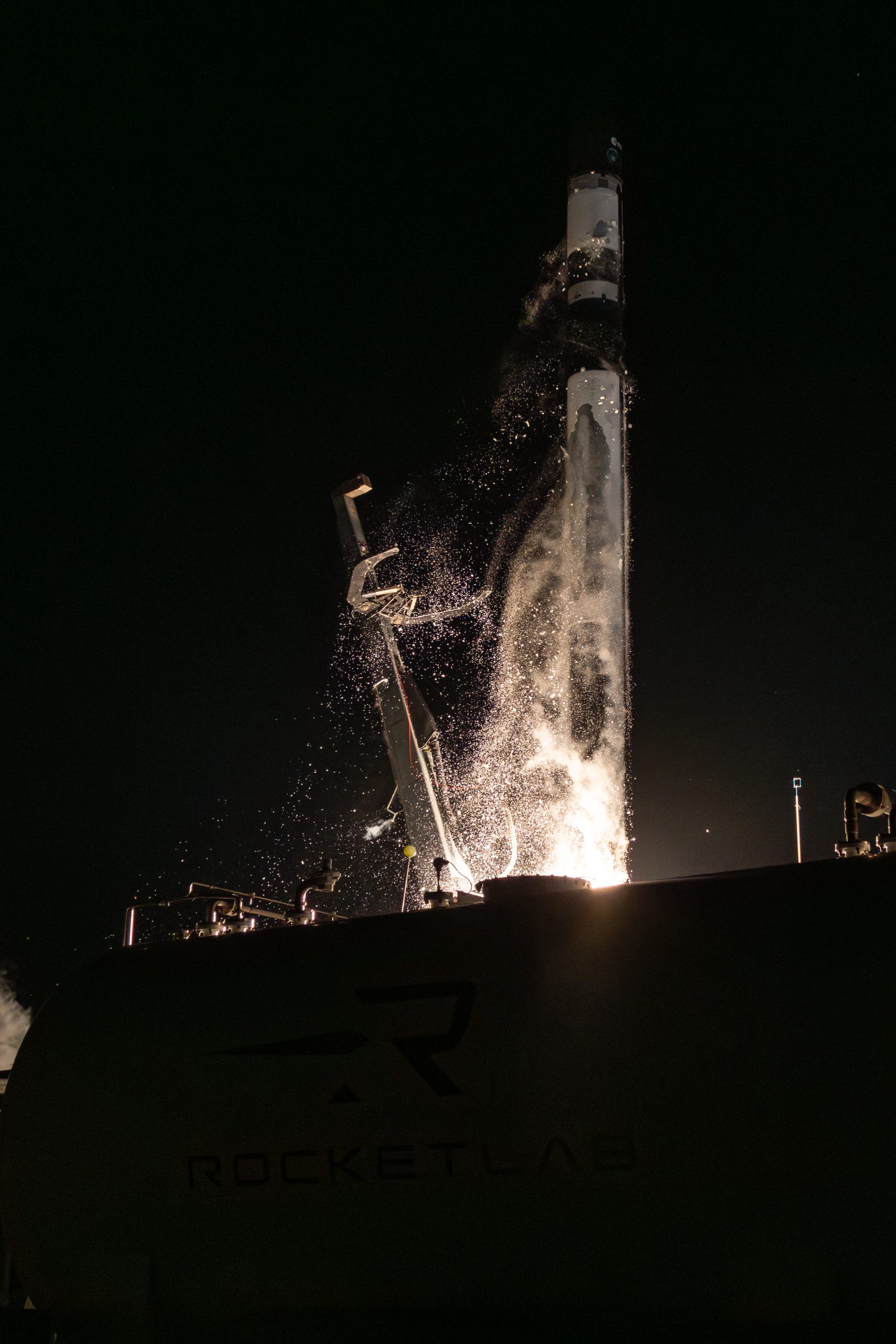
KENNEDY SPACE CENTER, Fla. — SpaceX launched the latest in its series of dedicated rideshare missions March 30, delivering more than 100 payloads to sun-synchronous orbit.
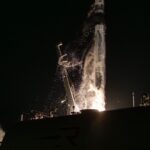
A Falcon 9 lifted off from Vandenberg Space Force Base in California at 7:02 a.m. Eastern on the Transporter-16 mission. SpaceX announced two and a half hours later that it completed all the deployments of payloads on the rocket’s upper stage.
The rocket carried 119 payloads, which included both satellites directly deployed from the Falcon 9 as well as hosted payloads and tugs that will later deploy satellites.
The largest payload on Transporter-16 was Gravitas from K2 Space. The spacecraft, flying a demonstration mission funded by the U.S. Space Force, is the first in the company’s “Mega class” of satellites producing 20 kilowatts of power. The company raised $250 million in December to scale up production of large spacecraft, including for satellite operator SES.
As with previous rideshare missions, Transporter-16 included a mix of returning and new customers. Companies such as Capella Space, HawkEye 360, Iceye, Satellogic, Spire and Unseenlabs augmented their constellations with spacecraft on the mission.
SatVu, a British company developing thermal infrared imaging technologies, flew its HotSat-2 on the mission, replacing its initial HotSat-1 spacecraft that failed six months after launch. Sierra Nevada Corp. launched three of its Vindlér radiofrequency-intelligence spacecraft built by Muon Space.
The launch included several orbital transfer vehicles carrying satellites or hosted payloads. Momentus, which had not launched its Vigoride tug since 2023, launched Vigoride-7 with 10 demonstration payloads. D-Orbit launched its latest Ion vehicle, while Exotrail launched its second spacevan vehicle.
The combination of low-cost SpaceX rideshare missions with orbital transfer vehicles, or OTVs, at one time appeared to threaten the business case for small launch vehicles. While SpaceX Transporter and Bandwagon missions go to sun-synchronous (SSO) or mid-inclination orbits, respectively, orbital transfer vehicles offered, in theory, “last-mile” services to take satellites to their preferred orbits.
However, demand for transfer vehicles has not materialized as once expected. “I think the market has spoken,” said Brian Rogers, vice president of global launch services at Rocket Lab, which operates the Electron small launch vehicle.
He noted during a Satellite 2026 panel March 25 that with orbital transfer vehicles that can be accommodated on Transporter missions, using a common form factor known as an ESPA ring, “you get, at best, one degree of inclination change.”
“It’s not the type of thing where you’re going to launch into SSO and then be able to swing over to mid-inclination,” he said. “It doesn’t add capability, and the price is still something equivalent to just buying a dedicated small launch.”
Adam Oakes, vice president of launch at Firefly Aerospace, agreed, but said there may be some specific use cases for OTVs, such as going from low Earth orbit to medium Earth orbit or interplanetary missions.
“I don’t think there’s going to be a world where there’s 14 OTV manufacturers,” he said on the panel. “I think that’s a really complicated logistics model.”
“We’ve heard forever that the next OTV company was coming for small launch,” Rogers concluded. “It’s just not materialized because the economics don’t work out with the physics.”










Related Posts
Stay Informed With the Latest & Most Important News
Previous Post
Next Post

Advertisement
-
 01Two Black Holes Observed Circling Each Other for the First Time
 -
 02From Polymerization-Enabled Folding and Assembly to Chemical Evolution: Key Processes for Emergence of Functional Polymers in the Origin of Life
 -
 03Astronomy 101: From the Sun and Moon to Wormholes and Warp Drive, Key Theories, Discoveries, and Facts about the Universe (The Adams 101 Series)
 -
 04True Anomaly hires former York Space executive as chief operating officer
 -
 05Φsat-2 begins science phase for AI Earth images
 -
 06Hurricane forecasters are losing 3 key satellites ahead of peak storm season − a meteorologist explains why it matters
 -
 07Binary star systems are complex astronomical objects − a new AI approach could pin down their properties quickly