
Now Reading: China targets 140 launches in 2026 amid commercial space surge
-
01
China targets 140 launches in 2026 amid commercial space surge


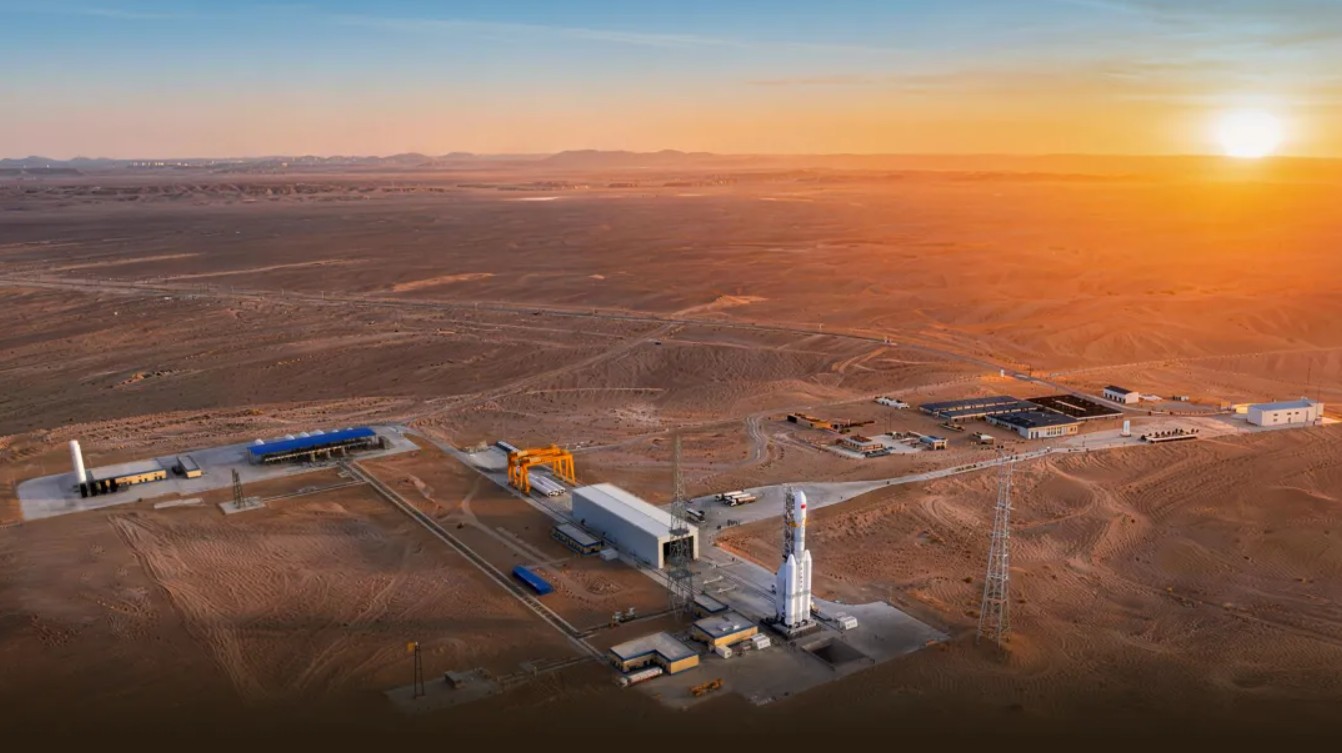

HELSINKI — China plans to conduct around 140 orbital launches this year, according to a commercial launch executive, marking a sharp acceleration in the country’s launch cadence.
Yang Yiqiang, founder and chairperson of CAS Space, said China’s launches are expected to reach around 140 in 2026, according to the Chinese-language 21st Century Business Herald.
China conducted a national record 92 orbital launches in 2025, spread across roughly two dozen vehicle families operated by state-owned enterprises and commercial startups. Reaching 140 launches this year would represent an increase of 52 percent year on year. This would follow a 35 percent increase from 68 launches in 2024 to 92 in 2025, further highlighting China’s acceleration.
The United States conducted 193 orbital launch attempts in 2025, according to a SpaceNews analysis, including 165 Falcon 9 missions, more than the rest of the world combined. Starlink is currently the single largest customer for the Falcon 9.
Yang’s comments were made at a provincial industry and policy forum in February. CAS Space successfully completed the first launch of its kerosene-liquid oxygen Kinetica-2 rocket March 30, sending three spacecraft, including a prototype freighter, into orbit. The company plans around 13 launches this year, including Kinetica-1 solid rocket and further Kinetica-2 launches, with the latter to include constellation launches.
The rapid acceleration in China’s launch cadence is being facilitated by the growth of its space launch infrastructure at sites including Jiuquan, which now includes a commercial innovation test zone, commercial launch pads on Hainan island near the national Wenchang spaceport, and the expansion of facilities at a coastal maritime launch complex in Haiyang, Shandong province. Further initiatives are at various levels of planning.
There is also strong growth of launch companies and a push for reusable launch, including early movers such as Landspace, iSpace, Space Pioneer, CAS Space and Galactic Energy, and early-stage entrants planning Starship-like launchers. There is also an ongoing expansion of the state-owned Long March series with new reusable rockets.
Policy-driven goals
Yang is also reported as saying that, in the long-term, China’s launches of large, liquid propellant rockets should be no fewer than 100 per year, and that the number of satellites launched annually should reach at least 2,000 to meet the needs of the development of the industry.
Such needs refer indirectly to the Guowang and Thousand Sails (Qianfan) megaconstellations, with plans for even larger on-orbit projects. China needs to meet deadlines for international filings related to these constellations, requiring a rapid acceleration in launch.
China has also signaled strong policy support for commercial space and satellite internet, with commercial space recently being elevated to a “pillar industry.” This has also meant a subsequent influx of capital into launch, satellite manufacturing and required subsystems such as optical communications.
The country also recently introduced the concept of “space+”, which envisions space treated less as a separate, standalone sector, and more as an enabling infrastructure to be integrated with other economic and strategic domains, highlighting space as a national priority.
In this context, comments from Yang thus appear to be projections and related to policy-driven targets from an industry insider, rather than the hopes of a leader of a commercial launch firm.
Meanwhile, the growth of commercial space continues apace in China, with Nebula-1 and Tianlong-3 rockets expected to make debut flights in the coming days, and provincial and municipal governments continuing to roll out policies to attract and incubate space companies and establish space clusters, and even the establishment of further spaceports.
The city of Ningbo, which signaled plans for a commercial spaceport as early as 2021, has now committed to establishing a commercial aerospace industrial base, opening up bidding for its first phase, according to a March 30 report on the municipal government website. Xichang, already home to a national inland spaceport in southwest China, is also planning a commercial expansion, while another spaceport project is being considered at the coastal city of Yangjiang in Guangdong as part of wider provincial space initiatives.










Related Posts


Stay Informed With the Latest & Most Important News
Previous Post
Next Post



Advertisement
-
 01Two Black Holes Observed Circling Each Other for the First Time
 -
 02From Polymerization-Enabled Folding and Assembly to Chemical Evolution: Key Processes for Emergence of Functional Polymers in the Origin of Life
 -
 03Astronomy 101: From the Sun and Moon to Wormholes and Warp Drive, Key Theories, Discoveries, and Facts about the Universe (The Adams 101 Series)
 -
 04True Anomaly hires former York Space executive as chief operating officer
 -
 05Φsat-2 begins science phase for AI Earth images
 -
 06Hurricane forecasters are losing 3 key satellites ahead of peak storm season − a meteorologist explains why it matters
 -
 07Binary star systems are complex astronomical objects − a new AI approach could pin down their properties quickly