
Now Reading: Astrobiology Early Career Opportunities: March 2026 Digest
-
01
Astrobiology Early Career Opportunities: March 2026 Digest


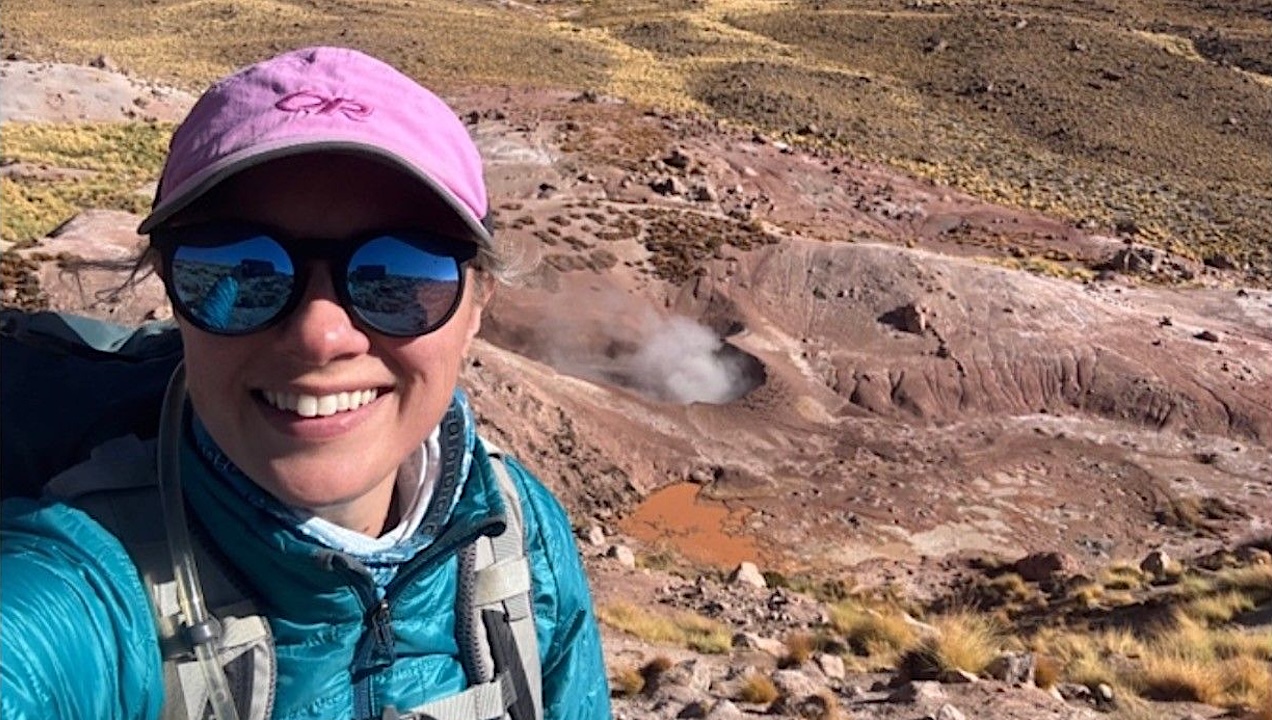
Scouting hot springs in the El Tatio Geyser Field in Northern Chile with funds from a NASA Early Career Collaboration Award. Sampling was performed with permission of the Toconce and Caspana communities. –Carolynn Harris via NASA.gov
NASA Dragonfly Guest Investigator Program
Application Deadline: May 29, 2026
Applications are currently being accepted for Cohort 7 of the Dragonfly Mission’s Guest Investigator Program. Over a two-year period, students will be mentored by members of the Dragonfly team for 3.6 months per year on projects relevant to Saturn’s moon Titan. These research experiences are equivalent to two back-to-back summer internships.
Please encourage eligible graduate students in your networks, including graduating seniors entering M.S. or PhD programs in Fall 2026, to apply. We especially encourage students who are not majoring in planetary science or the geosciences, and who attend colleges/universities that do not have a history of receiving funding from, or interacting with, NASA’s Planetary Science Division to apply.
More information on eligibility, this year’s projects, and how to apply, can be found on the Dragonfly Student Opportunities page.
Astrobiology Graduate Conference (AbGradCon)
Targeted Date: September 14-18, 2026
Planning for the Astrobiology Graduate Conference (AbGradCon) is underway! The currently targeted dates are September 14–18, 2026, with the location to be determined. AbGradCon is a conference aimed at early-career astrobiologists, run by early-career astrobiologists, and is a great way to connect with your peers, present your work, and build your professional network in a low-stress, encouraging environment. You can sign up to be notified when the conference is fully announced and when abstract submission and registration open.
Astrobiology NASA Postdoctoral Program (NPP)
Application Deadline: April 2, 2026
The NASA Astrobiology Program element of the NASA Postdoctoral Program (NPP) provides opportunities for 2-year fellowships for Ph.D. scientists and engineers to develop and propose their own research projects aligned with the goals of the NASA Astrobiology Program.
For additional information about the program see the NPP website.
2026 International Summer School in Astrobiology
Focus: “Searching for extraterrestrial life: challenges, methods and instruments”
Dates: June 29 to July 3, 2026
Application Deadline: April 10, 2026
The Josep Comas i Solà International Summer School in Astrobiology is held annually at the Palacio de la Magdalena in Santander, Spain. It is a well-established, week-long school for astrobiology graduate students and postdoctoral fellows. The school provides lectures from international experts, student projects and presentations, a whole-day field excursion to a nearby site of astrobiological interest, and cultural activities provided by the hosting university. This program forges new relationships and helps build international collaboration in astrobiology.
The Summer School is co-directed by the NASA Astrobiology Program and the Centro de Astrobiología (CAB), with support from INTA-CSIC, at the Universidad Internacional Menéndez Pelayo (UIMP), the Instituto Nacional de Técnica Aeroespacial (INTA) and the European Space Agency (ESA) Academy. The school is also a forum for meeting and promoting the ever-necessary transatlantic dialogue.
The NASA Astrobiology Program will provide funding for selected students for registration and room and board as well as airfare up to $2K per student. Other expenses are the responsibility of the student/advisor.
For more information and applications, click here.
NASA Astrobiology Early Career Collaboration Awards
Application Deadline: April 15, 2026
The ECCA offers research-related travel support for undergraduate and graduate students, postdocs, and junior scientists. Applicants are encouraged to use these resources to circulate among two or more NASA Astrobiology-supported research programs, or between groups which are relevant to astrobiology-supported missions. However, any travel that is critical for the applicant’s research will be considered. Travelers must be formally affiliated with a U.S. institution. Requests for travel expenses are limited to $5,000.
For more information and applications, click here.










Related Posts
Stay Informed With the Latest & Most Important News

Advertisement
-
 01Two Black Holes Observed Circling Each Other for the First Time
 -
 02From Polymerization-Enabled Folding and Assembly to Chemical Evolution: Key Processes for Emergence of Functional Polymers in the Origin of Life
 -
 03Astronomy 101: From the Sun and Moon to Wormholes and Warp Drive, Key Theories, Discoveries, and Facts about the Universe (The Adams 101 Series)
 -
 04True Anomaly hires former York Space executive as chief operating officer
 -
 05Φsat-2 begins science phase for AI Earth images
 -
 06Hurricane forecasters are losing 3 key satellites ahead of peak storm season − a meteorologist explains why it matters
 -
 07Binary star systems are complex astronomical objects − a new AI approach could pin down their properties quickly