
Now Reading: Pentagon awards Raytheon $45 million for GPS ground system as program future is reassessed
-
01
Pentagon awards Raytheon $45 million for GPS ground system as program future is reassessed

Pentagon awards Raytheon $45 million for GPS ground system as program future is reassessed

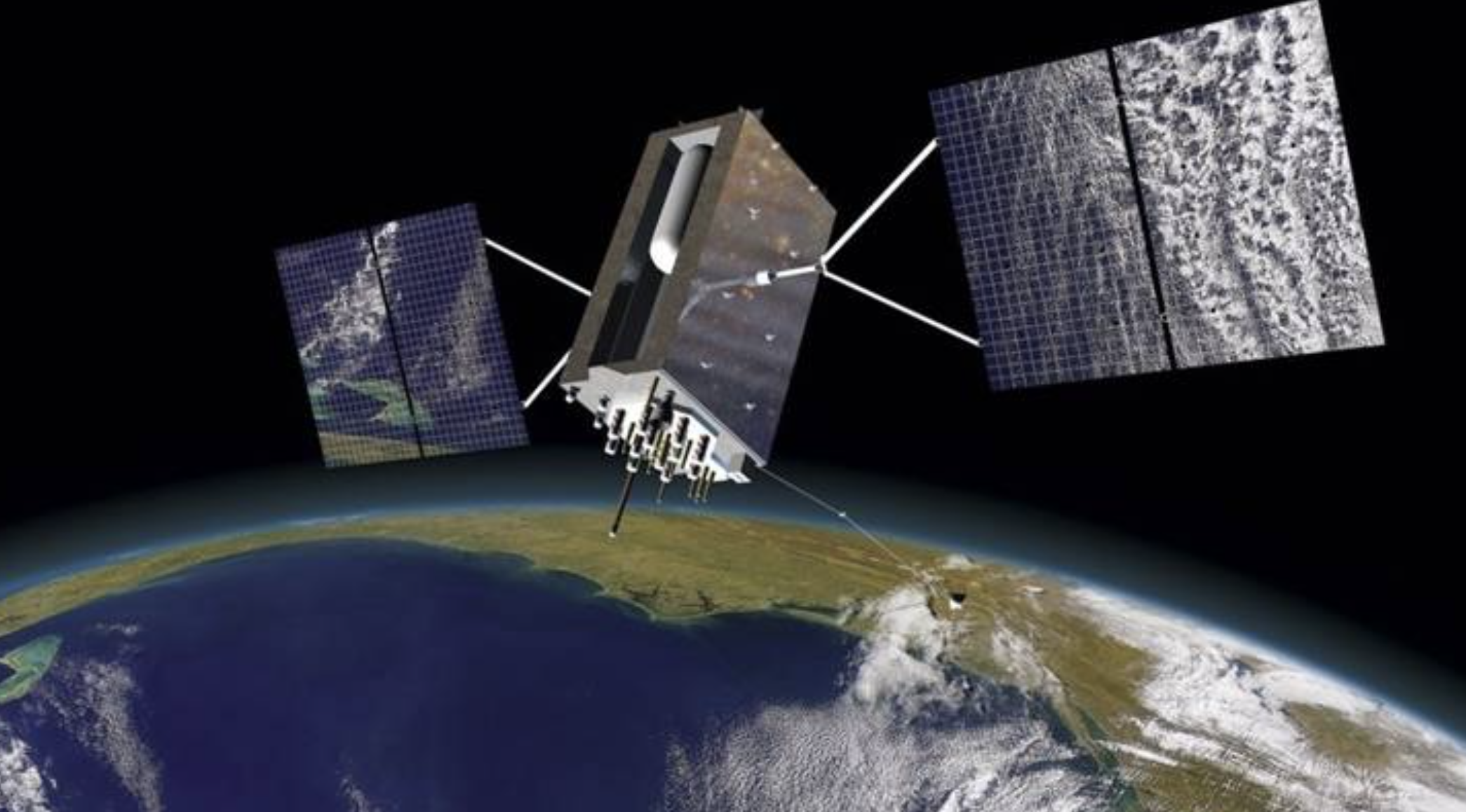

WASHINGTON — The Pentagon awarded RTX a $45.3 million contract modification to support U.S. military GPS satellite ground operations, even as officials weigh scaling back the troubled Next Generation Operational Control System program known as OCX.
“The modification will ensure the U.S. government can launch, checkout, and maintain GPS space vehicles, including SV 10 and future satellites,” a spokesperson for the U.S. Space Force said in a statement. SV-10, the 10th satellite in the GPS III constellation, is scheduled for launch later this month.
The contract modification, according to the announcement, is an “unpriced change order,” allowing work to proceed before final costs are negotiated. The modification runs for one year.
The contract comes amid indications the Defense Department does not plan to continue full development of OCX after years of delays and rising costs. Instead, officials are considering integrating portions of the Raytheon-developed software into the existing GPS ground system, known as the Architecture Evolution Plan, or AEP.
An unpriced change order authorizes a contractor to begin work before the government and contractor finalize the cost, typically used for urgent or narrowly defined tasks. In this case, the Pentagon is limiting Raytheon’s role to near-term support such as launch and early orbit operations, while continuing to reassess the broader OCX program.
The latest award would exclude further software fixes, tests and transition-to-operations work tied to OCX, according to officials familiar with the contract structure. Instead, it gives the government flexibility to negotiate how elements of OCX could be incorporated into AEP.
To date, the Pentagon has awarded Raytheon nearly $4.6 billion for OCX development over roughly 15 years. The program was originally intended to replace legacy ground systems and provide enhanced cybersecurity and support for modernized GPS signals.
Legacy system gains traction
Delays in OCX led the Air Force in 2016 to hire Lockheed Martin to upgrade AEP so it could operate newer GPS III satellites. Initially conceived as a stopgap, AEP has since evolved into a viable long-term alternative as improvements accumulated.
An early version of OCX is already used for launch and early orbit operations for GPS III satellites but does not provide full command-and-control capabilities. Officials are now evaluating whether to harvest usable components of OCX and integrate them into the AEP baseline rather than continue full-scale development of the new system.
Senior leaders acknowledge challenges
Chief of Space Operations Chance Saltzman said the Department of the Air Force and the Office of the Secretary of Defense are reviewing options.
“We have a serious issue, and that serious issue is being addressed,” Saltzman said April 1 at the Mitchell Institute’s Spacepower Conference. “We’re looking at the existing systems. We’re looking at the future systems, how far do we go with it.”
As more GPS III and future satellites are launched, he added, upgrades to ground systems will be required regardless of the path forward.










Related Posts

Stay Informed With the Latest & Most Important News
Previous Post
Next Post





Advertisement
-
 01Two Black Holes Observed Circling Each Other for the First Time
 -
 02From Polymerization-Enabled Folding and Assembly to Chemical Evolution: Key Processes for Emergence of Functional Polymers in the Origin of Life
 -
 03Astronomy 101: From the Sun and Moon to Wormholes and Warp Drive, Key Theories, Discoveries, and Facts about the Universe (The Adams 101 Series)
 -
 04True Anomaly hires former York Space executive as chief operating officer
 -
 05Φsat-2 begins science phase for AI Earth images
 -
 06Hurricane forecasters are losing 3 key satellites ahead of peak storm season − a meteorologist explains why it matters
 -
 07Binary star systems are complex astronomical objects − a new AI approach could pin down their properties quickly