
Now Reading: NASA’s Artemis 2 astronauts just flew by the moon. Lunar scientists can’t wait for what’s next
-
01
NASA’s Artemis 2 astronauts just flew by the moon. Lunar scientists can’t wait for what’s next

NASA’s Artemis 2 astronauts just flew by the moon. Lunar scientists can’t wait for what’s next

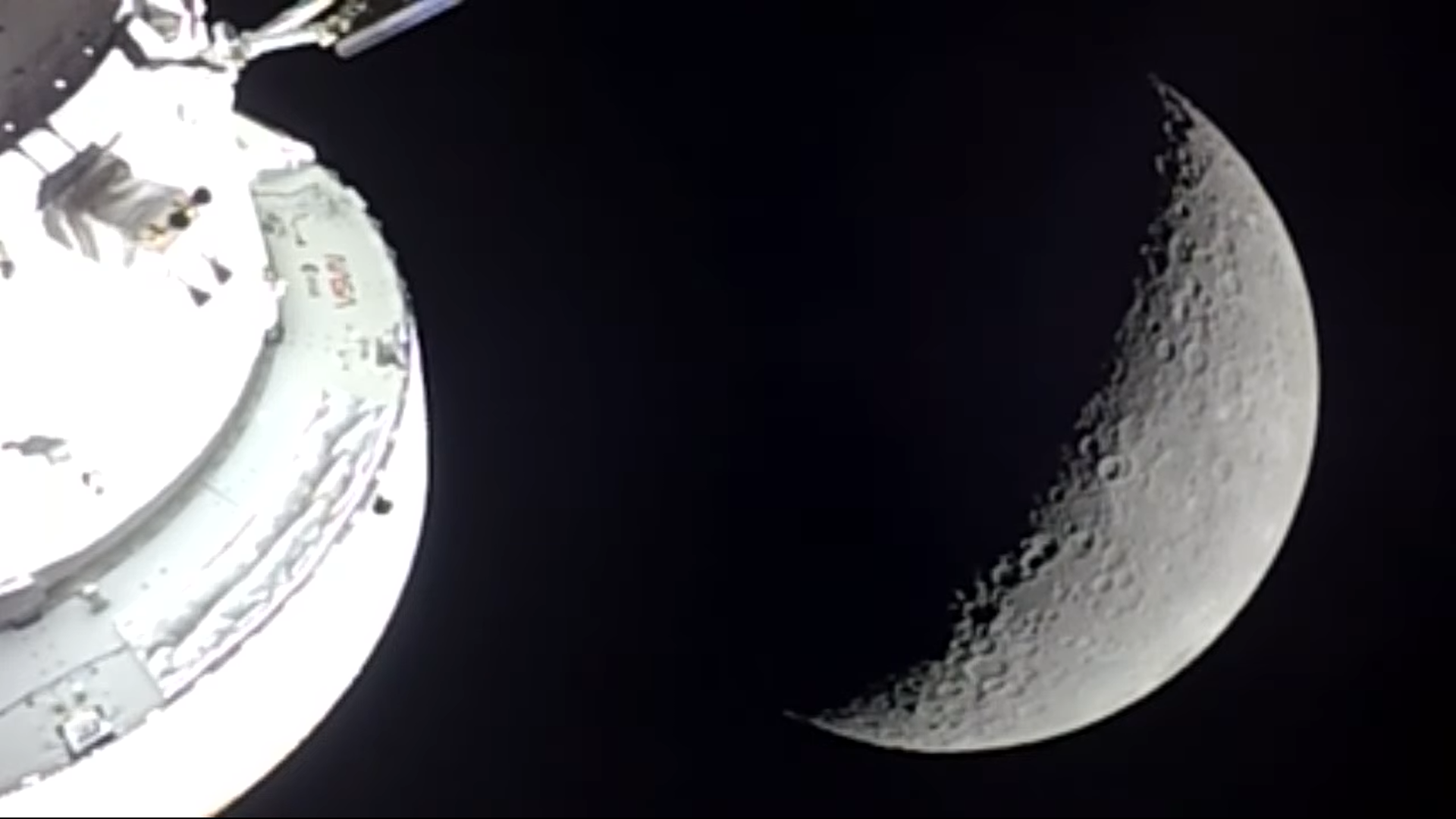
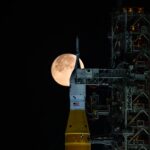
It was as though magic had showered across the world on April 1, 2026, when a quartet of daring astronauts lifted off from Earth in a little white capsule strapped to an enormously powerful rocket. Leaving behind a sendoff of roaring post-launch rumbles rivaled only by tears and cheers of joy, the sunrise-orange vessel pierced through a clear blue sky, beginning humanity’s long-awaited trip back to the moon.
Five days later, the adventurers — Christina Koch, Reid Wiseman, Victor Glover and Jeremy Hansen — woke up to a message from Apollo astronaut Jim Lovell. He’d recorded it before he died in August of last year: “Welcome to my old neighborhood.”

That moment marked the first time in over 50 years that humans have visited our planet’s very best friend, and the first time in history a woman, a non-American and a Black person were part of the endeavor. The last people to reach the moon were Apollo 17‘s Gene Cernan, Harrison Schmitt and Ronald Evans in 1972, who got there in a time before TikTok, virtual reality, iPhones, Wi-Fi or even DVD players existed. (Cernan and Schmitt walked on the lunar surface, while Evans circled above them in the mission’s command module.)
Naturally, this long lapse of lunar presence — despite our species’ continuous technological innovations — can feel a little ironic, but there are legitimate reasons why it took us so long to go back. And (ironically) the gap itself seems to have made revisiting our treasured gray rock so much more of a big deal. We’re finally back at the moon, and our generation can sort of relive the thrill that penetrated the 1960s and 1970s because it feels new — or, at least new enough. Moreover, if Apollo could accomplish what it did with only the tech available in its time, what can Artemis do now?
This exciting thought is especially potent for scientists who have dedicated their lives to studying the moon without ever knowing for sure they’d see us back there.
“I am part of a generation of lunar scientists, perhaps the majority of lunar scientists today, who were born after the Apollo missions had ended,” Jeffrey Andrews-Hanna, a lunar and planetary scientist at the University of Arizona, told Space.com. “For me, human exploration of the moon has always been an inspiring piece of history. Now, to see it unfolding before my eyes is incredibly exciting.”
It’s an awe that echoes the way academics felt about Apollo back in the day.
Alan Binder, for instance, a scientist from the University of Arizona’s Lunar and Planetary Laboratory, who was around to experience the Apollo years, said a professor at the time told his students they’d be doing their Ph.D. thesis about the moon.
“That’s what we believed. It was what we all wanted — some of us wanted to go to the moon, but we all wanted to study the moon and the planets. The whole world was listening,” he once said, according to a page on the University of Arizona’s website. “I have all these fantastic memories of Apollo and the men on the moon, and I envied them so much because I wanted to go. And I still want to go.”
These days, we can all go
Undoubtedly, science as a whole has exponentially improved over the last 50 years.
Nowadays, robotic surgery is commonplace in medicine, space observatories can churn out more data in one year than all of optical astronomy combined, billionaires can buy tickets to ride rockets and chatbots are smooth enough to function as friends, therapists and even, apparently, lovers (an unreal improvement from the days of SmarterChild in the early 2000s).
And now, we’ve all been to the moon in a way Apollo observers on Earth couldn’t.
Unlike during the Apollo years, people everywhere have been glued to their screens, monitoring the Artemis 2 crew’s trajectory literally in real time thanks to YouTube and 24/7 livestreams. Countless social media posts exude the sentiment that we should feel blessed that we’re witnessing a slice of history, and so many videos on TikTok can show you every single angle of the Artemis 2 rocket launch: from beaches on Earth and airplanes overhead, and even from the International Space Station. It’s a phenomenal time to be watching human spaceflight.
The astronauts benefit from this, too. They were allowed to bring their mobile phones and laptops into Artemis 2’s Orion spacecraft to snap personal photos, like once-in-a-lifetime shots looking back at Earth through the window.
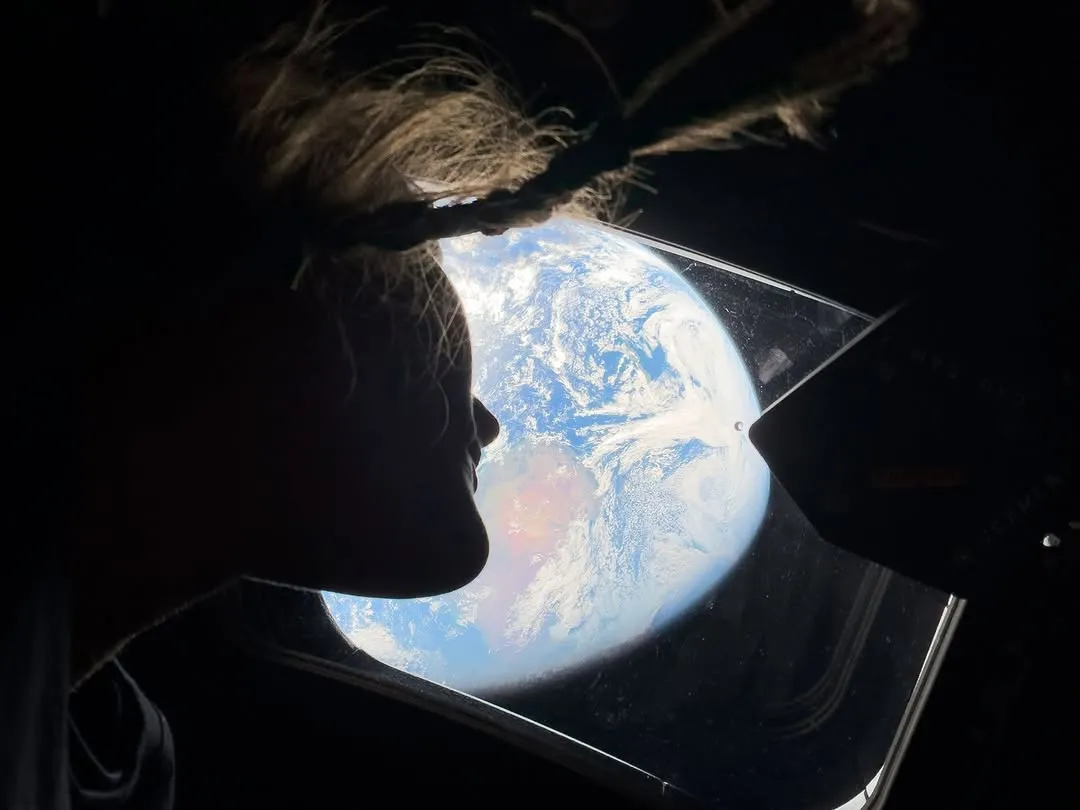

The Artemis 2 astronauts are also in charge of unique experiments like “organ-in-a-chip” thanks to modern medical advancements, have officially broken the human distance record set by Apollo 13 — and even have a toilet. That toilet has had issues during the mission, but even a half-functioning privy is better than Apollo’s bathroom situation, which was super unfortunate, to say the least. (And because Koch stepped up to make fixes to the Artemis 2 toilet, the mission notched another first: space plumber!)
And that’s not to mention breakthroughs that have been made concerning our overall knowledge of the moon. To put it lightly, we pretty much have 50 years’ worth of new things to look for, new theories to validate and new ideas to test out.
“On our end, we are building experimental facilities in our lab specifically to work on lunar science questions, so we can be active participants in these missions, not just observers of the data,” Dimitria Atri, a planetary scientist at New York University, told Space.com.


“The moon holds secrets that will help us understand planetary science at the most fundamental level. How rocky worlds form, evolve, and whether they can support life. Having humans return with modern instruments means access to a goldmine of data that robotic missions simply cannot match,” Atri said.
One small step
Most importantly, as every scientist I interviewed emphasized, having astronauts share the tides that robotic lunar orbiters have been surfing for years isn’t the only reason their hearts are fluttering about Artemis 2.
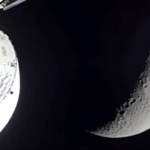
This mission actually won’t bring its crew onto the lunar surface, or even into lunar orbit for that matter. The flyby that occurred on Monday (April 6) was as close as these space explorers will get to the moon, but Artemis 2 is just one aspect of the whole Artemis program: NASA’s seriously ambitious project to eventually land humans on the moon and build moon bases and other lunar architecture, paving the way for crewed trips to the Red Planet someday.
You can think of Artemis as a giant blueprint with tons of gears meant to reignite the flame that went out at the end of the Apollo era.
For a quick recap: Artemis 1 already succeeded in 2022, sending an uncrewed Orion to lunar orbit and back as a proof of principle for Artemis 2. The current mission is also a test flight, putting Orion through its paces in deep space with astronauts on board for the first time.

“What excites me most scientifically is what a crewed mission enables that we can’t do otherwise: real-time decision making in the field, sample collection guided by trained human judgment, and the ability to respond to unexpected findings on the spot,” Atri said.
Artemis 3 will demonstrate docking between Orion and lunar landers in low Earth orbit, and Artemis 4 will bring that future hope into the present, seeing astronauts use whatever lander worked out best to touch down on the lunar surface.
“Apollo happened before I was born, and the idea that we will see humans on the moon within our lifetimes, with decades of advances in science and technology behind them, is remarkable,” Atri said.

Moon craters and moon bases
Andrews-Hanna is part of a research team that has been using data from robotic orbiters to analyze the oldest and largest confirmed impact crater in the entire solar system: the moon’s South Pole-Aitken Basin. The diameter of this impact site is over 1,550 miles (2,500 kilometers), which NASA compares to the distance from Waco, Texas to Washington, D.C. It’s also about 6 miles (10 km) deep. That’s comparable to the deepest part of Earth’s ocean, known as the Challenger Deep, which carves in about 6.86 miles (11 km).
“In a few years, humans will be standing on the rim of that basin, taking measurements that will show us what lies beneath it, and bring back rocks formed during the impact,” Andrews-Hanna said. “Everything will become much more real.”
I’ve also been told that NASA’s buzzing about moon bases in particular; one of the biggest draws of Artemis is that it aims to create a place for us to stay on the moon, in contrast to Apollo’s flags-and-footprints approach. Think outposts, scientific centers, maybe even launch pads that can serve as a cosmic layover for astronauts headed to Mars someday.
“For the first time in over 50 years, humanity can start planning for a more permanent presence on the moon, which will allow us to better understand our solar system, observe the universe and also exploit resources — minerals and energy — beyond our own planet,” Johan Robertsson, a geophysicist at ETH Zürich in Switzerland, told Space.com.
“Our research on subsurface imaging systems will be one of the key tools necessary to build the foundations for such a presence,” he added. “Whether it is using fiberoptic sensing to map geohazards or potential resources — ice — and accessible sub-surface structures — lava tubes — it all relies on geophysical techniques to provide subsurface images and maps.”
Artemis 2 astronauts will be great for some of that, seeing as how they’ve been guided by a ground team in taking pictures of ancient craters and lava flows — and on the note of future moon bases, the crew is also testing a variety of human responses to being in the environment of space and the moon.

The crew will, for instance, be exposed to radiation from the solar wind, which is made up of charged particles blasted from the sun that can damage hardware or hurt human bodies. Artemis 2 is actually measuring that radiation with six times more detail than Artemis 1 did, thanks to a contribution to the mission from Germany’s national space agency, known as DLR.
Furthermore, the crewmembers have been monitoring their own health throughout the mission, gathering data on sleep patterns, cardiovascular health, stress and immune function.
“The measurements that will be made and samples that will be collected by the Artemis missions will shed new light on the far side of the moon, and let us test and refine our theories for lunar evolution,” Andrews-Hanna said.

Modern space age means private money
It has to be mentioned that this mission will also allow NASA to test systems needed to take humans through cislunar space, which is the region beyond Earth orbit where gravity from both our planet and the moon impact a spacecraft to create a sort of “three-body problem” situation.
As more spacecraft are slated to start populating this area thanks to private companies launching their own satellites and landers (more on that shortly), resolving how to remain safe in cislunar space is top of mind.
“Artemis 2 is an exciting leap into the future, with a reflection upon the past glories of Apollo. New rockets, new astronaut capsule, advanced avionics, sophisticated computer technologies — all employed for humankind’s first expedition to the moon in the 21st century,” Jack Burns, a planetary scientist at the University of Colorado, Boulder, told Space.com.
Burns will be one person who benefits from Artemis 2’s measurements of cislunar space. He’s part of a collaboration working to plant radio telescopes on the moon — specifically the lunar far side, where the Artemis program is indeed headed to explore. The far side is attractive for many reasons, including the fact that it’s radio-quiet, meaning there would be little interference with scientific observations.
In 2024, Burns and his team managed to send up their first lunar radio telescope on Intuitive Machines’ Odysseus lander, the first private spacecraft to land on the moon, and collect their first moon-radio-astronomy data. (Burns’ team also put a project on another private lunar lander, Astrobotic’s Peregrine, but that probe failed and led to a very sad spacecraft story).

Another major contrast between Artemis and Apollo is that, during the Apollo program, commercial interests and private companies weren’t quite there yet when it comes to dabbling in space exploration. Over the last 50 years, there has been so much advancement in subjects like material science and orbital dynamics that established companies, startups and private institutions have been able to launch their own satellites and build their own rockets.
NASA has even developed its own Commercial Lunar Payload Services (CLPS) program, allowing private entities to buy space on rockets already headed to the moon. CLPS is a win-win for the agency because it can buy private landers to make the process of touching down on the moon cheaper and easier.
In fact, the Artemis 3 Earth orbit lander demonstration will test out two private lander prototypes, one from Blue Origin and one from SpaceX.
“Next year, we will launch the first radio telescope to the far side of the moon, called LuSEE-Night, on a Firefly Aerospace Blue Ghost-2 lander,” Burns said. “In the next decade, we are planning to place a 100,000 dipole antenna array on the lunar far side to further explore the Dark Ages and magnetic fields associated with potentially habitable exoplanets.”
“My 40-plus year effort to see radio telescopes on the moon is being realized as a result of the Artemis program,” he said.

The space explorers of Earth
On Dec. 24, 1968, Apollo 8 astronaut Bill Anders took a photo while sitting in a capsule orbiting the moon as our planet appeared to rise like the sun from across the horizon.
Today, this famous image, named “Earthrise,” is often credited as a key part of the push that gave rise to the environmental movement. He later said: “We came all this way to explore the moon, and the most important thing is that we discovered the Earth.”
With Artemis, it feels as though this rings true once again.
The moon is an anchor of sorts for us here on Earth. As the only cosmic object close enough to be viewed in detail with the unaided eye (but still far enough to remain untouchable, for the time being), it forces us to remember that other worlds do exist out there.
It hangs up there in the sky through our pain, through great celebrations, through tragic wars and through societal shifts. It was there before us and it will stay out there long after. It’ll always be studied, stared at, written about and treasured. It’ll always be waiting for another guest.
“I look up at the moon all the time,” Andrews-Hanna said, “excited by the fact that the things I am studying are up there visible to us on Earth, even if only from a distance of more than 200,000 miles.”

But most of all, the moon forces us to remember that, at the end of the day, we’re from Earth. It’s probably why the achievement of these four humans on Artemis 2 feels like an achievement for humanity and why everyone is so entranced watching them 24/7, myself included. They represent something unifying that perhaps we need more of.
“It’s not just a poster in the sky that goes by. It is a real place. And when we have that perspective, and we compare it to our home of the Earth, it just reminds us how much we have in common. Everything we need, the Earth provides, and that, in and of itself, is somewhat of a miracle, and one that you can’t truly know until you’ve had the perspective of the other,” Koch said in a broadcast on Monday evening.
“You look amazing; you look beautiful,” Victor Glover said in a video call with ABC News on Thursday night (April 2), referencing what it looks like to peek outside his spacecraft window. “No matter where you are from or what you look like, we’re all one people.”
On Monday, right after breaking the human-distance record while cruising around the far side of the moon, Artemis 2 astronaut Jeremy Hansen took a moment to tell Mission Control about some new lunar feature names that he and his crewmates came up with. They wanted to name one unnamed crater “Integrity,” the same name they gave their Orion spacecraft, and the other, a bright spot just on the border of the far and near sides of the moon, “Carroll.”
Carroll was Artemis 2 commander Reid Wiseman’s wife, a nurse who passed away in 2020 after a five-year-long battle with cancer.
“Reid, Victor and Christina and Jeremy, and all the great teams supporting you, good luck and Godspeed from all of us here on the good Earth,” Lovell said at the end of his congratulatory message from Earth.
It was a reference to the Christmas Eve message sent down to Earth from space during Apollo 8, which his crewmate Frank Borman ended by saying: “God bless all of you, all of you on the good Earth.”











Related Posts

Stay Informed With the Latest & Most Important News
Previous Post
Next Post



Advertisement
-
 01Two Black Holes Observed Circling Each Other for the First Time
 -
 02From Polymerization-Enabled Folding and Assembly to Chemical Evolution: Key Processes for Emergence of Functional Polymers in the Origin of Life
 -
 03Astronomy 101: From the Sun and Moon to Wormholes and Warp Drive, Key Theories, Discoveries, and Facts about the Universe (The Adams 101 Series)
 -
 04True Anomaly hires former York Space executive as chief operating officer
 -
 05Φsat-2 begins science phase for AI Earth images
 -
 06Hurricane forecasters are losing 3 key satellites ahead of peak storm season − a meteorologist explains why it matters
 -
 07Binary star systems are complex astronomical objects − a new AI approach could pin down their properties quickly