
Now Reading: Space security moves to forefront as threats to satellites spread
-
01
Space security moves to forefront as threats to satellites spread


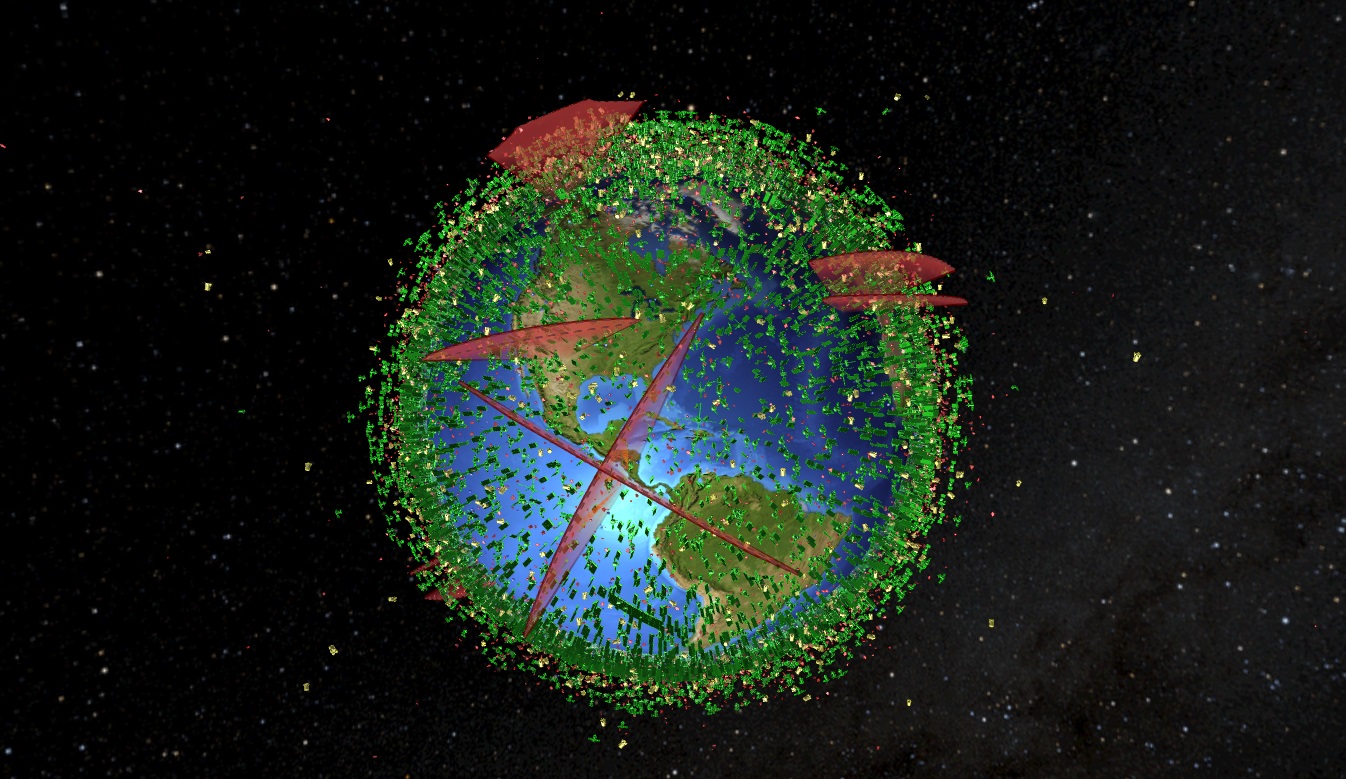

WASHINGTON — Space security is shifting from a niche arms-control concern to a central policy issue as reliance on satellites deepens and the tools to disrupt them proliferate, according to a new report from the Secure World Foundation.
The group’s annual “Global Counterspace Capabilities” report, widely used as a baseline open-source assessment, finds that interference with space systems now carries immediate military, economic and political consequences. At the same time, more countries are fielding technologies that can disrupt, degrade or disable satellites.
The report categorizes counterspace capabilities into five areas: direct-ascent weapons such as ground-launched missiles; co-orbital systems that maneuver near other satellites; electronic warfare tools including jamming and spoofing; directed-energy systems such as lasers; and cyber capabilities.
“The actual use of offensive counterspace capabilities could have long-lasting consequences for humanity,” the report warns, citing the risk of losing critical services and creating persistent debris fields.
Over the past decade, concerns have intensified among governments about dependence on vulnerable space infrastructure and the spread of capabilities that could be used to disrupt it, the report says. That dynamic has pushed space into mainstream defense planning, with some countries openly discussing the prospect that future conflicts on Earth could extend into orbit.
Discussions on counterspace technologies in years past focused largely on the United States, China and Russia. The latest SWF analysis highlights a broader field of actors. A growing number of countries are investing in technologies that support space security missions, including electronic warfare systems, cyber tools and satellites capable of maneuvering in orbit. These capabilities are typically framed as defensive, intended to protect national assets and improve awareness of activity in space, but they also serve a deterrent function by signaling an ability to respond to interference.
The report also points to emerging interest in more advanced systems, including reusable spaceplanes and so-called “bodyguard” satellites.
The U.S. military’s X-37B has set the benchmark for spaceplanes, demonstrating long-duration missions with the ability to carry payloads and return to Earth for reuse. China has conducted multiple flights of its own experimental spaceplane, suggesting it is developing a comparable capability. India, France and Germany are also pursuing similar concepts.
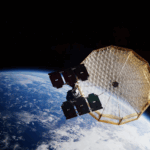
Separately, several countries are advancing satellites designed to operate in close proximity to high-value spacecraft. Often described as “bodyguards,” these systems build on rendezvous and proximity operations technologies originally developed for servicing and inspection. Japan and Germany are among those working on such capabilities, which can be used to monitor nearby objects or complicate access to sensitive assets.
These trends underscore countries’ pursuits of persistent, maneuverable and dual-use systems in orbit that blur the line between defensive measures and potential counterspace operations.










Related Posts

Stay Informed With the Latest & Most Important News
Previous Post
Next Post




Advertisement
-
 01Two Black Holes Observed Circling Each Other for the First Time
 -
 02From Polymerization-Enabled Folding and Assembly to Chemical Evolution: Key Processes for Emergence of Functional Polymers in the Origin of Life
 -
 03Astronomy 101: From the Sun and Moon to Wormholes and Warp Drive, Key Theories, Discoveries, and Facts about the Universe (The Adams 101 Series)
 -
 04True Anomaly hires former York Space executive as chief operating officer
 -
 05Φsat-2 begins science phase for AI Earth images
 -
 06Hurricane forecasters are losing 3 key satellites ahead of peak storm season − a meteorologist explains why it matters
 -
 07Binary star systems are complex astronomical objects − a new AI approach could pin down their properties quickly