
Now Reading: Space Sovereignty Is No Longer Optional
-
01
Space Sovereignty Is No Longer Optional



A Critical Infrastructure Under Strain
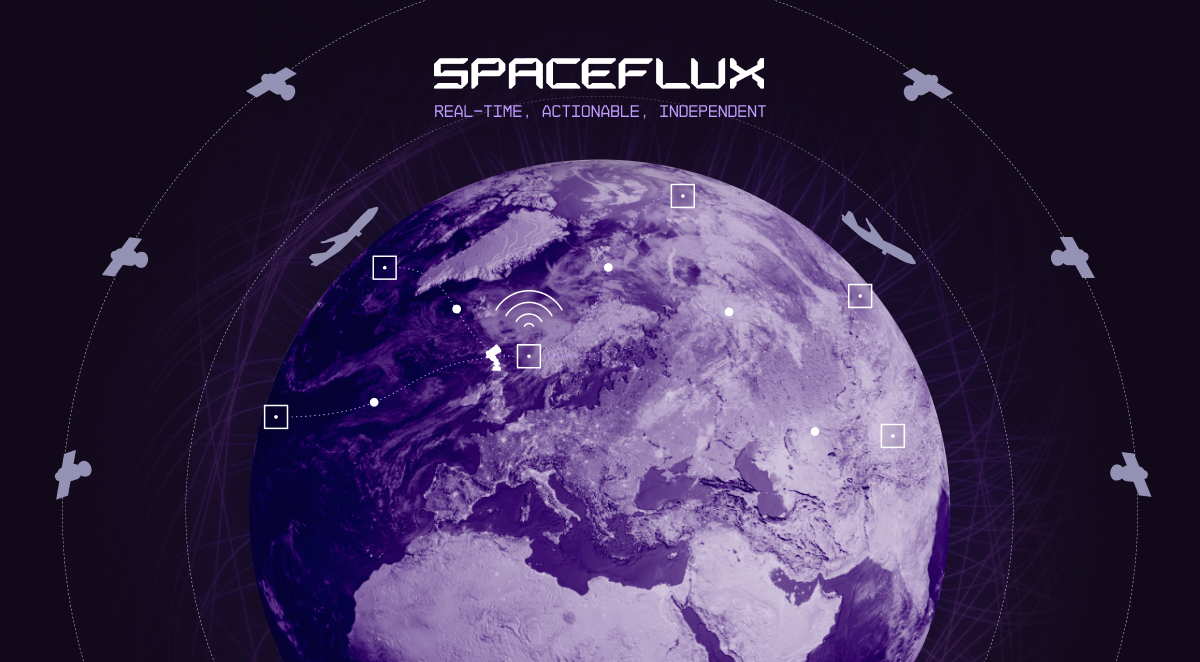
Space has quietly become the infrastructure beneath modern life. From financial transactions synchronised by satellite timing to military operations reliant on secure communications, the global economy now depends on assets in orbit. Yet the system that keeps those assets safe is entering a period of profound instability. At Spaceflux, we see this shift every day: orbital congestion is accelerating, geopolitical tensions are rising, and the long-standing assumption that space situational awareness can be relied upon as a free, globally accessible service is breaking down.
This is not an abstract concern. It is a structural change in how space is governed and secured. Spaceflux was founded to address precisely this moment: delivering sovereign, end-to-end space domain awareness capability that enables nations to track, analyse and interpret activity in orbit independently, while contributing to a more resilient allied system. The need for that capability is no longer theoretical. It is immediate.
For decades, the architecture of global space safety has rested on a narrow base. The United States maintained the most comprehensive catalogue of objects in orbit and shared collision warnings with operators worldwide. It was an arrangement born of a different era, when the number of satellites was limited and the strategic environment comparatively benign. It also reflected a political choice: to treat space safety as a public good.
That era is ending. Low Earth Orbit now hosts more than 10,000 active satellites, with tens of thousands more planned. The debris environment is worsening, increasing the probability of mission-ending collisions. At the same time, space has become an operational domain in which states are actively developing capabilities to disrupt or degrade orbital systems. The notion that a single country can indefinitely underpin global space safety, at no cost and without strategic consequence, is no longer credible.
Policy signals from Washington have made that clear. The revision of U.S. space policy in late 2025 removed the expectation that basic space situational awareness services would remain free. This was less a sudden shift than a formal acknowledgement of reality. Maintaining accurate, timely tracking data for an increasingly crowded and contested orbital environment is expensive, and the burden is unlikely to be carried by one nation alone.
Sovereignty, Capability and the New Space Reality
For allied countries, particularly those often described as middle powers, this creates an uncomfortable dilemma. These are nations with meaningful space assets and growing security responsibilities, but without the scale to dictate global standards. For them, reliance on externally provided data is no longer simply a matter of convenience; it is a strategic vulnerability.
The argument for sovereign capability in space domain awareness is therefore gaining traction. It is sometimes framed narrowly as a defence issue, but that misses the broader point. Independent tracking and analysis matter just as much to civil space agencies, commercial satellite operators, insurers and regulators. The ability to verify orbital data, rather than simply receive it, underpins everything from collision avoidance to diplomatic credibility in attributing hostile acts in space.
Sovereignty in this context does not mean isolation. It means independence of observation and the ability to operate without relying on another nation’s systems as a prerequisite. It also means being able to contribute meaningfully to shared allied awareness, rather than remaining a passive consumer of it.
What has changed most significantly in recent years is the nature of the problem itself. Space situational awareness, in its traditional form, was about knowing where objects were. Today’s operational requirements are far more demanding. Commanders and operators need to understand what satellites are doing, whether their behaviour is consistent with stated missions, and how that behaviour is changing over time.
This is the shift from situational awareness to domain awareness, from tracking positions to interpreting intent.
Meeting that requirement demands more than telescopes. It requires a layered architecture: sensors to collect data, secure platforms to process and fuse it, and advanced analytics to turn it into actionable intelligence. Building only part of that stack leaves nations exposed. True independence depends on controlling the system end to end, something we have prioritised from the outset at Spaceflux.
There is also a collective dimension that complicates the picture. Space domain awareness is inherently global. No single nation, however capable, can achieve complete coverage on its own. This has led to the emergence of a distributed model, particularly within NATO and Five Eyes frameworks, in which multiple countries operate interoperable but sovereign systems. The logic is straightforward. A network of independently operated capabilities is more resilient than a centralised one, harder to disrupt, and better able to withstand both technical failure and deliberate attack.
In this model, contribution matters as much as access. Nations that invest in their own sensors and analytics bring tangible value to the alliance. Those that do not remain dependent on the data of others.
A Narrowing Window for Action
Until recently, the cost and complexity of building such capability placed it beyond the reach of most countries. That constraint is beginning to loosen. Commercial providers now offer integrated, full-stack solutions that can be deployed within sovereign national infrastructure. This changes the calculus. Governments no longer need to build everything from first principles. Instead, they can adopt and adapt existing systems, scaling their capability over time.
At Spaceflux, this is exactly the approach we have taken. Our model combines a global network of optical sensors with a secure data platform designed for national deployment and an AI-driven analytics layer capable of detecting anomalies, tracking behavioural patterns and predicting satellite activity. These systems are already operational within UK government programmes, supporting both civil and defence users.
The approach is modular. Nations can begin with access to global tracking data and basic services, then build incrementally towards a fully sovereign system, complete with national sensors and real-time intelligence capabilities.
But time is not on their side.
The orbital environment is more congested than at any point in history. Strategic competition is extending into space. And the institutional arrangements that once underpinned global space safety are evolving in ways that reduce predictability and increase cost.
In such conditions, dependence carries risk. The ability to see, understand and interpret activity in orbit is no longer a niche technical function; it is a cornerstone of national security and economic stability.
The transition now underway is not simply technological. It is structural. Space is moving from a model of centralised provision to one of distributed responsibility.
The nations that recognise this, and invest accordingly, will shape the emerging architecture of space governance. They will move from dependence to contribution, from consuming data to helping define the shared picture of space.
Those that do not will find themselves reliant on systems they do not control, in a domain where control is increasingly synonymous with security.
Written by Kerri Mertz, Director of Business Development Spaceflux










Related Posts
Stay Informed With the Latest & Most Important News
Previous Post
Next Post
Previous Post

Next Post



Advertisement
-
 01Two Black Holes Observed Circling Each Other for the First Time
 -
 02From Polymerization-Enabled Folding and Assembly to Chemical Evolution: Key Processes for Emergence of Functional Polymers in the Origin of Life
 -
 03Astronomy 101: From the Sun and Moon to Wormholes and Warp Drive, Key Theories, Discoveries, and Facts about the Universe (The Adams 101 Series)
 -
 04True Anomaly hires former York Space executive as chief operating officer
 -
 05Φsat-2 begins science phase for AI Earth images
 -
 06Hurricane forecasters are losing 3 key satellites ahead of peak storm season − a meteorologist explains why it matters
 -
 07Binary star systems are complex astronomical objects − a new AI approach could pin down their properties quickly