
Now Reading: LeoLabs debuts space monitoring tool for military users
-
01
LeoLabs debuts space monitoring tool for military users


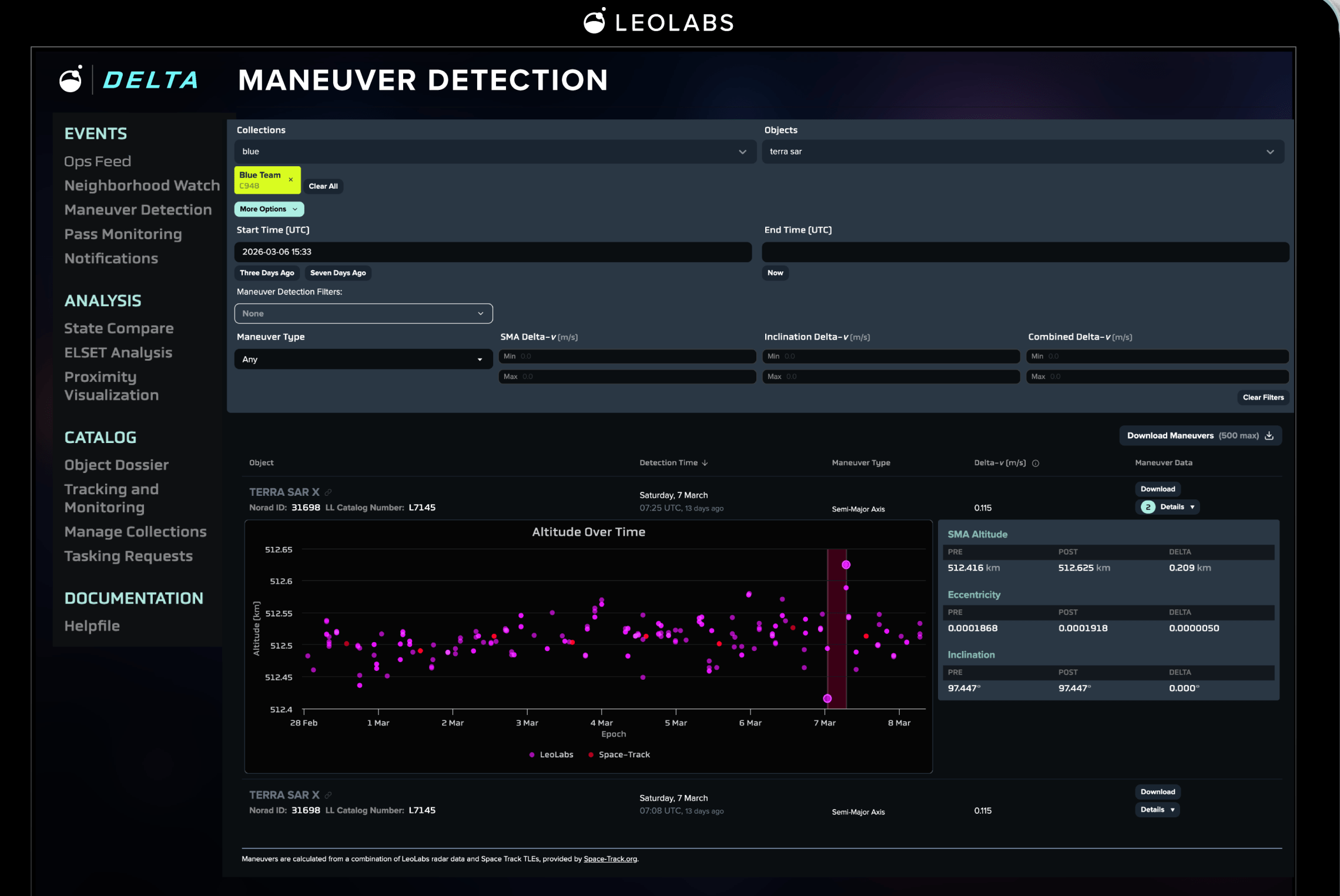

WASHINGTON — LeoLabs is expanding beyond tracking satellites and debris into identifying potential threats in orbit.
The Menlo Park, California-based company said several allied countries in Europe and Asia are using its new “Delta” system, a software platform designed to detect and characterize unusual satellite behavior. The tool is aimed at military and government operators managing spacecraft in low Earth orbit, where congestion and geopolitical competition are both increasing.
“Built for the next era of space security, this system will enable operators to defend their assets against evolving threats,” the company said April 8.
The push reflects a shift in how operators think about risk in orbit. Traditional conjunction assessment systems focus on collision avoidance, or predicting when two objects might accidentally come too close. Delta is designed to go further, flagging behavior that may be deliberate.
That includes identifying when a satellite changes its orbit in ways that put it into the same orbital plane as another spacecraft, a configuration that can allow closer, repeated approaches. The system analyzes radar data and orbital models to detect such changes and alert users when an object, particularly one identified as potentially adversarial, begins to align with their assets.
The alert is intended to provide early awareness of unusual proximity or activity, giving operators more time to assess intent and consider responses.
LeoLabs’ chief executive Tony Frazier said the system is already in operational use with several allied governments, though he declined to name them. He said those customers are integrating the tool into military space operations as they increase the use of satellites for national security missions.
“We’ve had very strong adoption across allies and partners in Asia and Europe, where they’ve been using this capability as part of their daily operations,” Frazier said.
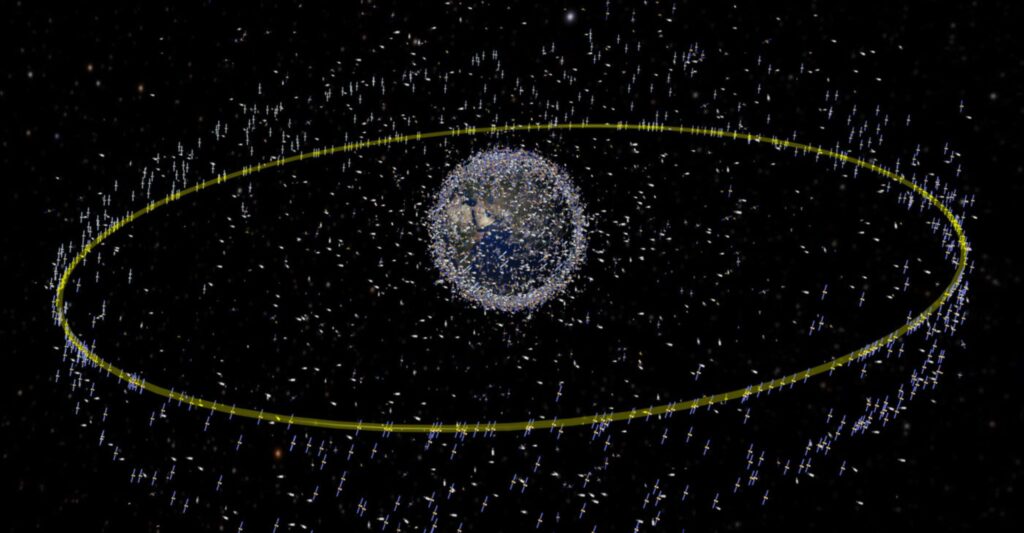
The company’s pitch comes as the scale of activity in low Earth orbit accelerates. More than 70,000 operational satellites are projected to be in orbit by 2030, according to LeoLabs estimates, with roughly one-third associated with adversarial nations. That growth is compressing decision timelines for military operators and increasing the difficulty of distinguishing routine movements from potentially hostile ones.
“Threat detection systems have to be able to keep up with that growth,” Frazier said.
Delta draws on LeoLabs’ network of ground-based radars and its proprietary catalog of tracked objects. The system monitors satellites flagged by users as objects of interest, looking for deviations in orbit, patterns of activity and other anomalous events.
In the U.S. defense market, commercial providers of space domain awareness like LeoLabs are seeking to complement government systems not just with additional data, but with tools that interpret it.










Related Posts


Stay Informed With the Latest & Most Important News
Previous Post
Next Post


Advertisement
-
 01Two Black Holes Observed Circling Each Other for the First Time
 -
 02From Polymerization-Enabled Folding and Assembly to Chemical Evolution: Key Processes for Emergence of Functional Polymers in the Origin of Life
 -
 03Astronomy 101: From the Sun and Moon to Wormholes and Warp Drive, Key Theories, Discoveries, and Facts about the Universe (The Adams 101 Series)
 -
 04True Anomaly hires former York Space executive as chief operating officer
 -
 05Φsat-2 begins science phase for AI Earth images
 -
 06Hurricane forecasters are losing 3 key satellites ahead of peak storm season − a meteorologist explains why it matters
 -
 07Binary star systems are complex astronomical objects − a new AI approach could pin down their properties quickly