
Now Reading: Icy Ocean World Recon: How Did Earth’s Most Powerful Ocean Current Form?
-
01
Icy Ocean World Recon: How Did Earth’s Most Powerful Ocean Current Form?


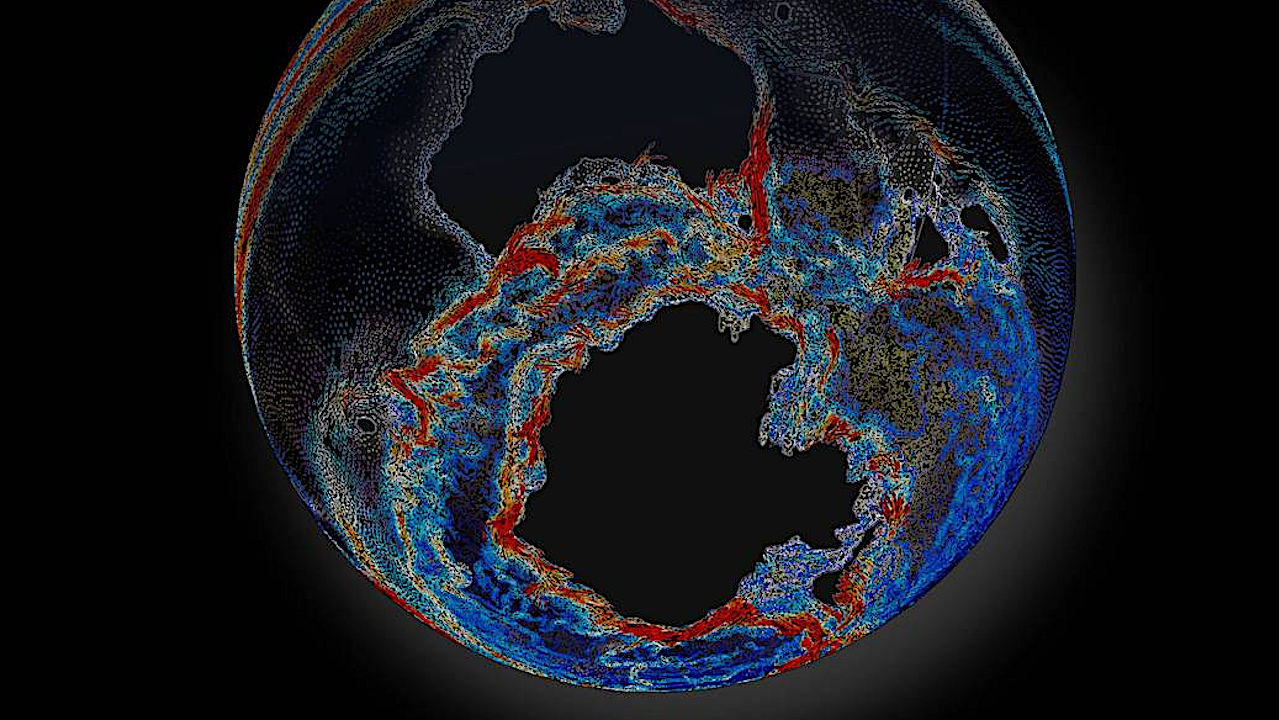
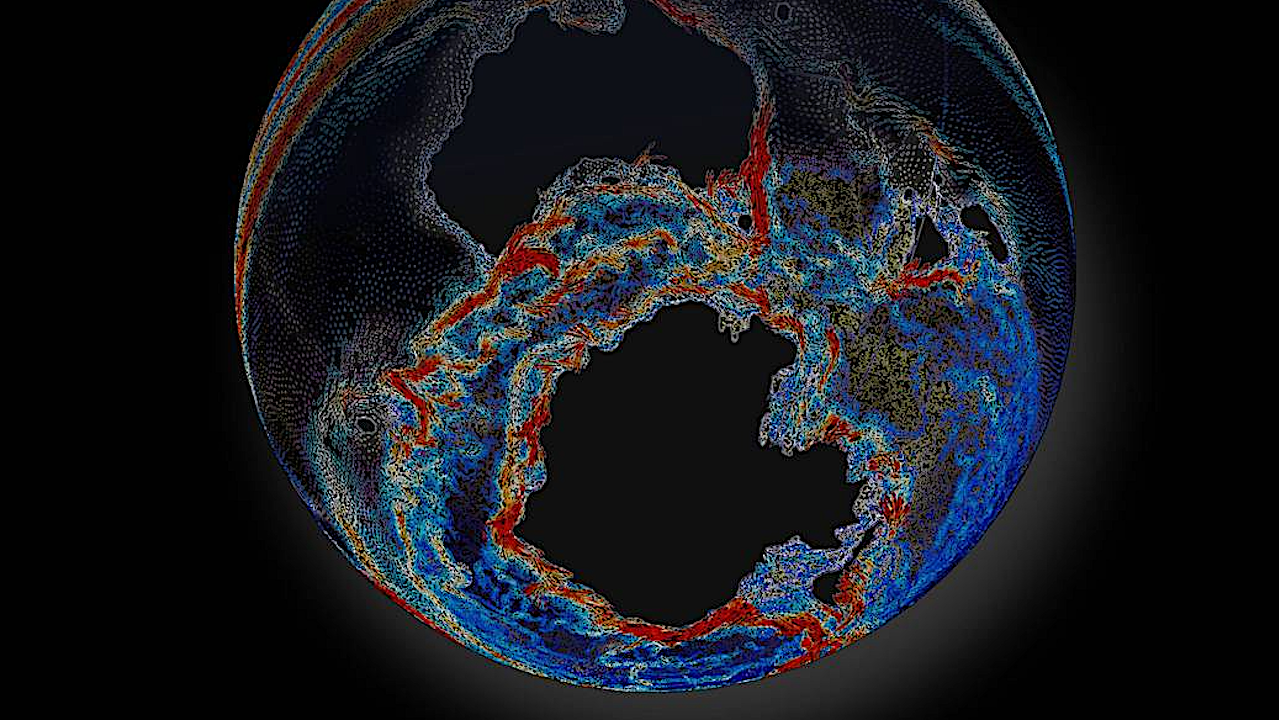
Antarctic Circumpolar Current (Photo: Alfred Wegener Institute / Hanna Knahl, Patrick Scholz)
It transports far more than 100 times as much water as all of the Earth’s rivers combined: The Antarctic Circumpolar Current rushes around the southern continent unhindered by land masses and is therefore a fundamental component of the climate system.
In a recent study published in the journal Proceedings of the National Academy of Sciences, a research team led by the Alfred Wegener Institute describes how and when this mighty ring current developed in Earth’s history. Surprising finding: it took more than the opening of the ocean passages between Antarctica, and South America and Australia.
Earth’s climate underwent its last drastic change around 34 million years ago during the transition into the Oligocene – cooling from a largely ice sheet-free greenhouse climate to our current icehouse climate, in which large areas of the poles became increasingly glaciated with permanent ice.
At this time, the ocean passages between Australia, Antarctica and South America widened and deepened, the Antarctic Circumpolar Current (ACC) developed and the formation of the Antarctic Ice Sheet began. The CO2 concentration in the atmosphere at that time was around 600 ppm – a value that has not been reached ever since, but could be exceeded again by the end of this century in some climate scenarios.
“In order to predict the possible future climate, it is necessary to look into the past with simulations and data to understand our Earth in warmer and more CO2-rich climate states than today,” says Hanna Knahl, climate modeller at the Alfred Wegener Institute, Helmholtz Centre for Polar and Marine Research (AWI) and lead author of the study, which now appears in the Proceedings of the National Academy of Sciences (PNAS).
“But careful, the climate of the past can of course not be projected 1:1 onto the future. Our study shows that the circumpolar current in its ‘infancy’ influenced the climate very differently than today’s fully developed ACC does.”
For the current study, Hanna Knahl and her colleagues analysed the formation of the ACC. To this end, climate simulations were created with the continental configuration from 33.5 million years ago, when Australia and South America were still much closer to Antarctica. For these simulations, the team coupled the Antarctic Ice Sheet from a 2024 Science study with the ocean, atmosphere, and land masses to analyse how the ocean currents around Antarctica developed. The simulated currents were then compared with data-based reconstructions from this period.
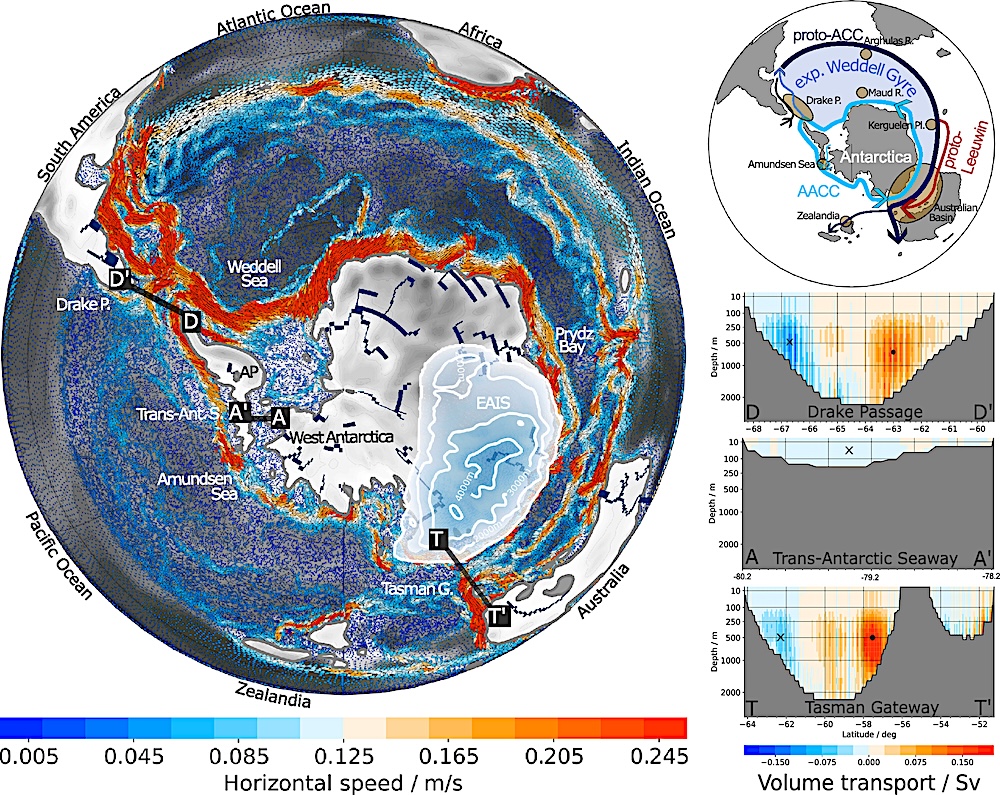
Southern Ocean circulation during the EOGM. (Left) Horizontal ocean surface velocity (colors: speed; arrows: direction) averaged over the upper 100 m, overlaid on EOGM bathymetry. A proto-Antarctic Circumpolar Current (proto-ACC) is visible in the Atlantic and Indian sectors, while no continuous ACC exists in the Pacific sector. After passing through the Tasman Gateway near the East Antarctic Ice Sheet (EAIS; ice thickness indicated by white-to-blue shading), the eastward current deflects northward. River systems (dark blue) sourced in the mountains of Dronning Maud Land (topography in white-to-gray shading) feed fresh water into a strong Antarctic Coastal Current (AACC) that flows from the Tasman Gateway toward the Drake Passage. Together the AACC and the proto-ACC form an expanded Weddell Gyre. (Top Right) Overview of the dominating surface currents in the EOGM simulation (arrows) and areas we use for the proxy data-model comparison (orange circles). (Bottom Right) Ocean volume transport across key transects: Drake Passage (D, D’), Trans-Antarctic Seaway (A, A’), and Tasman Gateway (T, T’). The vertical structure highlights the proto-ACC (red) and the coastal current (blue). Transport through the Trans-Antarctic Seaway is compara tively weaker. — PNAS
Hanna Knahl explains: “There were already indications that the wind in the Tasman Gateway played an important role in the formation of the ACC. Our simulations can clearly confirm this: Only when Australia had moved further away from Antarctica and the strong westerly winds blew directly through the Tasman Gateway, the current could fully develop.” Surprisingly, at that time the Southern Ocean may have been divided into two completely different parts. Although the ocean passages around Antarctica were already open, the model only simulates a strong current in the Atlantic and Indian sectors, while the Pacific sector remained much calmer.
Simulations in which climate and ice sheets are coupled are still relatively new and particularly complex. In order to investigate the infancy of the Antarctic Circumpolar Current under particularly realistic conditions, the two AWI research divisions, Palaeoclimate Dynamics and Marine Geology, have combined their skills and merged them with international expertise from the Australian Centre of Excellence in Antarctic Science and the Antarctic Research Centre Wellington.
“With this PNAS study, we are showing – for the first time – how helpful and important it is to carry out these coupled and relatively high-resolution model simulations for the climate of the deep past. Even though they are very demanding, they provide novel insights into the interaction of ice, atmosphere, land surface, and ocean,” explains AWI palaeoclimate modeller Prof Dr Gerrit Lohmann, co-author of the study. With the recent analyses of ACC’s formation, the team was able to show how a reorganisation of the global ocean circulation took place in Earth’s history.
AWI geoscientist Dr Johann Klages, also a co-author of the study, concludes: “This understanding is crucial, as the formation of the ACC has strongly driven carbon uptake by the ocean. This reduction in the concentration of greenhouse gases in Earth’s atmosphere thus had the potential to initiate the cooler climate of the so-called Cenozoic Ice Age, which continues to this day with permanently ice-covered polar ice caps, in which warm and cold periods alternate. This new knowledge will therefore help us to more reliably interpret recent changes in Southern Ocean circulation more reliably.”
Original publication
Hanna S. Knahl, Johann P. Klages, Lars Ackermann, Katharina Hochmuth, Lu Niu, Nicholas R. Golledge, Gerrit Lohmann: Configuration of circum-Antarctic circulation at the last green- to icehouse climate transition, PNAS (2026). DOI: 10.1073/pnas.2520064123 (open access)
Astrobiology, oceanography,










Related Posts
Stay Informed With the Latest & Most Important News
Previous Post
Next Post

Advertisement
-
 01Two Black Holes Observed Circling Each Other for the First Time
 -
 02From Polymerization-Enabled Folding and Assembly to Chemical Evolution: Key Processes for Emergence of Functional Polymers in the Origin of Life
 -
 03Astronomy 101: From the Sun and Moon to Wormholes and Warp Drive, Key Theories, Discoveries, and Facts about the Universe (The Adams 101 Series)
 -
 04True Anomaly hires former York Space executive as chief operating officer
 -
 05Φsat-2 begins science phase for AI Earth images
 -
 06Hurricane forecasters are losing 3 key satellites ahead of peak storm season − a meteorologist explains why it matters
 -
 07Binary star systems are complex astronomical objects − a new AI approach could pin down their properties quickly