
Now Reading: What time is NASA’s Artemis 2 moon mission landing today? Full schedule
-
01
What time is NASA’s Artemis 2 moon mission landing today? Full schedule


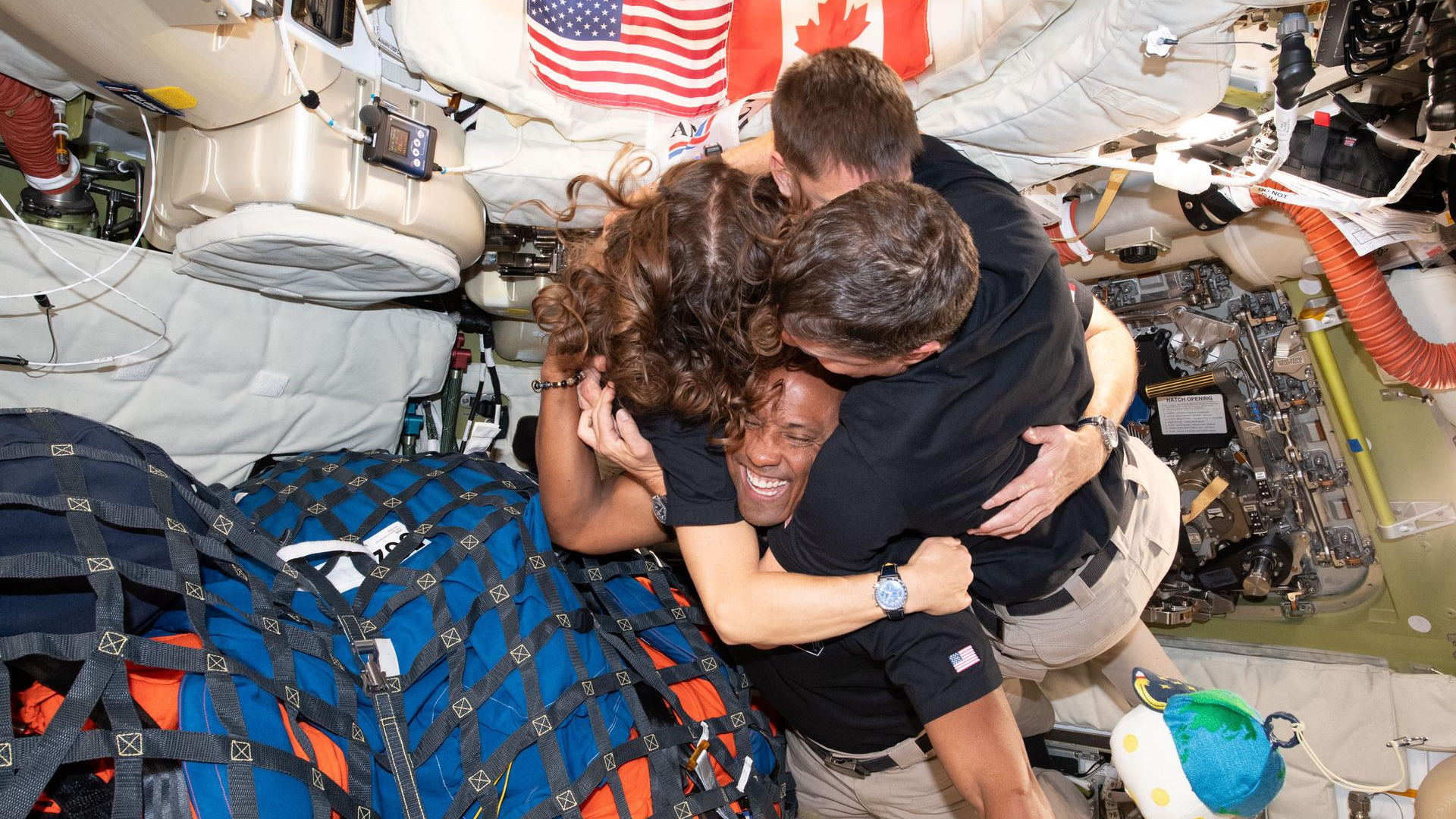
NASA’s historic Artemis 2 mission will return to Earth today (April 10) to end a 10-day test flight around the moon. The four astronaut crew return home with a splashdown off the coast of Southern California, and if you’re hoping to watch it live, you’ll need to know when to tune in. Here’s what you need to know to follow along.
Returning to Earth on Orion are Artemis 2 commander Reid Wiseman, pilot Victor Glover, and mission specialists Christina Koch and Jeremy Hansen. All are NASA astronauts except for Hansen, who is from the Canadian Space Agency.

Preparations for splashdown begin well in advance and this final day of the mission is fully dedicated to ensuring that the Artemis 2 crew returns to Earth safely. Following extensive preparations, the crew will stow equipment, get into their spacesuits, and buckle up in the crew module for an intense ride home.
The service module, which propelled the crew through their journey to the moon and back again, will separate from the crew module where the crew sits. The crew module’s heat shield will safeguard the crew as they travel through Earth’s atmosphere, with the capsule reaching about 3,000 degrees Fahrenheit. Following reentry, a series of parachutes will deploy to slow them down to about 17 miles per hour for splashdown. The crew will be met by team members from NASA and the U.S. Navy.
Between launch and splashdown, the Artemis 2 crew will have traveled a total of 695,081 miles (1,118,624 kilometers) before they splash down off the San Diego coast.

What time is the Artemis 2 launch?
NASA is officially targeting Friday (April 10) for the splashdown of its Artemis 2 mission, scheduled for around 8:07 p.m. EDT (0007GMT).
Splashing down locally at 5:07 pm PDT, the event will take place with what is predicted to be sunny skies off the coast of Southern California. While the crew landing is likely to take place near the coast of San Diego, the splashdown is estimated to be between 50-70 miles offshore, NASA officials have said.
Can I watch the Artemis 2 launch online?
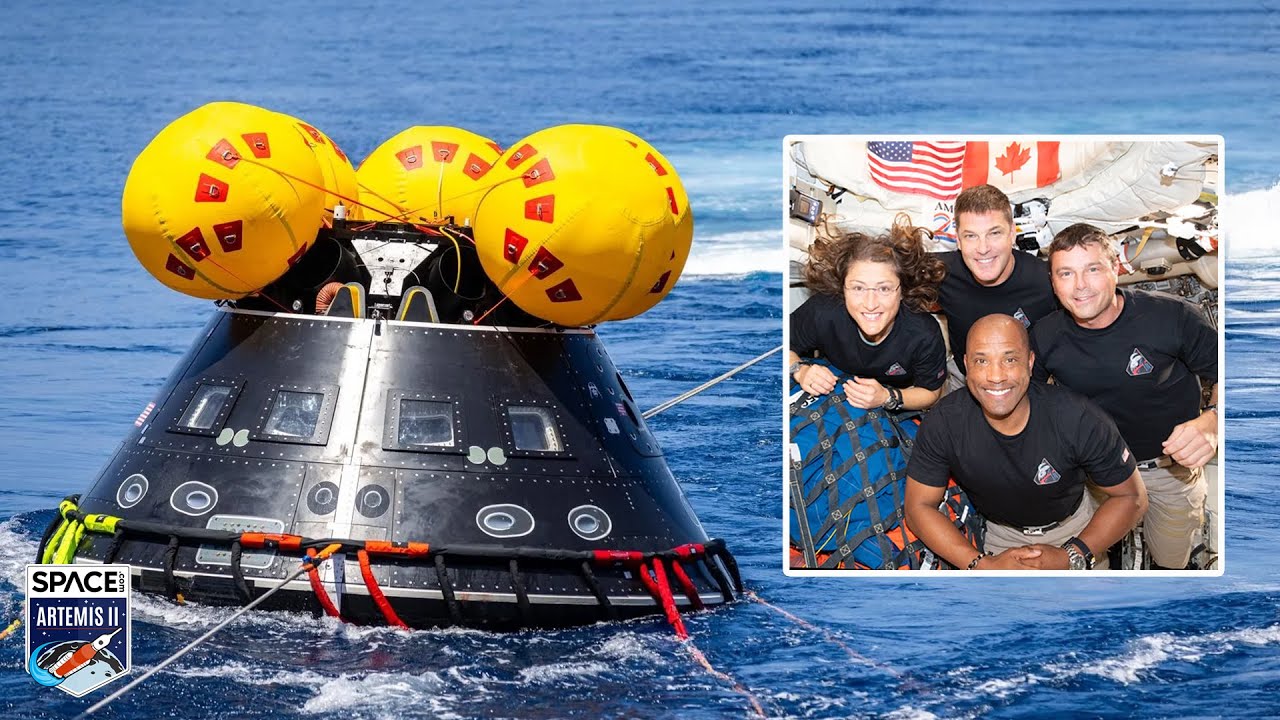
Yes, you’ll be able to watch the Artemis 2 splashdown online. On April 10, NASA will have a livestream for you to watch. You’ll be able to watch them all here on Space.com and our VideoFromSpace Youtube Channel. Live coverage begins at 6:30 pm EDT (2230 GMT).
NASA is also continuing to provide simulcasts of the mission on Netflix, Amazon Prime, and other streaming services, as well as on its own website and NASA+ streaming service, and YouTube.
The Artemis 2 crew’s families will be watching the livestream as well, though they will be watching from Mission Control.
Here’s what to expect on landing day.

Friday, April 10 – Artemis 2 landing events
- 11:35 a.m. EDT (1535 GMT): The Artemis 2 crew wakes up.
- 5:05 p.m. EDT (2105 GMT): The crew begins its reentry checklist.
- 6:30 p.m. EDT (2230 GMT): NASA+ coverage begins.
- 7:33 p.m. EDT (2333 GMT): Crew Module and Service Module separate.
- 7:37 p.m. EDT (23:37 GMT): Crew Module performs a “raise burn,” a critical maneuver to position the craft for a safe splashdown.
- 7:53 p.m. EDT (2353 GMT):
- Entry Interface occurs and the Orion capsule re-enters Earth’s atmosphere.
- 8:07 p.m. EDT (0007 GMT April 11): Splashdown
- 9:06 p.m. EDT (0106 GMT April 11): Targeted time for crew extraction (exact time is subject to change)
- 9:35 p.m. EDT (0135 GMT April 11): The Artemis 2 crew arrives on their recovery ship (this is also the time that NASA+ coverage will conclude).
- 10:30 p.m. EDT (0230 GMT April 11): NASA post-landing press conference.
Artemis 2 moon mission recap

Artemis 2 is a 10-day crewed mission sent to complete a flyby of the moon as part of NASA’s Artemis program, which aims to return humans to the moon. NASA plans for Artemis to be a stepping stone toward establishing a long-term human presence on the moon as well as a human presence on Mars in the future.
Artemis 2 sent its crew on a free-return trajectory around the moon. The four astronauts who flew on Artemis 2 are NASA astronauts commander Reid Wiseman, mission pilot Victor Glover and mission specialist Christina Koch as well as Canadian Space Agency mission specialist Jeremy Hansen.
With this mission, Koch has become the first woman to travel to the moon’s vicinity, Glover is the first person of color to do so, and Hansen is the first non-American.
On this journey, the Orion spacecraft looped behind the moon and used gravity which naturally guided the capsule back to Earth. The crew spent a couple of days in orbit, about four days traveling to the moon and another four days to return back to Earth.
In addition to testing this maneuver, this mission also had the astronauts testing life-support systems, navigation, communications and deep-space operations. This work will support future lunar landing missions including the first Artemis crewed lunar landing which will occur in 2028 as part of the Artemis 4 mission. Between now and then, a third Artemis 3 crewed test flight is scheduled to take place.
With Orion’s splashdown in the Pacific Ocean, NASA will have completed its first crewed lunar mission in more than 53 years.

Lego
Lego Icons NASA Artemis Space Launch System (10341)
The most detailed Artemis SLS Lego set, this adult-aimed model has 3,601 pieces and stands 28-inches (71 cm) tall. We thought “Lego has knocked it out of the park” in our full build review. Don’t forget about the newer, more compact and much cheaper Lego Technic SLS set, only $60, also ‘launches’ with some clever Technic moving parts.










Related Posts

Stay Informed With the Latest & Most Important News
Previous Post
Next Post



Advertisement
-
 01Two Black Holes Observed Circling Each Other for the First Time
 -
 02From Polymerization-Enabled Folding and Assembly to Chemical Evolution: Key Processes for Emergence of Functional Polymers in the Origin of Life
 -
 03Astronomy 101: From the Sun and Moon to Wormholes and Warp Drive, Key Theories, Discoveries, and Facts about the Universe (The Adams 101 Series)
 -
 04True Anomaly hires former York Space executive as chief operating officer
 -
 05Φsat-2 begins science phase for AI Earth images
 -
 06Hurricane forecasters are losing 3 key satellites ahead of peak storm season − a meteorologist explains why it matters
 -
 07Binary star systems are complex astronomical objects − a new AI approach could pin down their properties quickly