
Now Reading: Artemis II: splashdown
-
01
Artemis II: splashdown



11/04/2026
52 views
0 likes
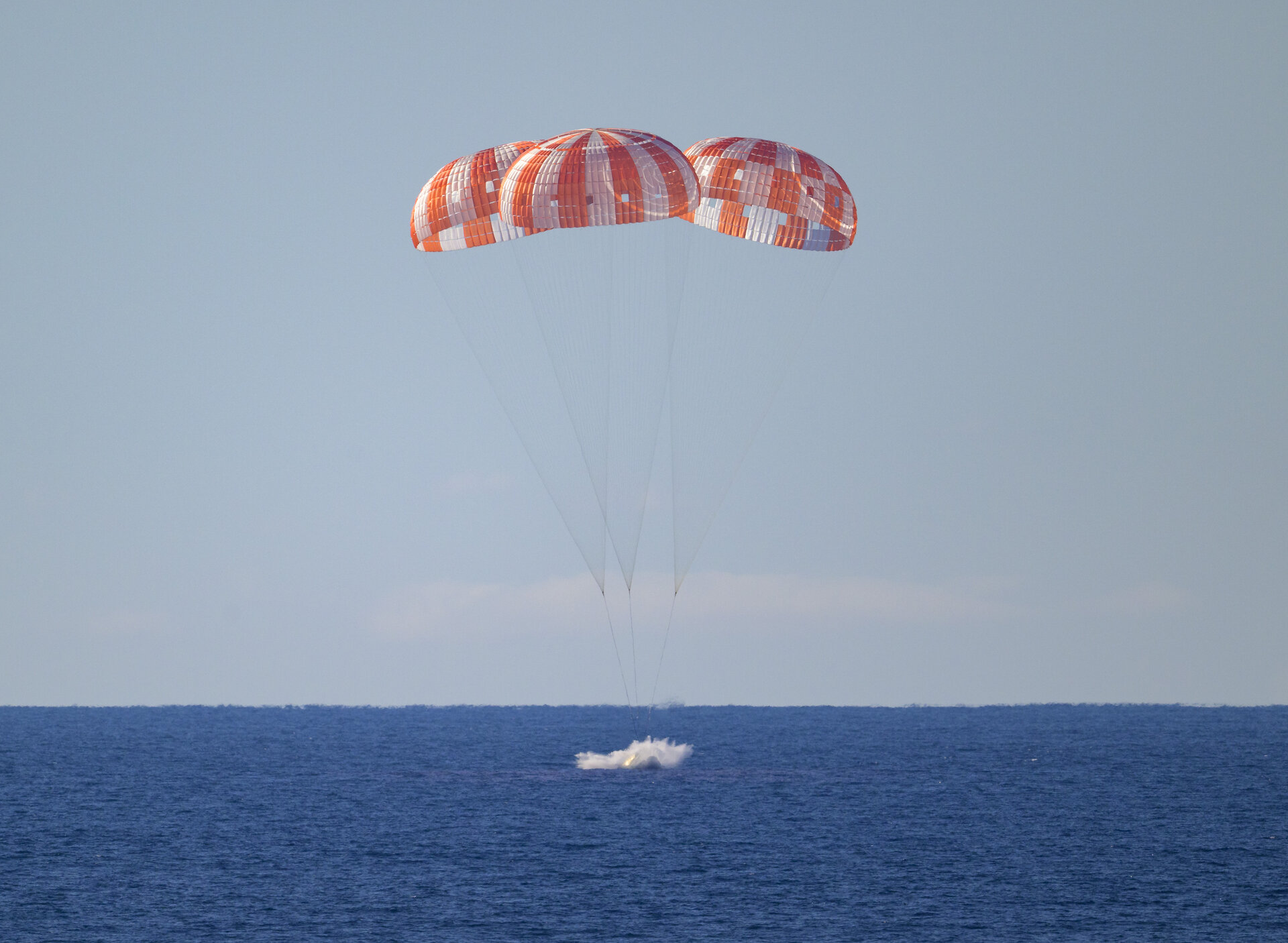
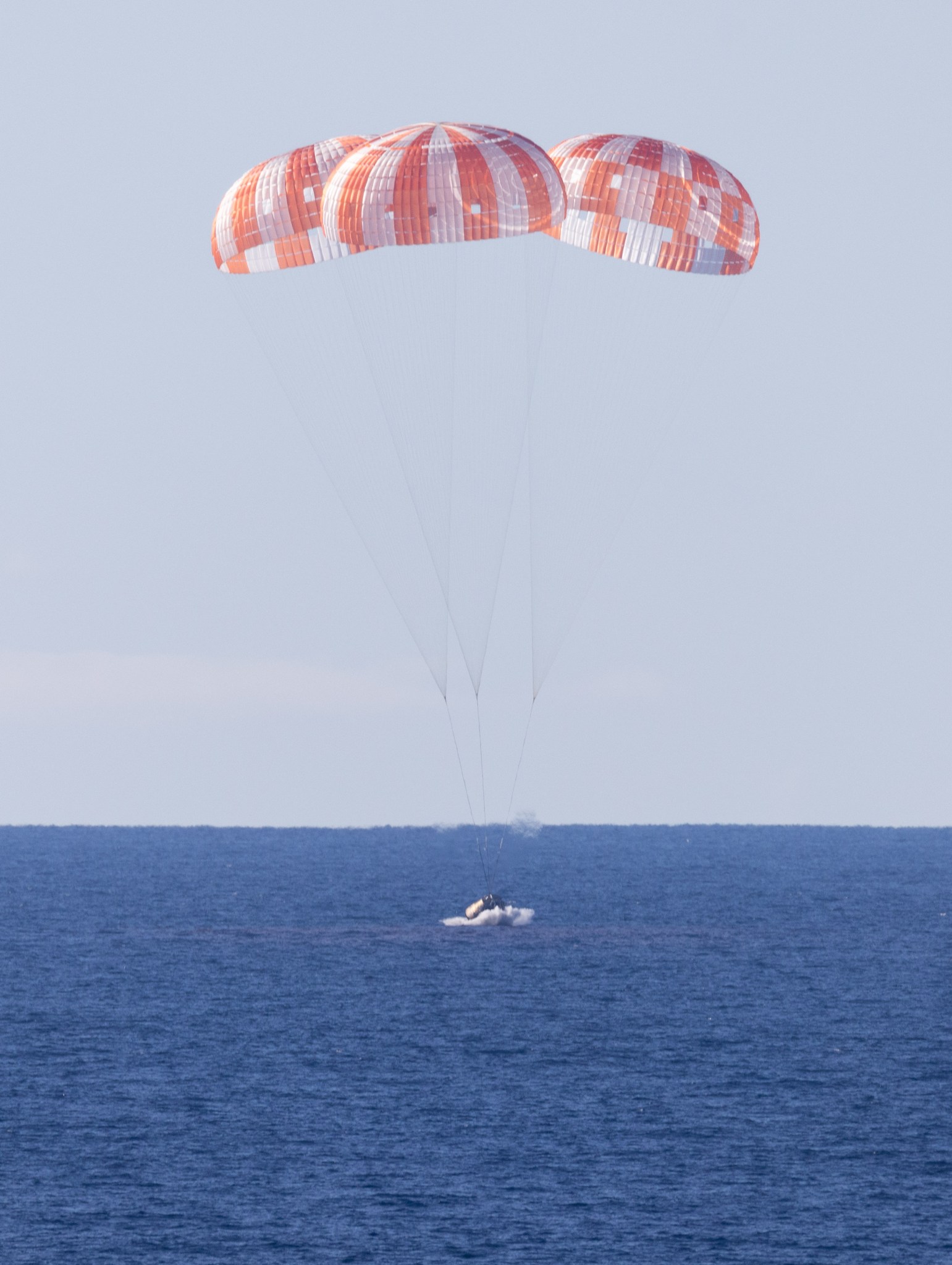
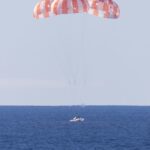
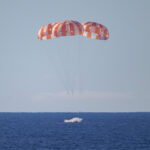
Today, at 17:07 local time on 10 April (01:07 BST/02:07 CEST 11 April), NASA’s Orion spacecraft and its crew splashed down safely in the Pacific Ocean, marking the end of the Artemis II mission. ESA’s European Service Module powered this historic mission that took four astronauts around the Moon and back for the first time since Apollo 17 in 1972.
The European Service Module supplied air and potable water for the astronauts, generated electrical power through its four solar arrays, provided thermal control in the harsh environment of space, and propelled Orion over 1 million km through deep space. Mostly built by European industry under ESA leadership, the European Service Module was assembled by Airbus Defence and Space in Bremen, Germany, with contributions from companies across 13 European countries, involving 20 main contractors and over 100 European suppliers.
“The European Service Module put on a powerful demonstration of Europe’s capability to deliver critical elements for ambitious international exploration missions,” says ESA’s Director General Josef Aschbacher. “On behalf of ESA, I would like to sincerely thank all our industrial partners across Europe for their dedication, professionalism and relentless focus on quality. This success reflects years of close cooperation, engineering excellence and trust between ESA and European industry. In particular, I would like to recognise Airbus Defence and Space, as prime contractor of this complex and truly pan‑European effort.”
Europe in the driving seat
At 00:35 CEST on 2 April, NASA’s Space Launch System rocket lifted off from the Kennedy Space Center in Florida, carrying four astronauts aboard the Orion spacecraft. Twenty minutes after launch, the European Service Module’s four solar arrays unfurled in space and began powering Orion. Around three hours into the mission, Orion separated from the rocket’s upper stage and the astronauts took manual control, using the European Service Module’s engines to practise proximity operation manoeuvres for future Artemis missions.
On flight day 2 of the Artemis II mission, after a day of safety checks in Earth orbit, mission control gave the go for the translunar injection. This 350-second burn performed by the European Service Module’s main engine set Orion and its crew on their free-return trajectory around the Moon. This initial burn was so precise that two out of the three trajectory correction burns planned on the way to the Moon to finetune the spacecraft’s trajectory were cancelled.
“The European Service Module injected so precisely Artemis II towards the Moon that two planned trajectory burns were not necessary, demonstrating our know-how to its finest,” says Daniel Neuenschwander, ESA’s Director for Human and Robotic Exploration. “This success is a testimony to the hard work of all the teams involved in this project. From the European engineers working for years on the development of the hardware, to the experts supporting the mission from the control rooms in Europe and in the United States… they are the ones that made the dream of going back to the Moon to stay come true.”
The crew of Orion flew past the Moon on 6 April, breaking the Apollo 13 record for the farthest distance from Earth. After the lunar flyby, three more trajectory correction burns occurred during the four-day journey back to Earth.
On flight day 10, the last day of the Artemis II mission, Orion’s Crew Module and the European Service Module separated at 00:33 BST/01:33 CEST on 11 April. Twenty minutes later, the Crew Module began its reentry through Earth’s atmosphere, with splashdown occurring just a few minutes after. The European Service Module itself burned up harmlessly in Earth’s atmosphere.










Related Posts

Stay Informed With the Latest & Most Important News
Previous Post
Next Post

Advertisement
-
 01Two Black Holes Observed Circling Each Other for the First Time
 -
 02From Polymerization-Enabled Folding and Assembly to Chemical Evolution: Key Processes for Emergence of Functional Polymers in the Origin of Life
 -
 03Astronomy 101: From the Sun and Moon to Wormholes and Warp Drive, Key Theories, Discoveries, and Facts about the Universe (The Adams 101 Series)
 -
 04True Anomaly hires former York Space executive as chief operating officer
 -
 05Φsat-2 begins science phase for AI Earth images
 -
 06Hurricane forecasters are losing 3 key satellites ahead of peak storm season − a meteorologist explains why it matters
 -
 07Binary star systems are complex astronomical objects − a new AI approach could pin down their properties quickly