
Now Reading: Falcon 9 launches Cygnus cargo spacecraft to the ISS
-
01
Falcon 9 launches Cygnus cargo spacecraft to the ISS


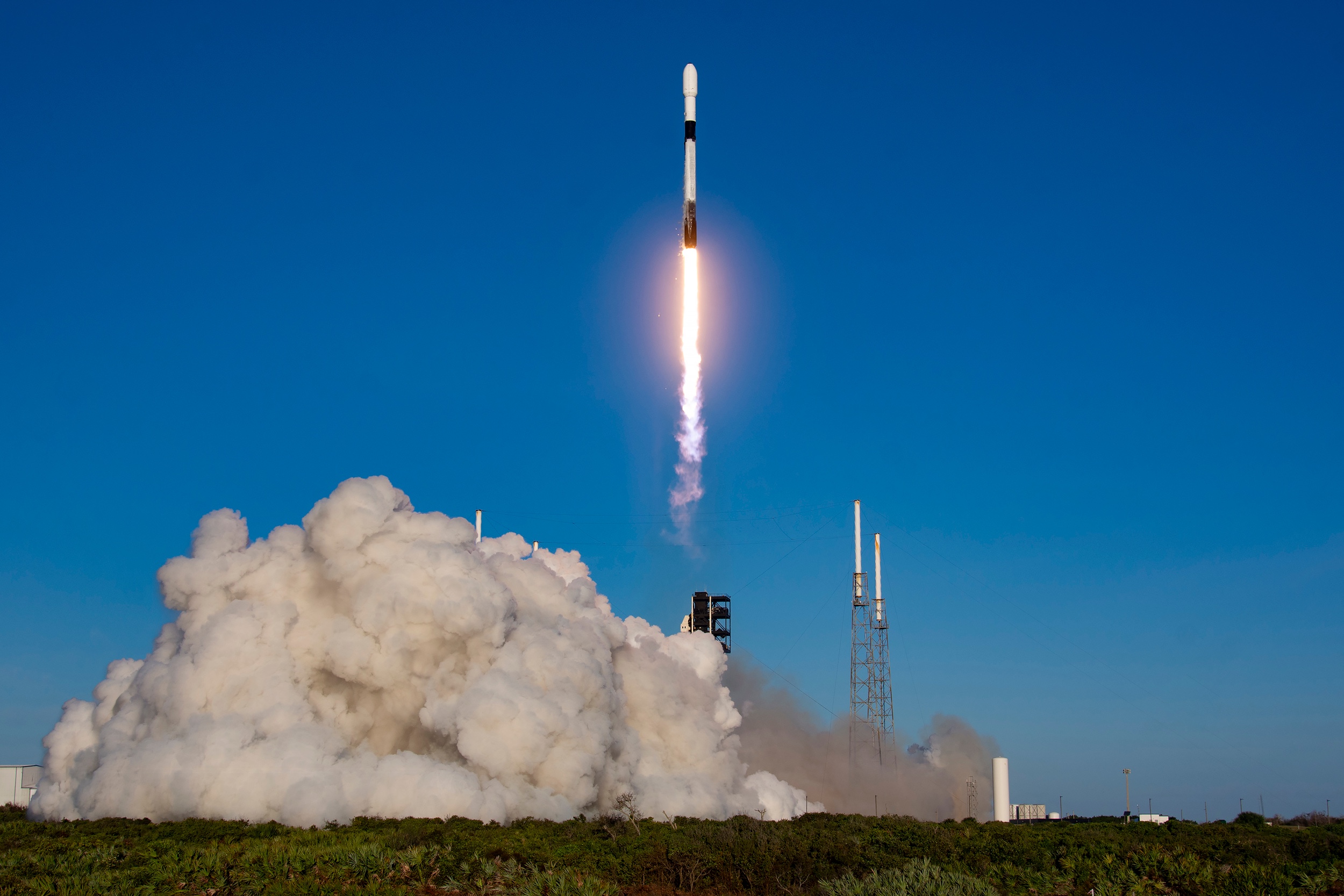

WASHINGTON — A Falcon 9 launched a Cygnus cargo spacecraft April 11 as Northrop Grumman continues its dependence on a competitor to fly resupply missions to the International Space Station.
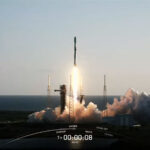
The Falcon 9 lifted off from Cape Canaveral Space Force Station’s Space Launch Complex 40 at 7:41 a.m. Eastern. The launch, originally scheduled for April 8, was delayed by weather conditions at the launch site.
The Falcon 9 upper stage deployed the NG-24 Cygnus XL spacecraft into low Earth orbit nearly 15 minutes after liftoff. The spacecraft, named the S.S. Steven R. Nagel by Northrop after a former NASA astronaut who died in 2014, is scheduled to arrive at the ISS April 13, with the station’s robotic arm grappling the spacecraft at around 12:50 p.m. Eastern to berth it to the station’s Unity module.
The NG-24 mission is the fourth consecutive Cygnus to launch on Falcon 9 to support Northrop’s Commercial Resupply Services, or CRS, contract with NASA. Northrop Grumman originally planned to use three Falcon 9 launches to bridge the gap after retiring its Antares 230+ rocket, which used Russian and Ukrainian components, in 2023 while working with Firefly Aerospace on a new version, Antares 330, a precursor to the larger Eclipse rocket.
However, the Antares 330, once planned to begin launches in late 2024, remains in development. In an earnings call last month, Jason Kim, chief executive of Firefly, said the company expected to ship later this year the first stage it is building for the first launch to Northrop, which will integrate it with its own upper stage. However, he did not give a schedule for that launch.
Northrop expects to launch at least one more Cygnus mission on a Falcon 9. “NG-25 will be on a Falcon 9, and we will continue to ensure launch vehicle flexibility exists until our Antares 330 is ready,” a Northrop spokesperson told SpaceNews April 7. “We are working with NASA to determine the best opportunity to launch a CRS mission using Antares 330.”
NG-24 was the second flight of Cygnus XL, a larger version of the Cygnus spacecraft with a payload capacity of 5,000 kilograms. NASA said the spacecraft was at full capacity, carrying 2,120 kilograms of vehicle hardware, 1,410 kilograms of crew supplies and 1,075 kilograms of science investigations. The remainder was devoted to spacewalk equipment and computer resources.
The first Cygnus XL mission, NG-23, launched last September after the Cygnus spacecraft built for the NG-22 mission that was to launch in early 2025 was damaged during shipment to the launch site. NASA and Northrop elected not to launch NG-22.
The company, though, says it still plans to fly the NG-22 mission at some point. “The NG-22 pressurized cargo module production is underway, and we are working closely with NASA on updated mission timing,” a company spokesperson said April 7.
In a break with standard practices on other CRS missions, NASA did not hold prelaunch mission or science briefings. Such briefings provide an overview of the mission and the science on board and offer an opportunity to discuss issues with NASA and industry representatives. NASA did not give a reason for skipping the briefings, which would have overlapped with the Artemis 2 mission that took many of the agency’s public affairs resources.
It also meant that NASA officials were not available to discuss potential changes in ISS operations, including the pace of future cargo resupply missions. NASA’s fiscal year 2027 budget request, released April 3, cut about $1.1 billion from the $3 billion appropriated in 2026 for ISS operations, including crew and cargo missions. That could affect the number of cargo missions and potential reductions in the four-person crew on the station’s U.S. segment.
“The number of cargo missions supported by the budget impacts the amount of crew supplies and research that can fly to ISS. Reduced crew supplies could result in reduced crew on ISS,” NASA stated in its budget documents. “ISS will continue to monitor crew supplies to determine the appropriate crew size that can be sustained with the available cargo vehicles.”










Related Posts
Stay Informed With the Latest & Most Important News
Previous Post
Next Post

Advertisement
-
 01Two Black Holes Observed Circling Each Other for the First Time
 -
 02From Polymerization-Enabled Folding and Assembly to Chemical Evolution: Key Processes for Emergence of Functional Polymers in the Origin of Life
 -
 03Astronomy 101: From the Sun and Moon to Wormholes and Warp Drive, Key Theories, Discoveries, and Facts about the Universe (The Adams 101 Series)
 -
 04True Anomaly hires former York Space executive as chief operating officer
 -
 05Φsat-2 begins science phase for AI Earth images
 -
 06Hurricane forecasters are losing 3 key satellites ahead of peak storm season − a meteorologist explains why it matters
 -
 07Binary star systems are complex astronomical objects − a new AI approach could pin down their properties quickly