
Now Reading: Astronomers propose new dual-particle model to unravel mysteries of dark matter
-
01
Astronomers propose new dual-particle model to unravel mysteries of dark matter


Astronomers are rethinking the nature of dark matter, spurred by new theoretical insights that suggest it might be composed of multiple types of particles rather than a single entity. This idea could help address a perplexing observational conundrum that has stymied researchers for years. The existence of dark matter has been inferred due to observable gravitational effects that cannot be attributed to the visible elements of the universe, including stars, gas, and dust. The rapid rotation of galaxies, the stability of galaxy clusters, and the large-scale structure of the cosmic microwave background all indicate a significant amount of unseen mass that interacts through gravity, yet does not emit, absorb, or reflect light, earning it the designation of “dark matter.”
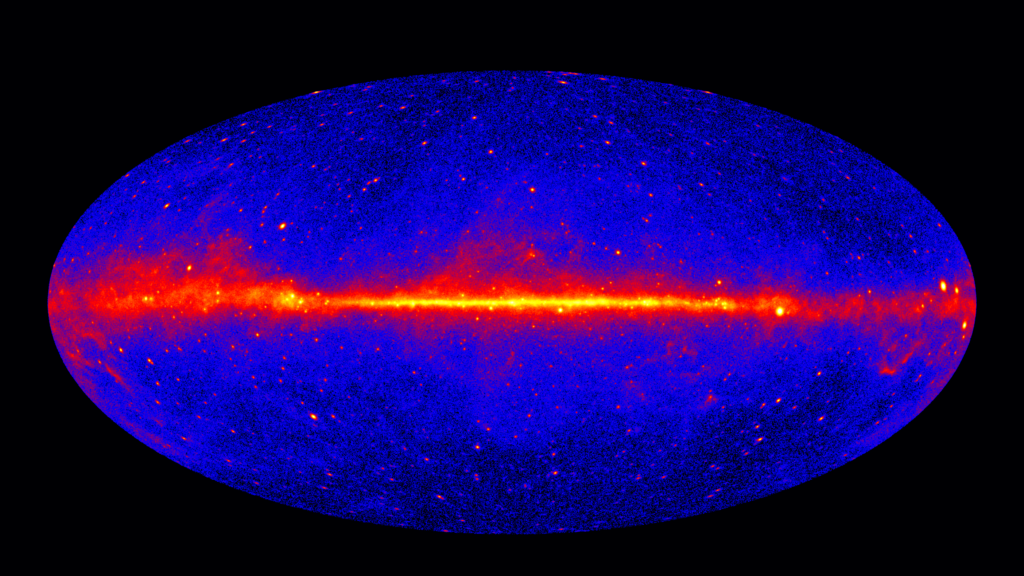
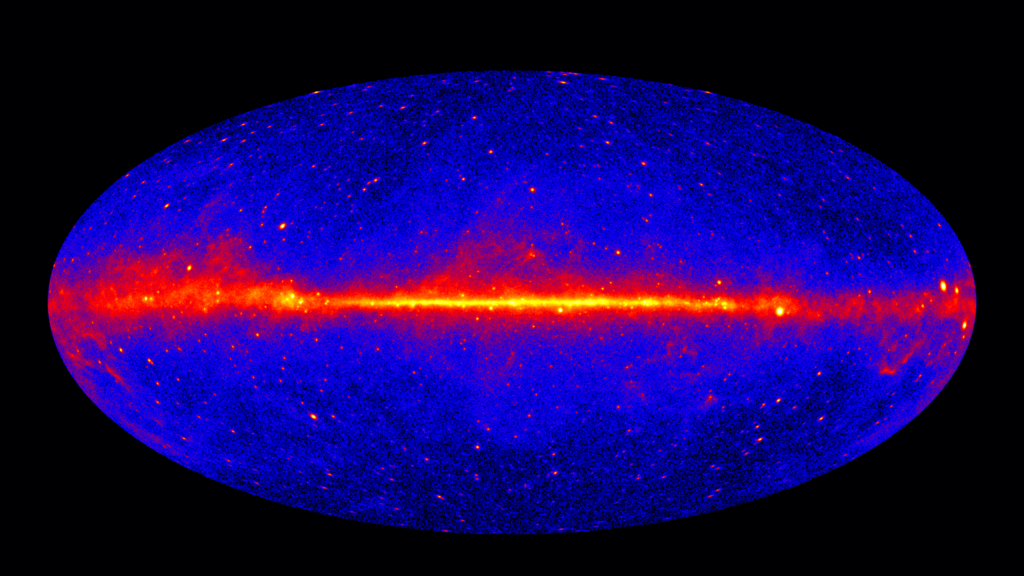
In a new paper published in the Journal of Cosmology and Astroparticle Physics, scientists delve into one of the most intriguing clues of dark matter’s presence: an unexpected increase in gamma-ray emissions from the center of our galaxy, as detected by NASA’s Fermi Gamma-ray Space Telescope. While some researchers have proposed that this gamma-ray signal could be the result of dark matter particles annihilating one another, the absence of similar signals in smaller, dark matter-dense systems, such as dwarf galaxies, has generated skepticism about such interpretations. Gordan Krnjaic, a co-author of the study, highlighted that if dark matter behaved consistently across the universe, it would be observable in all galaxies, including those little and diffuse.
Dwarf galaxies, particularly favored in dark matter research due to their significant amounts of this hidden mass and minimal stellar interference, could reveal critical signals of dark matter interactions. However, the lack of any detectable gamma-ray signal from these bodies has posed a considerable challenge. This absence raises two possibilities: either the gamma-ray excess in the Milky Way originates from something other than dark matter—perhaps unresolved pulsars—or current theoretical models about dark matter interactions are lacking.
The innovative hypothesis put forth by the researchers offers a fresh perspective. It posits that dark matter could be comprised of two separate types of particles that only annihilate when they encounter each other, not when they meet like particles. “This environmental dependence could be a game changer,” Krnjaic noted. “We may have two different particles, and they need to interact to annihilate.”
In this dual-particle scenario, the intensity of gamma-ray emissions would hinge not only on the total amount of dark matter present but also on the ratio of the two particle types. If both particles coexist in equal ratios, as is likely in the Milky Way, more frequent annihilations could generate a detectable gamma-ray signal. Conversely, if one type predominates in dwarf galaxies, the likelihood of interactions between the two distinct particles would diminish, leading to a lack of gamma-ray emissions despite the abundance of dark matter.
While this two-state model does not conclusively solve the mystery of dark matter, it offers a more adaptable framework for interpreting both its detection and non-detection across various environments. Notably, it suggests that the absence of a signal in certain settings should not be interpreted as definitive evidence against the presence of dark matter.
Looking ahead, enhanced observations of dwarf galaxies, either through the Fermi telescope or its future successors, could shed light on potential faint gamma-ray emissions, or further verify their absence. Such findings would provide a clearer understanding of the proposed model.
For now, this research underscores the complexities of dark matter, which is believed to constitute approximately 85% of the universe’s total mass while remaining elusive to direct detection. It’s possible that dark matter is not merely a single, uncomplicated particle but rather a nuanced combination that reveals its characteristics only under specific cosmic conditions. Alternatively, these observations may lead to a deeper understanding that compels astronomers to reassess their grasp of gravity itself.










Related Posts



Stay Informed With the Latest & Most Important News
Previous Post
Next Post


Advertisement
-
 01Two Black Holes Observed Circling Each Other for the First Time
 -
 02From Polymerization-Enabled Folding and Assembly to Chemical Evolution: Key Processes for Emergence of Functional Polymers in the Origin of Life
 -
 03Astronomy 101: From the Sun and Moon to Wormholes and Warp Drive, Key Theories, Discoveries, and Facts about the Universe (The Adams 101 Series)
 -
 04True Anomaly hires former York Space executive as chief operating officer
 -
 05Φsat-2 begins science phase for AI Earth images
 -
 06Hurricane forecasters are losing 3 key satellites ahead of peak storm season − a meteorologist explains why it matters
 -
 07Binary star systems are complex astronomical objects − a new AI approach could pin down their properties quickly