
Now Reading: Widespread Antarctic ice loss signals alarming ecological shifts in marine ecosystems
-
01
Widespread Antarctic ice loss signals alarming ecological shifts in marine ecosystems

Widespread Antarctic ice loss signals alarming ecological shifts in marine ecosystems

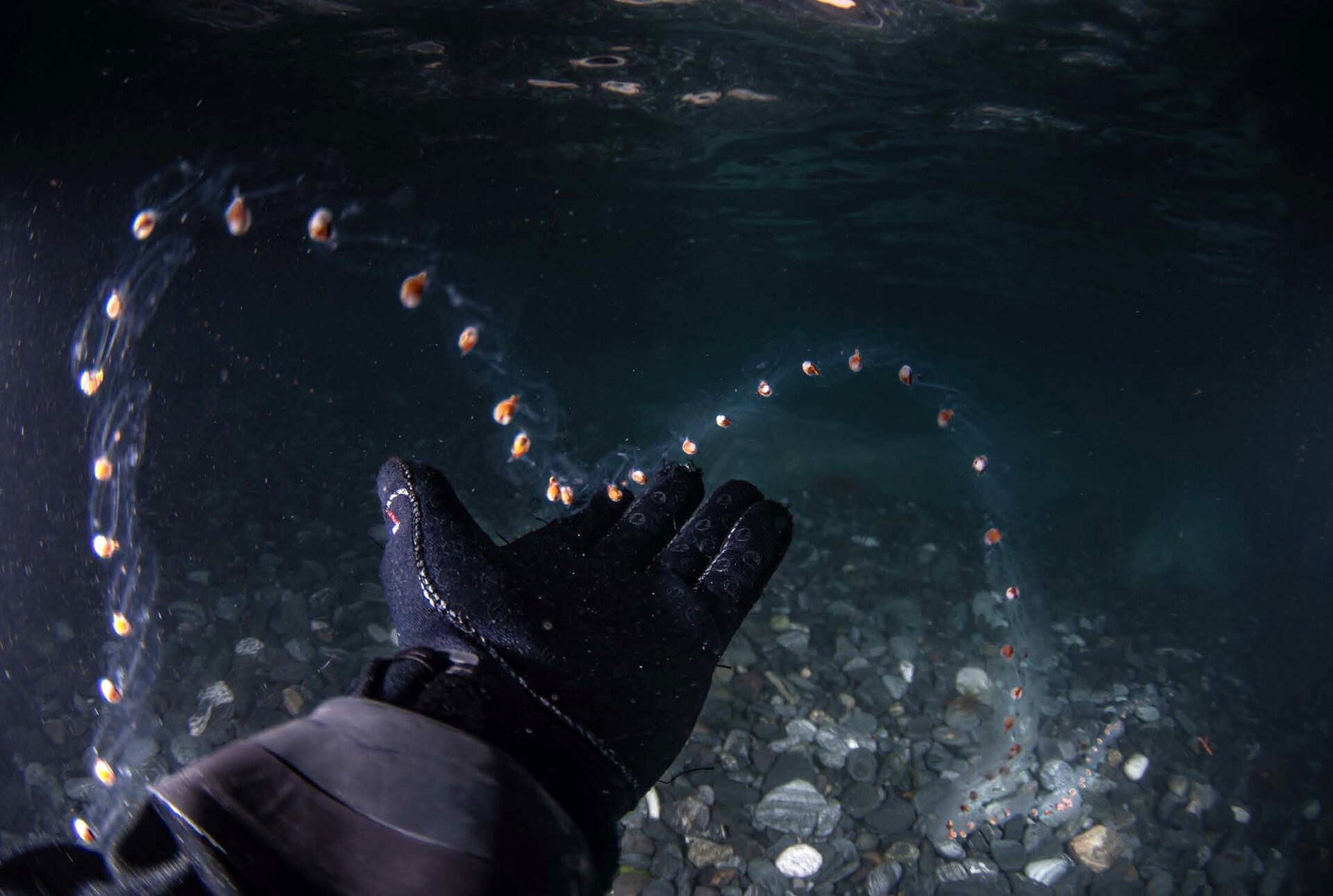

A recent study funded by the European Space Agency highlights alarming changes in the Antarctic’s ice levels, mirroring the well-documented shifts occurring in the Arctic. Researchers have used satellite data to reveal significant declines in sea ice around Antarctica, with serious implications for critical plankton species that form the basis of the region’s marine ecosystem.
Over the past decade, Antarctica has experienced a dramatic reduction in its seasonal sea ice coverage, losing an area equivalent to that of Greenland in just a few years. Initially deemed a temporary decline, this significant loss is now recognized as the start of a new “low-ice era,” a shift that has taken researchers by surprise and disrupted existing climate models and ecological observations.
Led by the Plymouth Marine Laboratory in the UK, the research team adopted a satellite-based approach instead of conventional field studies. They analyzed data from the ESA’s Climate Change Initiative’s Ocean Colour Project, which uses satellite measurements of ocean color to assess biological conditions in the Southern Ocean. By categorizing different areas into seascapes based on light reflection, scientists were able to gather insights into phytoplankton populations, vital organisms within the Antarctic food web.
The study, published in the Marine Ecology Progress Series, revealed unexpected changes in phytoplankton density, with nearly 70% of the region now exhibiting increased summer concentrations compared to levels prior to the significant ice loss. These shifts were correlated with data on krill and salps, two essential species in Antarctic waters. Antarctic krill, numbering in the trillions, play an important role as a food source for various marine animals, including whales and seals, while salps, jelly-like filter feeders, can flourish in conditions where krill populations decline.
Despite the apparent increase in phytoplankton, researchers caution that the ecological benefits may not be simpler. The decrease in sea ice eliminates vital habitats for various organisms and affects the abundance of diatoms, larger algae integral to energy transfer within marine food chains. Although salps may be benefiting from the changes, they are less efficient in carbon storage than krill, which could have repercussions for climate regulation.
As scientists continue to unravel the complexities of this new low-ice era, they emphasize the vital role of satellite data in monitoring these transformations over time. This ongoing research not only sheds light on the current state of Antarctic ecosystems but could also inform conservation efforts and global climate strategies in the face of rapid environmental changes. The results indicate that the diminishing ice cover in Antarctica is more than a physical manifestation of climate change; it signifies a profound biological shift within one of the planet’s most crucial marine environments.










Related Posts

Stay Informed With the Latest & Most Important News
Previous Post
Next Post




Advertisement
-
 01Two Black Holes Observed Circling Each Other for the First Time
 -
 02From Polymerization-Enabled Folding and Assembly to Chemical Evolution: Key Processes for Emergence of Functional Polymers in the Origin of Life
 -
 03Astronomy 101: From the Sun and Moon to Wormholes and Warp Drive, Key Theories, Discoveries, and Facts about the Universe (The Adams 101 Series)
 -
 04True Anomaly hires former York Space executive as chief operating officer
 -
 05Φsat-2 begins science phase for AI Earth images
 -
 06Hurricane forecasters are losing 3 key satellites ahead of peak storm season − a meteorologist explains why it matters
 -
 07Binary star systems are complex astronomical objects − a new AI approach could pin down their properties quickly