
Now Reading: China ramps up satellite production capacity amid constellation ambitions
-
01
China ramps up satellite production capacity amid constellation ambitions


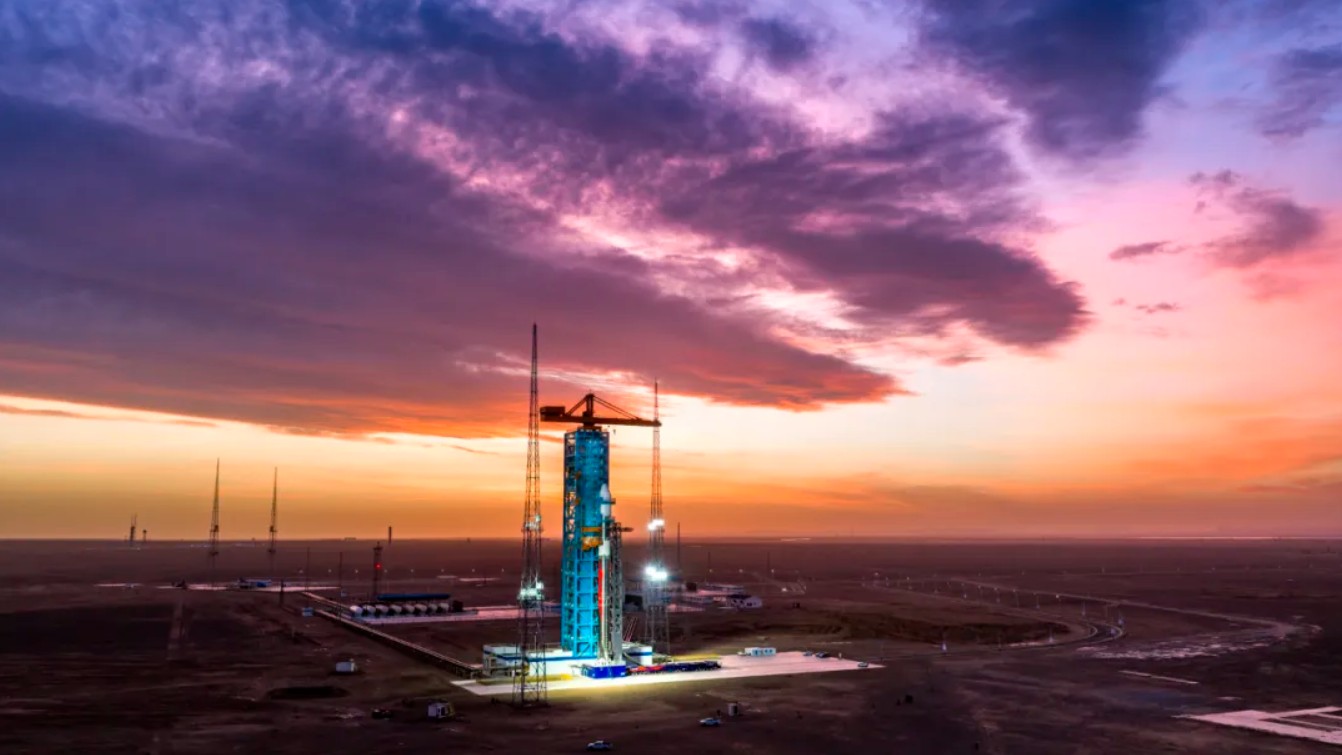

HELSINKI — China is rapidly building a broad, diverse satellite manufacturing base capable of producing thousands of spacecraft annually, but faces bottlenecks in launch and uncertain demand.
The country has already established dozens of facilities spanning state-owned institutes, commercial firms and regionally-backed clusters, with further future factories expected to take capacity to around 7,000 satellites per year, according to a space industry assessment.
Chinese space industry outlet Hello Space has identified at least 55 satellite factories in China, with 36 already in operation, 16 under construction, and a further three planned. According to the analysis, this provides a total production capacity of 4,050 satellites per year from the already operational facilities, with a projected additional capacity of 3,310 satellites from the future factories. In total, this amounts to a projected 7,360 satellites per year.
While the figure represents a theoretical maximum rather than demonstrated output, it nonetheless highlights the scale of China’s satellite manufacturing buildout. This is in part to help meet the requirements of the Guowang and Qianfan megaconstellations, which are planned to comprise a total of 28,000 satellites, creating strong demand.
But the planned capacity appears to go beyond these, to potentially enable state and commercial plans spanning applications such as remote sensing, Internet of Things, meteorology, direct-to-device and navigation enhancement. There are also nascent plans for on-orbit computing constellations and two new constellations filed with the ITU which would total 200,000 satellites, indicating longer term ambitions beyond demonstrated current demand.
The mapping of facilities also shows the emergence of new regional space clusters, and a shift towards mass production, often with strong support from local and regional governments.
Regionally, Shanghai—home to state-owned SAST and IAMCAS—leads the way, with 10 operational factories providing a potential 970 satellites per year, while nearby Zhejiang province boasts annual production capacity of 870, and Jilin province, which hosts Changguang Satellite, can produce 400 satellites. Beijing, which is moving to foster its commercial space ecosystem, and Hainan, which is constructing a satellite “super factory” alongside its launch facilities, are working to bring online a further capacity of 1,000 satellites per year each.
Publicly disclosed capacity figures for several major facilities broadly align with the estimates in the Hello Space analysis. Furthermore, the article describes three categories—market-driven, including factories for companies such as GalaxySpace, MinoSpace and Geespace; regionally-driven, including those at Hainan and the Haiyang-based maritime spaceport in Shandong, and the Jinan Satellite Manufacturing Base controlled by the Jinan Iron and Steel Group; and traditional players, such as the China Academy of Space Technology (CAST) and IAMCAS, which are already contributing to Guowang.
Bottlenecks
Despite this apparent online satellite manufacturing capacity, the number of spacecraft actually being produced and reaching orbit is far lower. Independent tracking from Jonathan McDowell indicates China launched 371 satellites in 2025, or less than 10 percent of the current online capacity. The gap reflects not only launch constraints but also the still-maturing commercial viability of large satellite constellations, with uncertainties over applications and revenue models.
In contrast, McDowell’s statistics show SpaceX alone launched 3,157 Starlink satellites in 2025, in what was a record year for launch. This is more than 10 times China’s total for the year, highlighting the gap between China’s manufacturing ambitions and its current deployment capacity and constellations it aims to emulate.
China has a fleet of older hypergolic and newer, expendable cryogenic and kerosene-based Long March launch vehicles in operation, along with numerous smaller solid rockets from the commercial sector. However, a plethora of new, potentially reusable Long March and commercial rockets have recently hit the pad or are close to doing so, which will mean China will soon likely be able to greatly boost its launch cadence and overall payload mass to orbit. Additionally, there is an ongoing expansion of existing launch centers and infrastructure as well as proposed new spaceports to help increase China’s access to space.
China’s central government in March designated commercial space as an emerging pillar industry, meaning the sector is set to benefit from strong policy support, state financing and industrial development programs. These moves suggest China is positioning itself to rapidly scale satellite deployment once it overcomes technical and commercial constraints.










Related Posts
Stay Informed With the Latest & Most Important News
Previous Post
Next Post




Advertisement
-
 01Two Black Holes Observed Circling Each Other for the First Time
 -
 02From Polymerization-Enabled Folding and Assembly to Chemical Evolution: Key Processes for Emergence of Functional Polymers in the Origin of Life
 -
 03Astronomy 101: From the Sun and Moon to Wormholes and Warp Drive, Key Theories, Discoveries, and Facts about the Universe (The Adams 101 Series)
 -
 04True Anomaly hires former York Space executive as chief operating officer
 -
 05Φsat-2 begins science phase for AI Earth images
 -
 06Hurricane forecasters are losing 3 key satellites ahead of peak storm season − a meteorologist explains why it matters
 -
 07Binary star systems are complex astronomical objects − a new AI approach could pin down their properties quickly