
Now Reading: Sun unleashes 2 colossal X-flares within 7 hours of each other, knocking out radio signals on Earth
-
01
Sun unleashes 2 colossal X-flares within 7 hours of each other, knocking out radio signals on Earth

Sun unleashes 2 colossal X-flares within 7 hours of each other, knocking out radio signals on Earth

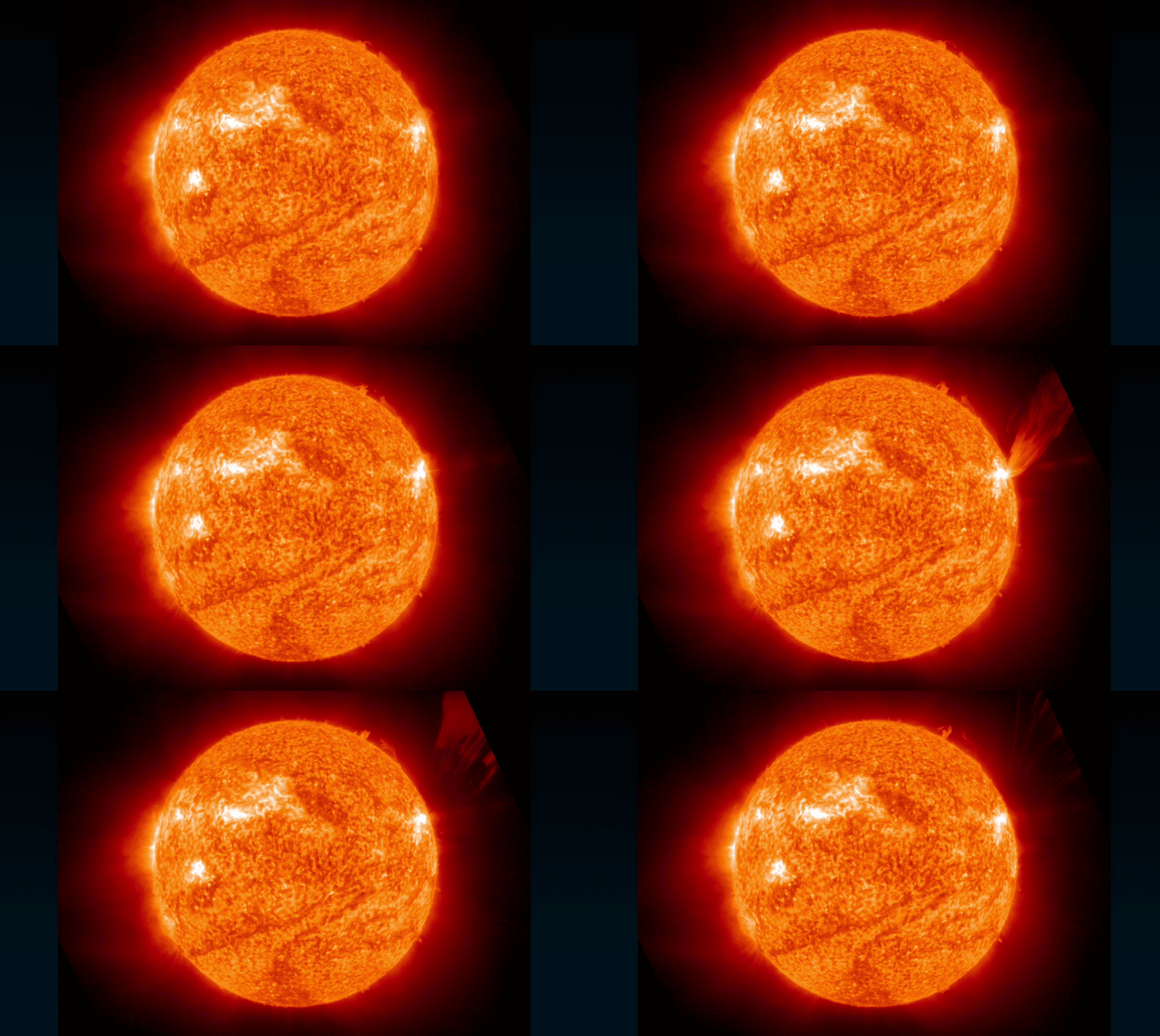
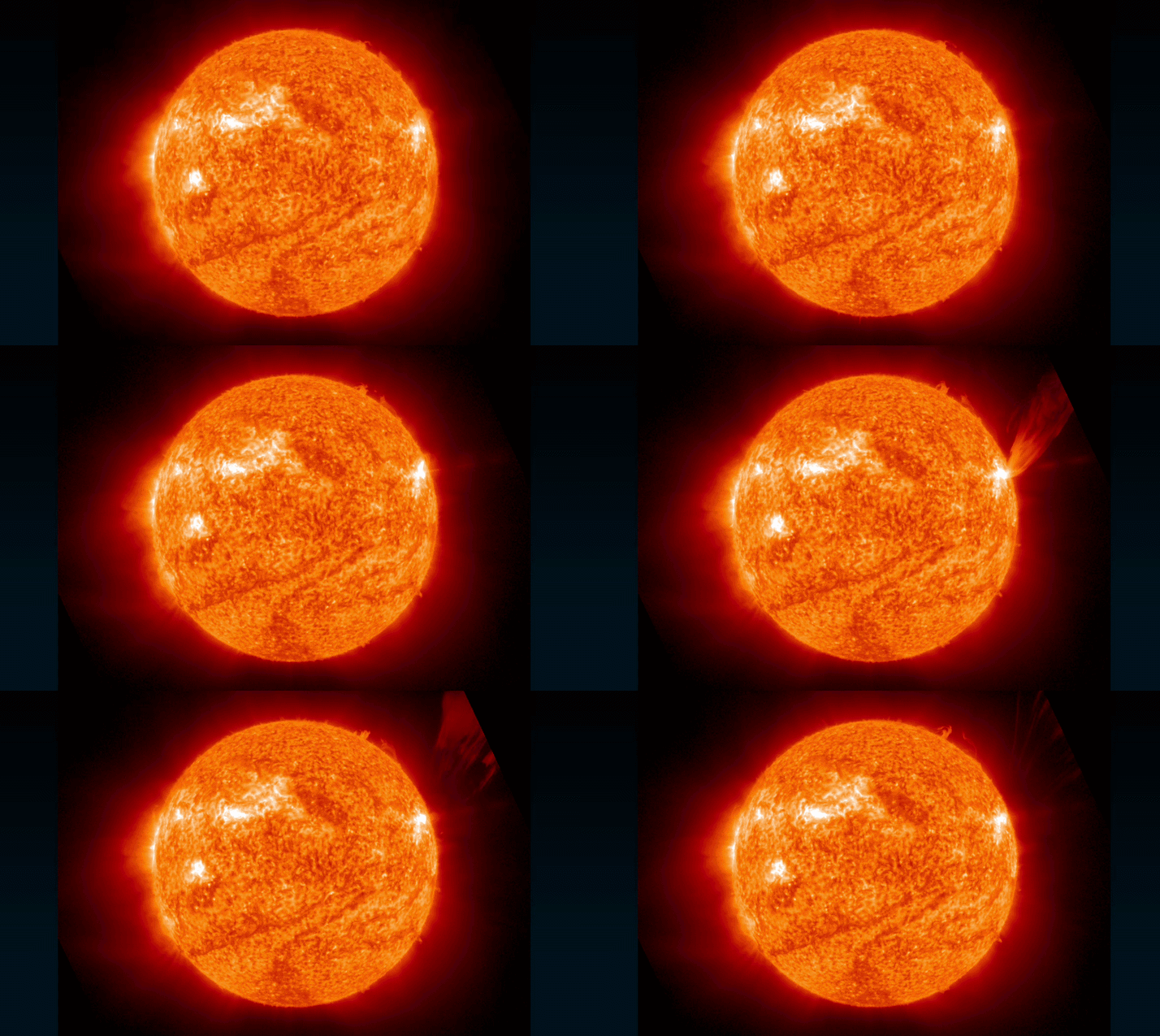
The sun has certainly woken up! It has fired off not one but two powerful X2.5 solar flares within just 7 hours.
The bursts of radiation from the flares triggered strong radio blackouts on the sunlit side of Earth — the first affecting parts of the Pacific Ocean and Australia and the second impacting East Asia.
The active sunspot region is putting on quite the show before it rotates out of view. The X-flares were preceded by a flurry of M-class solar flares on April 23, along with a rare “sympathetic flare” where eruptions occurred in two separate sunspot regions on opposite sides of the sun.
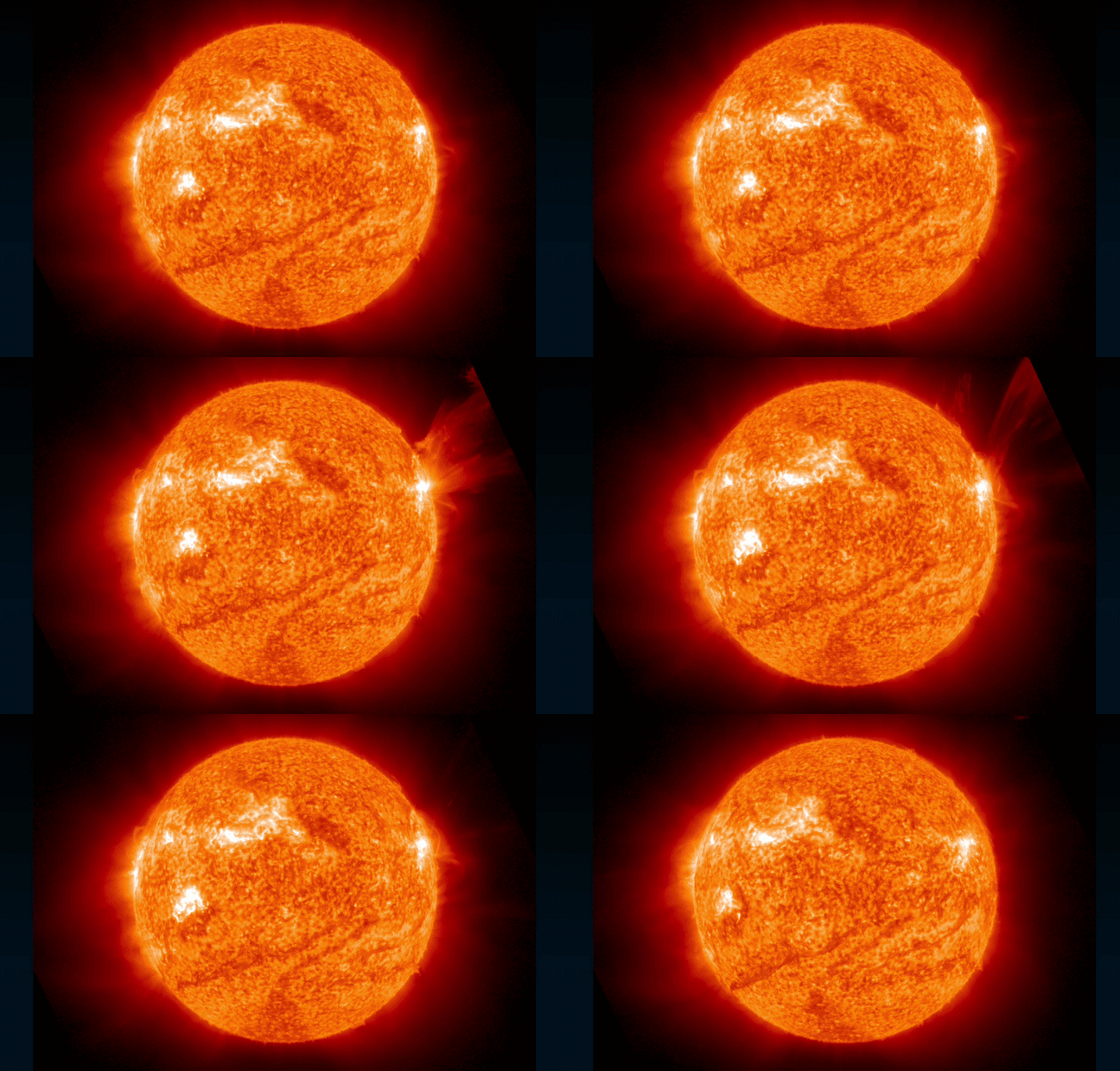
The X-flares appear to have been accompanied by coronal mass ejections (CMEs) — large expulsions of plasma and magnetic field from the sun. However, because the sunspot is positioned on the sun’s western edge, it’s unlikely these CMEs are heading directly toward Earth. That said, forecasters are still modelling their paths and a glancing blow remains possible. If that happens, it could trigger geomagnetic storm conditions and spark vivid aurora displays.
What are solar flares?
Solar flares are powerful explosions from the sun that release intense bursts of electromagnetic radiation at the speed of light, including X-rays and ultraviolet light.
They are classified by strength into five categories, A, B, C, M, and X, each letter representing a 10-fold increase in intensity, with X-flares being the most powerful.
How do they cause radio blackouts?
Image 1 of 2
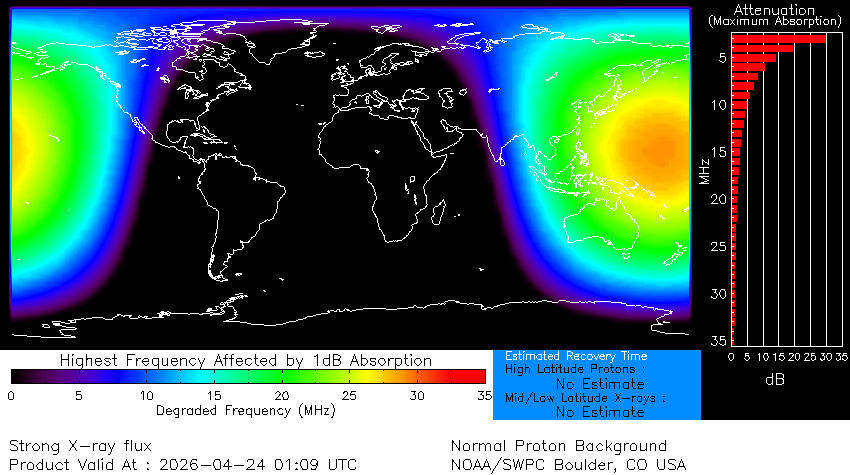
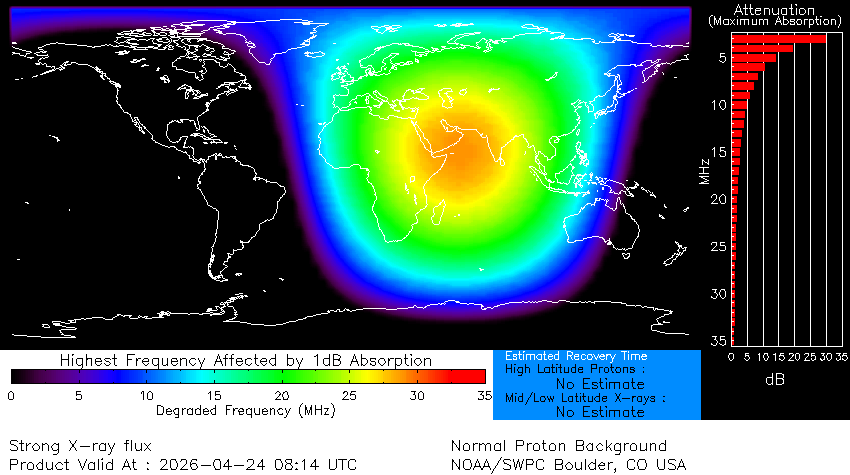
When radiation from a solar flare reaches Earth, it ionizes the upper atmosphere known as the ionosphere, which can disrupt shortwave radio communications.
Under normal conditions, high-frequency radio waves can travel long distances by bouncing off the upper layers in the ionosphere. But during a strong solar flare, the lower layers become much more ionized than usual.
This creates a denser environment where radio waves are more likely to collide with charged particles and lose energy. As a result, signals can weaken, become distorted or be completely absorbed, leading to shortwave radio blackouts according to NOAA.










Related Posts


Stay Informed With the Latest & Most Important News
Previous Post
Next Post



Advertisement
-
 01Two Black Holes Observed Circling Each Other for the First Time
 -
 02From Polymerization-Enabled Folding and Assembly to Chemical Evolution: Key Processes for Emergence of Functional Polymers in the Origin of Life
 -
 03Astronomy 101: From the Sun and Moon to Wormholes and Warp Drive, Key Theories, Discoveries, and Facts about the Universe (The Adams 101 Series)
 -
 04True Anomaly hires former York Space executive as chief operating officer
 -
 05Φsat-2 begins science phase for AI Earth images
 -
 06Hurricane forecasters are losing 3 key satellites ahead of peak storm season − a meteorologist explains why it matters
 -
 07Binary star systems are complex astronomical objects − a new AI approach could pin down their properties quickly