
Now Reading: The opportunity beyond orbital data centers
-
01
The opportunity beyond orbital data centers




TAMPA, Fla. — Investor attention is starting to shift toward ventures that could be enabled by orbital data centers, even as the massive computing networks proposed by SpaceX and others remain years from reality.
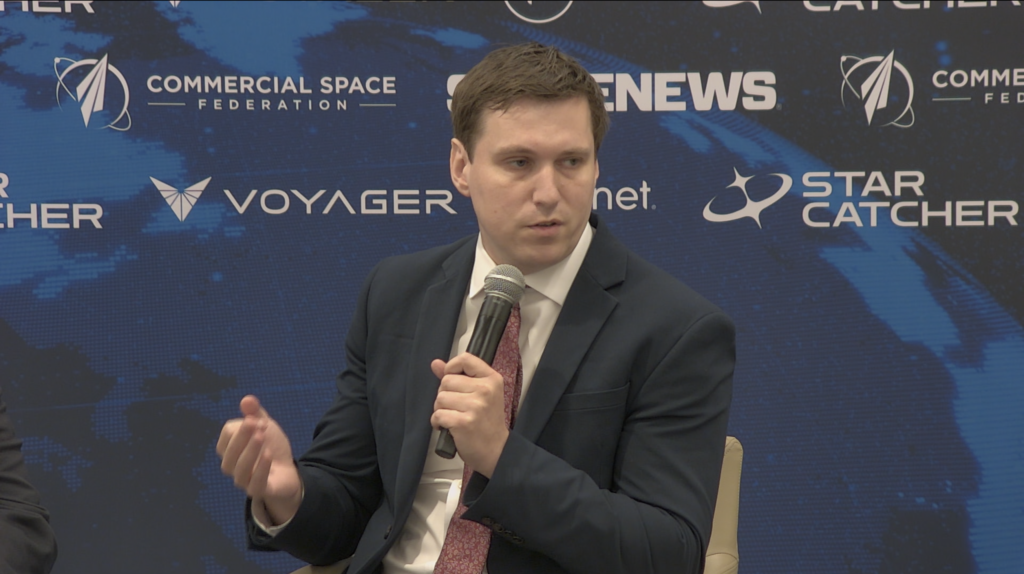
Delian Asparouhov, a partner at venture capital firm Founders Fund, said April 30 during a SpaceNews event on orbital data centers in Washington, D.C., that he would be wary of competing directly with SpaceX in the emerging market, or in any area the company considers core.
However, he pointed to potential opportunities for companies built around the infrastructure that, for now, is primarily targeting AI computing workloads on Earth.
Asparouhov, also cofounder and president of returnable spacecraft developer Varda Space Industries, said he was initially skeptical of orbital data centers because of the scale of the infrastructure and costs involved.
SpaceX has filed plans for up to one million orbital data centers, which are expected to at least initially focus on internal compute workloads at Elon Musk’s AI company xAI and electric carmaker Tesla. Two-year-old venture Starcloud is seeking approval for 88,000 orbital data centers, aimed at customers seeking infrastructure for their own computing services.
According to Asparouhov, lower launch costs and technology maturity projected over the next decade have made the business case more compelling.
Political pressure on terrestrial data centers is another major factor. He pointed to growing populist opposition on the left and right in the United States that could lead to more development restrictions.
Founders Fund, an early SpaceX investor that has also backed AI companies OpenAI and Anthropic, has not yet made what Asparouhov described as a “real lunar investment,” but that could change if orbital data centers create demand for new infrastructure.
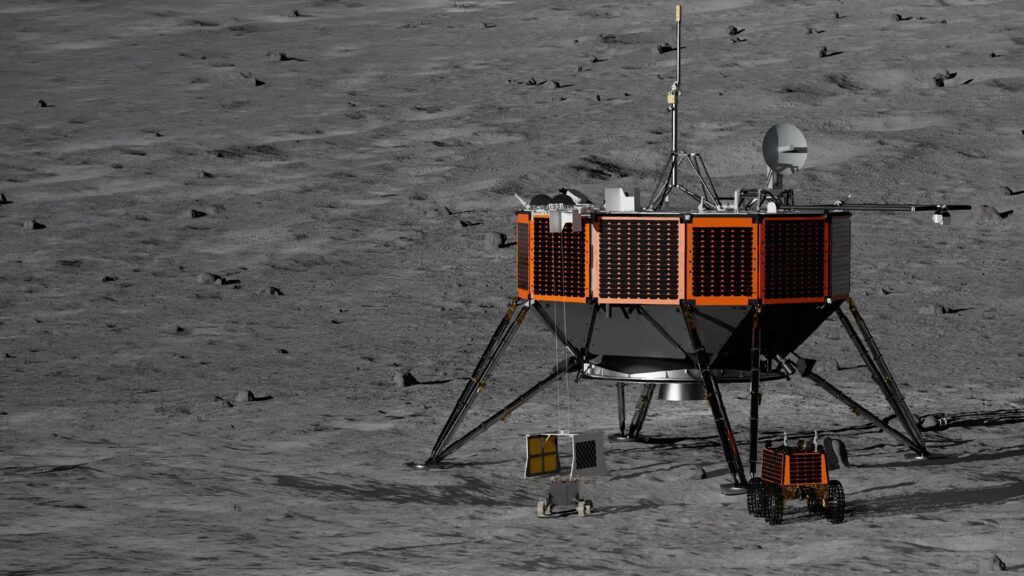
One example could be autonomous lunar ice mines that would rely on nearby computing capacity to process data and operate around the clock.
That’s a capability that would greatly benefit from orbital data centers, he said, while remaining outside SpaceX’s core focus.
Founders Fund has also invested in Crusoe, an AI infrastructure provider and early Starcloud customer.
Still, Asparouhov said the orbital data center market depends heavily on launch capacity, particularly whether Starship and other heavy-lift vehicles can frequently place large amounts of mass in orbit at much lower cost.
Other unresolved challenges include power generation, thermal management, regulation and whether demand for space-based compute develops at the scale proponents expect, amid concerns over a potential AI bubble back on Earth.










Related Posts

Stay Informed With the Latest & Most Important News
Previous Post
Next Post



Advertisement
-
 01Two Black Holes Observed Circling Each Other for the First Time
 -
 02From Polymerization-Enabled Folding and Assembly to Chemical Evolution: Key Processes for Emergence of Functional Polymers in the Origin of Life
 -
 03Astronomy 101: From the Sun and Moon to Wormholes and Warp Drive, Key Theories, Discoveries, and Facts about the Universe (The Adams 101 Series)
 -
 04True Anomaly hires former York Space executive as chief operating officer
 -
 05Φsat-2 begins science phase for AI Earth images
 -
 06Hurricane forecasters are losing 3 key satellites ahead of peak storm season − a meteorologist explains why it matters
 -
 07Binary star systems are complex astronomical objects − a new AI approach could pin down their properties quickly