
Now Reading: Trump’s proposed NASA budget is a ‘horrible threat to our future’ in space, Planetary Society CEO says
-
01
Trump’s proposed NASA budget is a ‘horrible threat to our future’ in space, Planetary Society CEO says

Trump’s proposed NASA budget is a ‘horrible threat to our future’ in space, Planetary Society CEO says

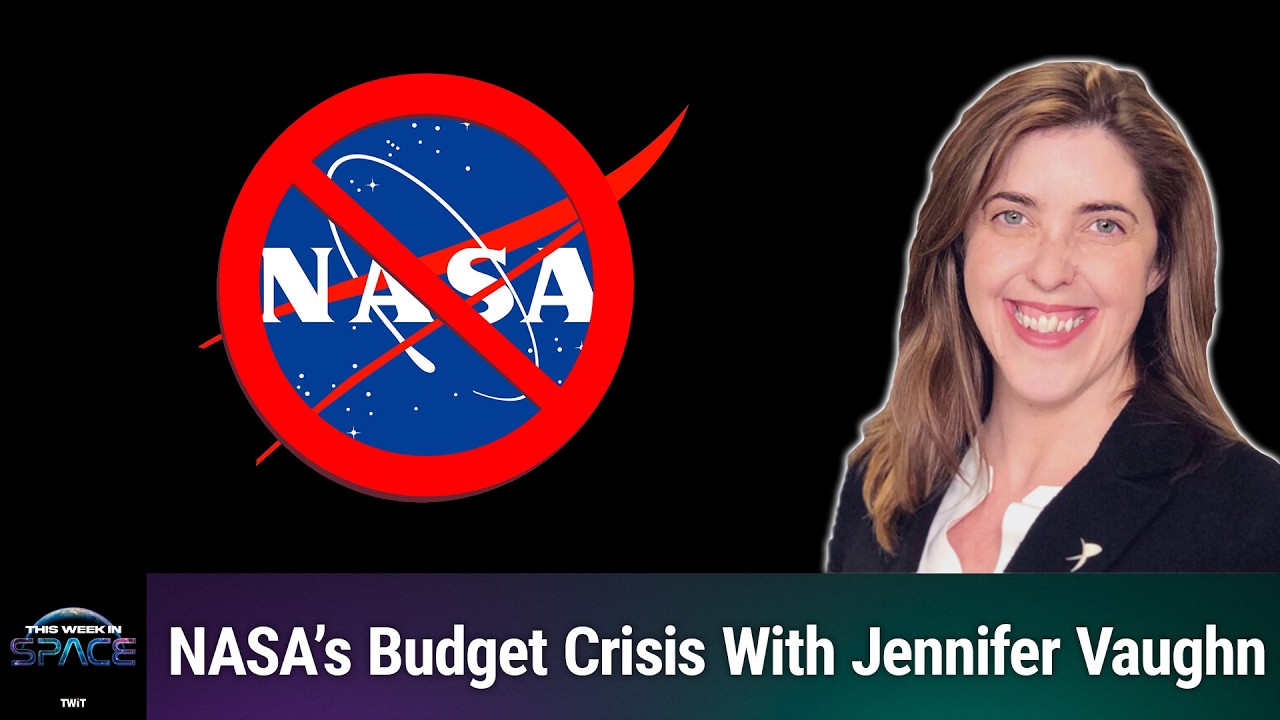
The new chief of the Planetary Society says she is prepared once again to fight NASA’s science budget cuts, after helping the advocacy group do so last year.
Planetary Society CEO Jennifer Vaughn said the political environment is “so raucous” for space organizations like hers, in conversation with Space.com Editor-in-Chief Tariq Malik, along with Ad Astra editor-in-chief Rod Pyle, during the “This Week in Space” weekly podcast on Friday (April 24) that Malik and Pyle co-host.
Article continues below
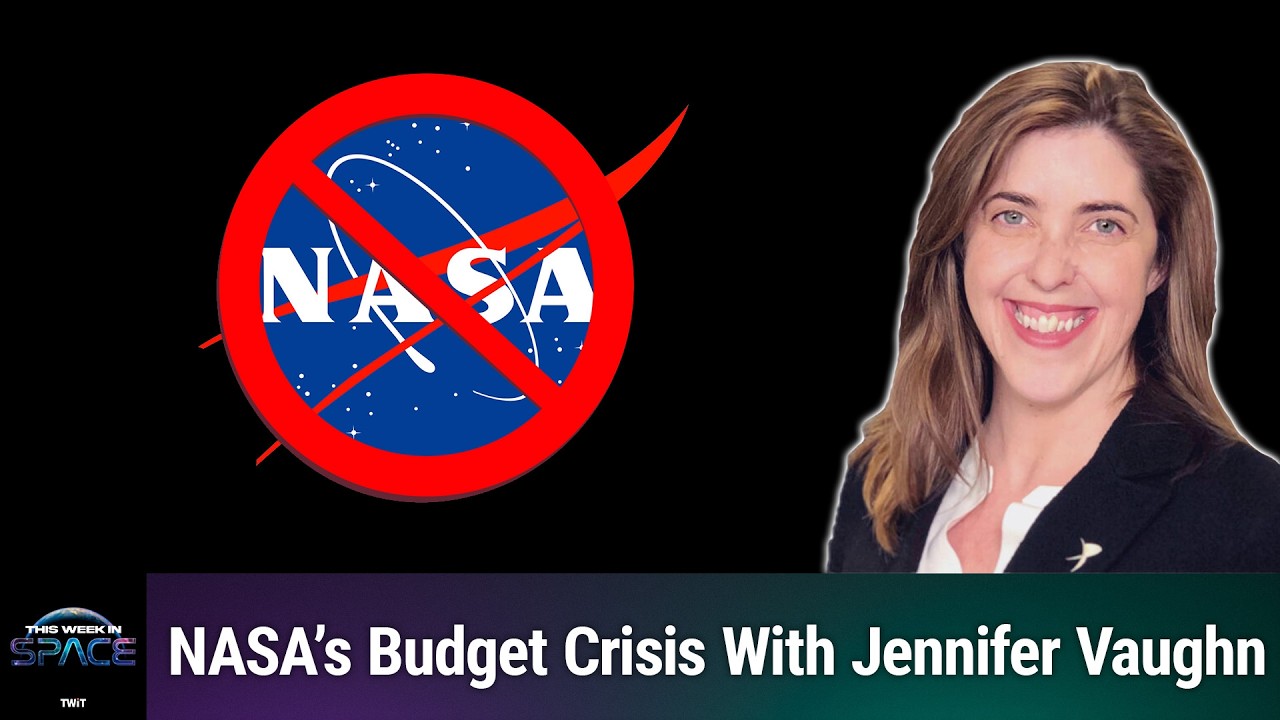
Vaughn took over the role from Bill Nye earlier this year. The new Planetary Society CEO said NASA is having an exciting time in space these days due in large part to the historic Artemis 2 moon mission. But the cuts, she said, pose a “horrible threat to our future, especially the scientific exploration of space, which is what we’re all about.”
While Artemis 2 was on its way to the moon, and on Good Friday as well as Passover, the Trump administration dropped a 23% cut to the agency that would slash spending in fiscal 2027 spending to $18.8 billion — similar to the request rejected by Congress in the last fiscal year.
Vaughn added that especially with Artemis 2 showing what that leadership represents, her take is the budget is “going nowhere” with Congress. The Planetary Society was one of the groups most prominently fighting for the cuts to be restored in the 2026 budget, she said, and members of Congress have remembered that in recent conversations.
But the Planetary Society is not taking that for granted. “Our job is to stand up to sound the alarms, and make sure that everyone understands that this proposal should not move forward,” she said. “Even if we believe that everyone in Congress is already on board and they’re saying, ‘Yep, we’re going to make sure this doesn’t happen.'”
The “ping-pong” approach to slashing and restoring budgets, she added, is “damaging” because it might be moving those who would be interested in space science jobs into areas where they perceive more stability. So even if the cuts are restored, “The damage gets done regardless.”
Damage is not only done in terms of career stability, but in terms of inspiration, Vaughn stated. She recalled the seminal 1980s Cosmos series hosted by Carl Sagan, a planetary scientist and co-founder of the Planetary Society. That series came in the wake of generational-building missions such as the Voyager 1 and Voyager 2 that as a pair, eventually flew past all the gas giants of the solar system, and the first U.S. landings on Mars by Viking 1 and Viking 2 in 1976.
Similar inspiring things are happening today, she noted, which drive not only intangibles like inspiration, but “pushing the bounds of science and technology” in a way that is relevant to the workforce. Proposed cuts to the science program include “perfectly good spacecraft”, she said, such as the Chandra X-Ray Observatory, which is uncovering the hidden universe using one of NASA’s seminal telescopes, along with the OSIRIS-APEX mission set to explore asteroid Apophis, and the Mars Odyssey mission that has been charting the Red Planet for 25 years.
And there are more decadal missions to come that would also be removed, including spacecraft to Venus and an effort to bring a large mission to Uranus, both of which have been identified as priorities by decadal surveys in the planetary science community. And even the planning stages of new missions are not being pushed forward: no new calls for missions have been put out recently, and no new grants released, Vaughn said.
But “I feel like it’s being drowned out,” she added of the discussion around science, “like you’re just not hearing that anymore. That’s the whole point, and I felt like saying that with some of my own meetings on the [Capitol] Hill.”
Vaughn is no stranger to the society — in fact, she’s been there for 30 of the society’s nearly 50 years of existence. She worked her way up from editorial assistant of The Planetary Report, graduating on to managing editor, director of publications and now, CEO of the organization.
Vaughn said that two “space love stories” brought her into the field. The first was a tragedy, when she was in her 20s: she had been studying literature and American poetry, specifically Adrienne Rich’s poem “Orion” (which among other things, includes a description of the constellation in the northern sky.)
Vaughn’s “fabulous poetry teacher” was someone she trusted so much that she shared she was having a hard time with her mother, who had had a stroke. The teacher, who she did not name, sympathized and said Vaughn perhaps was having trouble sleeping, and suggested using the stars as a source of the inspiration.
“So here is the ’90s. So here’s a stack of papers,’ ” Vaughn recalled the teacher telling her next, saying as an aside in this pre-World Wide Web era, “because everything was a paper.” The papers concerned the Orion constellation, and the Orion Nebula, which “started to spark this interest in me, because I also was having my own personal conversation about the night sky and the consistency of it all. And in my little moment of crisis, how all of humankind has been looking up at the same sky and going through these tough moments and these moments of joy, it just was helping to put everything together for me in a moment when I needed it most.”
Along that journey, Vaughn joined the Planetary Society. By coincidence the first Mars rover on the Sojourner mission, known as Pathfinder, landed on the Red Planet in 1997 just seven months after she became a member. Vaughn called it a “conversion moment” similar to Artemis 2, because she witnessed the first U.S. Mars landing since 1976 alongside 5,000 other enthusiasts.
And the magic wasn’t done. “Then just watching that first image come down, kind of just like filling in line by line, because it was a very slow process back then to get the image fully resolved—and recognizing this is the first time humankind has ever laid eyes on this site,” Vaughn recalled. She realised: “This is, I’m exploring. I’m an explorer. You’re an explorer. We’re all an explorer. And I realised, in that moment, ‘What could be more exciting than this? This is truly what I want to be doing.'”
Vaughn noted that what she would love to see is a bigger commitment to U.S. science today. While speaking from a “very limited perspective,” she said, one of the big differences between the U.S. and China is that China can “set out a 100-year plan and they can actually commit to it, and then there’s no question of will [that] the funding will be there.”
Recent Congressional discussions (under both the Trump and Biden administrations) have focused on China’s perceived threat to U.S. space exploration, in terms of areas like landing humans on the moon by 2030 and by expanding opportunities in low-Earth orbit for research just as the International Space Station is expected to retire.
Vaughn added, however, that she is not focused on “some sort of space race” between the countries, but rather, “I do really believe that what the U.S. has been able to deliver is extraordinary. It is trailblazing leadership. And why would you ever want to lose that? Why would you ever want to give that up? And so I think we need this. We need longer-term commitments here to what we’re trying to do in space.”










Related Posts
Stay Informed With the Latest & Most Important News
Previous Post
Next Post



Advertisement
-
 01Two Black Holes Observed Circling Each Other for the First Time
 -
 02From Polymerization-Enabled Folding and Assembly to Chemical Evolution: Key Processes for Emergence of Functional Polymers in the Origin of Life
 -
 03Astronomy 101: From the Sun and Moon to Wormholes and Warp Drive, Key Theories, Discoveries, and Facts about the Universe (The Adams 101 Series)
 -
 04True Anomaly hires former York Space executive as chief operating officer
 -
 05Φsat-2 begins science phase for AI Earth images
 -
 06Hurricane forecasters are losing 3 key satellites ahead of peak storm season − a meteorologist explains why it matters
 -
 07Binary star systems are complex astronomical objects − a new AI approach could pin down their properties quickly