
Now Reading: Thousands Of Previously Unknown Proteins Discovered
-
01
Thousands Of Previously Unknown Proteins Discovered


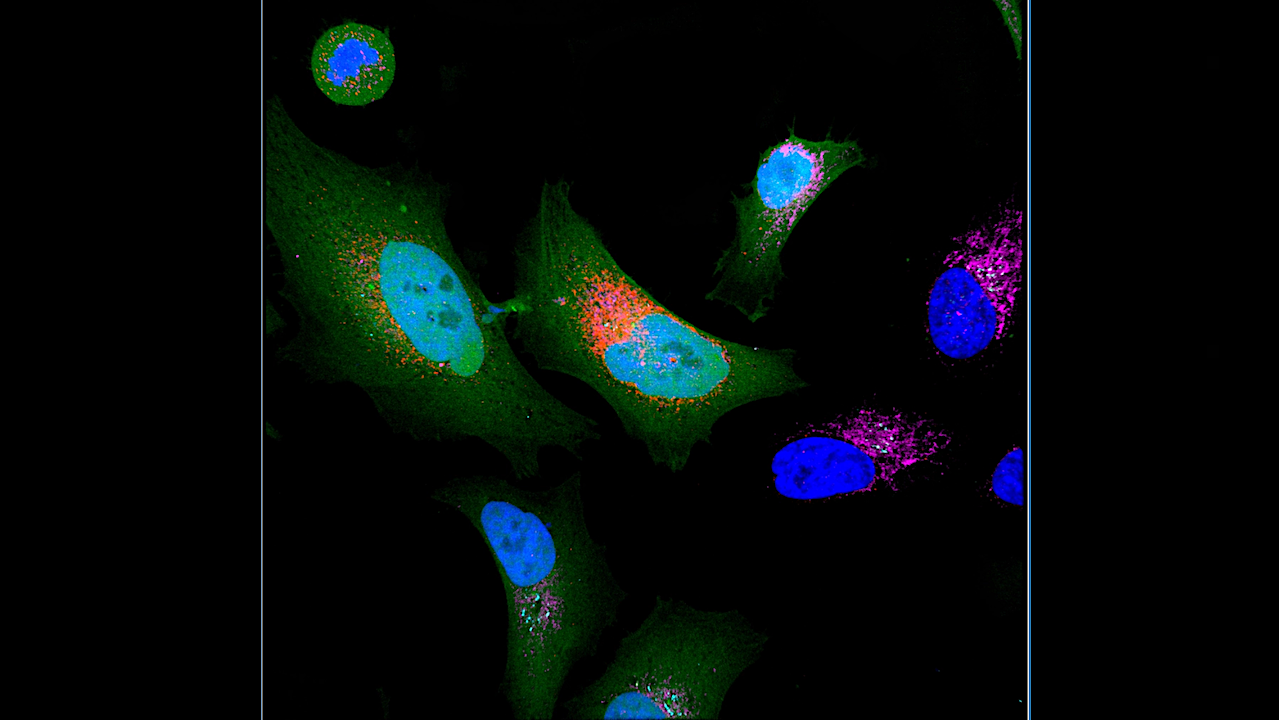
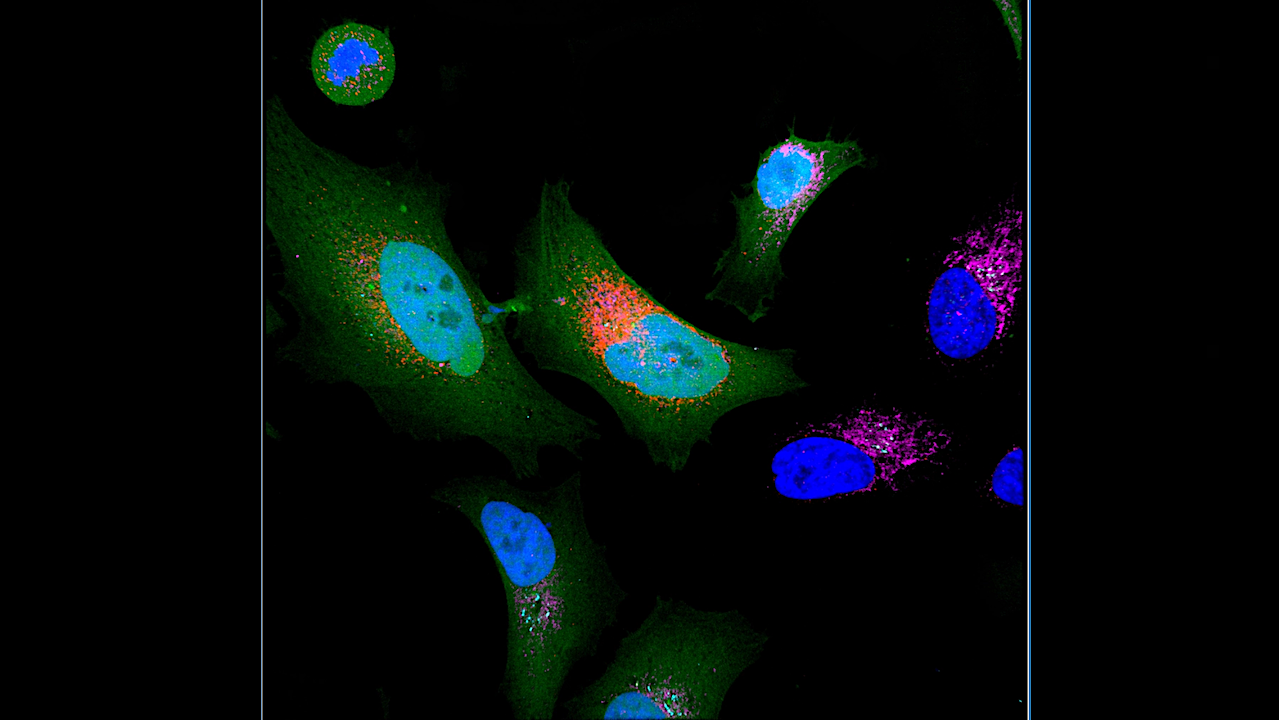
Cancer Cell expressing microprotein (colored in red) – Credits Ting Luo The researchers investigated 7,264 so‑called non‑canonical open reading frames (ncORFs). These ncORFs are produced by previously overlooked genes in our DNA, the so‑called non‑coding genome, and are the source of peptideins. They found that approximately a quarter of the studied ncORFs actually produce proteins. This was unprecedented proof of their existence.
Editor’s note: As we expand outward from Earth to other worlds we are almost certainly going to encounter things we did not expect to find – things that are unlikely or impossible on Earth. Life on other worlds may arise from a totally different set of chemical pathways than was the case on Earth. Or it may follow a very similar path. Or both. How do we estimate what could exist such that we are better prepared to search for the unexpected? Using systems such these researchers have done to identify the plethora of compounds that are possible and functional in Earth life is one way to start to figure that out.
A group of international researchers has discovered 1,700 new proteins. The research data they collected has been made accessible to other researchers. These are small proteins that may play an important role in cells, for example in the development of diseases such as (childhood) cancer. The researchers hope to quickly learn more about the role of these newly discovered micro‑proteins in the so‑called dark proteome, which they call peptideins. These proteins may offer new leads for future treatments.
‘It was very special when we realized: this really is something new!’ says Dr. Sebastiaan van Heesch, research group leader at the Princess Máxima Center and Oncode Institute. He led the study together with two other scientists from the United States.
There is still much to learn about the thousands of new proteins. Leron Kok, a PhD candidate in the Van Heesch group and involved in the research, explains: ‘What we do know is that they are produced by the thousands in every cell of our body. And we have also shown that some of these peptideins are essential for a cell’s survival: the cell dies when you remove the small protein.’
Discovering a new world together
Previous research into the precise role of the microprotein involved in medulloblastoma took nearly four years. This work was published by the Van Heesch group in collaboration with the research group of Dr. John Prensner at the University of Michigan, which is also part of the same international consortium.
Many peptideins still remain to be studied. The researchers are therefore pleased that the research data on the new proteins is now accessible to other scientists via databases. This allows other researchers to include them in their own studies and to indicate, for example, when they observe that one of the proteins is involved in a specific cellular process, carries DNA changes linked to disease, or frequently occurs in certain types of cancer.
Researchers can also use the database to make their research results more complete. Thousands of additional peptideins that previously remained invisible in results, but are present in the cell, can now be added. Van Heesch says: This is how we discover this new world of previously unknown proteins together.’
The results were published today in the leading scientific journal Nature. Earlier, Nature and the likewise prestigious journal Science published news articles about this research. The study was made possible by many funding organizations. For the research at the Princess Máxima Center, these included, among others, Oncode Accelerator, the Netherlands Organisation for Scientific Research (NWO), Oncode Institute and Stichting Kinderen Kankervrij (KiKa).
Innovative Technologies
Peptidein is now officially recognized as a new molecular type in human cells. ‘With peptideins, we are filling a ‘biological gap’. Using new techniques, we have given a name to something we detected, saw had potential for further research, formally defined it, and made it accessible to other researchers,’ says Sebastiaan Van Heesch
To reach this point, experts in proteomics, immunopeptidomics, ribosome profiling, and gene annotation collaborated within the TransCODE consortium. The study was led by Dr. Sebastiaan van Heesch, research group leader at the Princess Máxima Center, together with Dr. John Prensner and Dr. Robert Moritz, research group leaders at the University of Michigan and the Institute for Systems Biology in Seattle, respectively.
Researchers discovered and added this new group of proteins to reference databases thanks to advanced techniques, including:
- CRISPR‑Cas9 screening to determine biological function; are there peptideins that are crucial for cell survival?
- A new bioinformatics program to measure the evolutionary age of peptideins and the selective pressure acting on them
- Optimized size-enriched and targeted proteomics technologies to improve the detection and validation of peptideins
Consensus and Evidence
Leron Kok is, together with four other authors from the United States and the United Kingdom, first author of the study published in Nature. ‘We analyzed and visualized a vast amount of public data to achieve consensus and scientific evidence to properly establish this new group,’ he says.
Evidence was provided for 1,700 detected peptideins. These have been included as a new group in reference databases accessible to researchers, such as GENCODE, UniProt, and PeptideAtlas. The data helps researchers obtain a more complete picture of biological processes in and around different types of cells. This makes it possible, for example, to identify more precise targets for immunotherapy. The database also helps compare candidates for new therapies and analyze data more effectively. The consortium intends to continue feeding the databases with new data, and the first expansion has already taken place.
Van Heesch explains: ‘With this recognition and by making the information accessible, we have opened a new field of research and built a bridge to research groups in the proteomics field. The insights they gain will allow us to prioritize the roles that thousands of new peptideins play in cells and determine where therapeutic opportunities with these previously unknown proteins may lie.’
The study was conducted by the TransCODE consortium, an international collaboration of more than 60 researchers from over 30 institutions worldwide. The consortium is co‑led by the Princess Máxima Center for pediatric oncology in the Netherlands, the University of Michigan Medical School, the EMBL European Bioinformatics Institute in Hinxton, and the Institute for Systems Biology in Seattle. The consortium continues its work and collaborates with other dark proteome initiatives, such as the recently awarded Cancer Grand Challenge to Team ILLUMINE.
Revealed: the mysterious ‘dark’ proteins that might play a big role in biology, Nature
Astrobiology, genomics, biochemistry, bioinformatics,










Related Posts



Stay Informed With the Latest & Most Important News



Advertisement
-
 01Two Black Holes Observed Circling Each Other for the First Time
 -
 02From Polymerization-Enabled Folding and Assembly to Chemical Evolution: Key Processes for Emergence of Functional Polymers in the Origin of Life
 -
 03Astronomy 101: From the Sun and Moon to Wormholes and Warp Drive, Key Theories, Discoveries, and Facts about the Universe (The Adams 101 Series)
 -
 04True Anomaly hires former York Space executive as chief operating officer
 -
 05Φsat-2 begins science phase for AI Earth images
 -
 06Hurricane forecasters are losing 3 key satellites ahead of peak storm season − a meteorologist explains why it matters
 -
 07Binary star systems are complex astronomical objects − a new AI approach could pin down their properties quickly