
Now Reading: European Space Agency to livestream launch of collaborative Smile mission in 2026
-
01
European Space Agency to livestream launch of collaborative Smile mission in 2026

European Space Agency to livestream launch of collaborative Smile mission in 2026

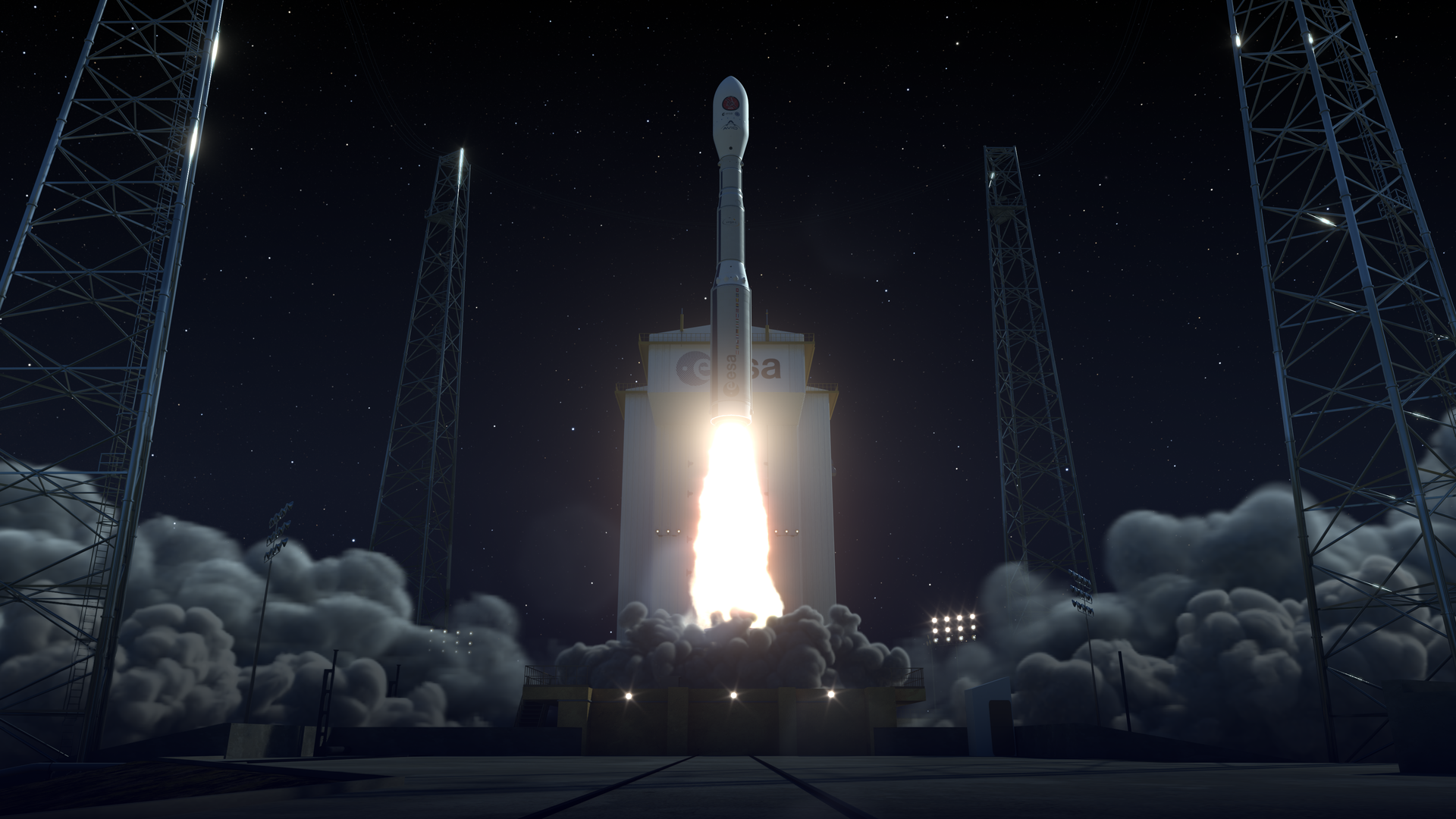

The European Space Agency (ESA) is set to livestream the launch of the European-Chinese Smile mission on May 19, 2026, at 04:52 BST (05:52 CEST, 00:52 local time). The mission will take off aboard a Vega-C rocket from Europe’s Spaceport in French Guiana. Viewers can tune in beginning at 05:30 CEST to watch the launch, which is subject to schedule changes.
The launch coverage will feature key milestones from liftoff through the spacecraft’s initial deployment phases. Notable events include the ignition of the first stage at liftoff, the separation of various rocket stages, and the deployment of Smile’s solar arrays.
Once in space, the Smile spacecraft will undergo 11 engine burns over the next 25 days, gradually adjusting its orbit from 700 km above Earth to an altitude of 121,000 km over the North Pole and 5,000 km over the South Pole. The mission team will then prepare Smile for scientific operations, which include deploying its magnetometer boom and activating its imaging instruments. The first X-ray and ultraviolet images are expected around three months post-launch, marking the beginning of the mission’s scientific endeavors, designed to last three years.
Smile, short for Solar wind Magnetosphere Ionosphere Link Explorer, is a collaborative effort between ESA and the Chinese Academy of Sciences. The mission aims to explore Earth’s reactions to solar wind, enhancing understanding of solar storms and space weather dynamics. ESA supplies the majority of the mission’s scientific payload and will oversee the operation of the spacecraft once it’s in orbit, while the Chinese Academy of Sciences provides additional scientific instruments and the spacecraft platform.
The Vega-C rocket, which will deliver Smile to orbit, is designed to launch around 2,300 kg into space, catering to small scientific and Earth observation satellites. With a height of 35 meters and a launch weight of 210 tonnes, it utilizes three solid-propellant stages followed by a liquid-propellant stage for precise satellite deployment, fortifying Europe’s access to space.










Related Posts

Stay Informed With the Latest & Most Important News
Previous Post
Next Post

Advertisement
-
 01Two Black Holes Observed Circling Each Other for the First Time
 -
 02From Polymerization-Enabled Folding and Assembly to Chemical Evolution: Key Processes for Emergence of Functional Polymers in the Origin of Life
 -
 03Astronomy 101: From the Sun and Moon to Wormholes and Warp Drive, Key Theories, Discoveries, and Facts about the Universe (The Adams 101 Series)
 -
 04True Anomaly hires former York Space executive as chief operating officer
 -
 05Φsat-2 begins science phase for AI Earth images
 -
 06Hurricane forecasters are losing 3 key satellites ahead of peak storm season − a meteorologist explains why it matters
 -
 07Binary star systems are complex astronomical objects − a new AI approach could pin down their properties quickly