
Now Reading: Intense Week of Space Launches Scheduled as US and China Prepare for Nine Missions
-
01
Intense Week of Space Launches Scheduled as US and China Prepare for Nine Missions

Intense Week of Space Launches Scheduled as US and China Prepare for Nine Missions

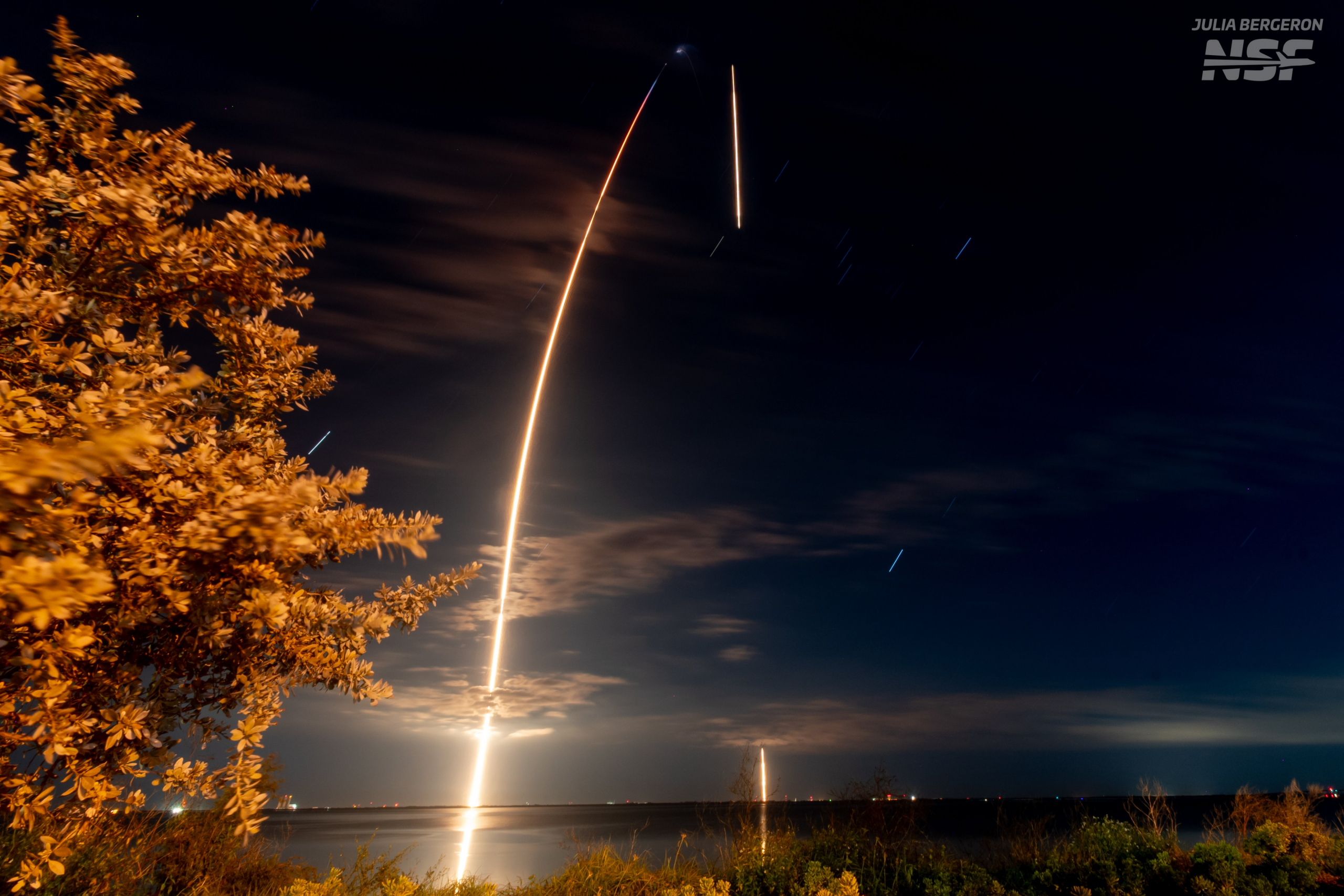

The week of May 11 is set to witness a flurry of space launches, with nine missions scheduled across the United States and China, featuring both government and commercial entities. SpaceX will spearhead the activities in the U.S. with four separate Falcon 9 missions, which include a resupply flight to the International Space Station (ISS), a classified payload for the National Reconnaissance Office (NRO), a Starlink launch, and a commercial communications mission for Globalstar. Additionally, SpaceX’s Starship could attempt its 12th test flight as early as Friday.
China will contribute four launches during this timeframe, with the China Aerospace Science and Technology Corporation (CASC) preparing to lift off a Chang Zheng 6A rocket from Taiyuan and a Chang Zheng 8 from Wenchang. The Chinese commercial sector will also execute consecutive launches of Zhuque-2E and Kinetica 1 rockets from Jiuquan.
SpaceX’s week begins on the West Coast with the NROL-172 mission set to launch from Vandenberg Space Force Base on Monday, May 11, at 7:13 PM PDT (02:13 UTC on May 12). This NRO mission will deliver the 12th set of satellites for its proliferated architecture program, a novel approach involving a larger number of smaller satellites aimed at improving data collection and operational resilience. The satellites are expected to be government-grade variants of SpaceX’s Starlink technology, developed in collaboration with Northrop Grumman for intelligence operations in low Earth orbit (LEO).
On Tuesday, May 12, the Chang Zheng 6A is scheduled to launch at 11:55 UTC from the Taiyuan Satellite Launch Center. The specifics of its payload remain undisclosed, but it is anticipated to support either the GuoWang or G60 Qianfan internet satellite constellations as China intensifies efforts to establish robust broadband coverage.
Later that day, Falcon 9 will conduct its 34th Commercial Resupply Services mission for NASA, departing from Cape Canaveral Space Force Station at 7:16 PM EDT (23:16 UTC). The Dragon capsule will deliver a significant payload to the ISS, including scientific experiments targeting a range of health and physical science studies as well as equipment for monitoring cosmic radiation.
On Wednesday, May 13, Beijing-based LandSpace will put its Zhuque-2E rocket into operation from Jiuquan at 03:00 UTC, although details surrounding its payload remain unannounced. This rocket uses liquid oxygen and methane, making it one of a few commercial methalox launchers currently active worldwide.
Following that launch, CAS Space will attempt to launch its Kinetica 1 rocket on May 15 at 04:30 UTC from Jiuquan. The specifics of its mission have not been revealed, but the rocket is designed to serve commercial customers with capabilities for placing payloads into LEO and SSO.
SpaceX’s busy schedule continues with a Falcon 9 launch of a new batch of Starlink satellites set for Friday morning at 7:00 AM PDT (14:00 UTC), enhancing its already expansive internet constellation. This will be followed by the anticipated 12th flight of the Starship system on the same day, which aims to further test its Block 3 configuration in a suborbital mission.
Closing out the week, SpaceX will conduct its first of two planned Globalstar missions on Sunday, May 17, carrying nine satellites to bolster the communication network essential for mobile voice and data services. This mission marks a continuation of Globalstar’s efforts to upgrade its constellation in partnership with Apple, which is financing much of the initiative.
Finally, a Chang Zheng 8 rocket will launch from Wenchang on Sunday at 14:40 UTC, although details of its cargo remain undisclosed. This launch underscores the robust rhythm of China’s space program, which continues to gather momentum as it looks to complete a high number of missions through 2026.










Related Posts


Stay Informed With the Latest & Most Important News
Previous Post
Next Post

Advertisement
-
 01Two Black Holes Observed Circling Each Other for the First Time
 -
 02From Polymerization-Enabled Folding and Assembly to Chemical Evolution: Key Processes for Emergence of Functional Polymers in the Origin of Life
 -
 03Astronomy 101: From the Sun and Moon to Wormholes and Warp Drive, Key Theories, Discoveries, and Facts about the Universe (The Adams 101 Series)
 -
 04True Anomaly hires former York Space executive as chief operating officer
 -
 05Φsat-2 begins science phase for AI Earth images
 -
 06Hurricane forecasters are losing 3 key satellites ahead of peak storm season − a meteorologist explains why it matters
 -
 07Binary star systems are complex astronomical objects − a new AI approach could pin down their properties quickly