
Now Reading: Analytical Characterization Approaches to Measure Prebiotically Relevant Compounds in High Salinity Impact-Induced Hydrothermal Systems
-
01
Analytical Characterization Approaches to Measure Prebiotically Relevant Compounds in High Salinity Impact-Induced Hydrothermal Systems

Analytical Characterization Approaches to Measure Prebiotically Relevant Compounds in High Salinity Impact-Induced Hydrothermal Systems

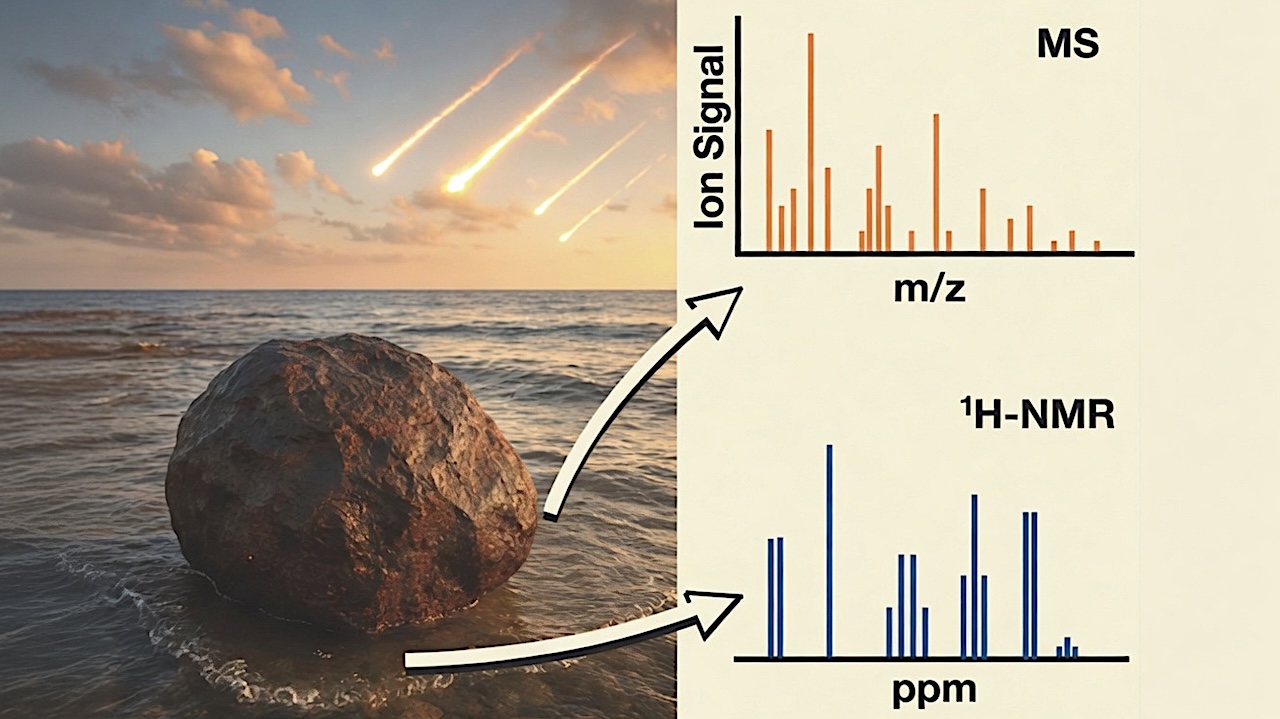
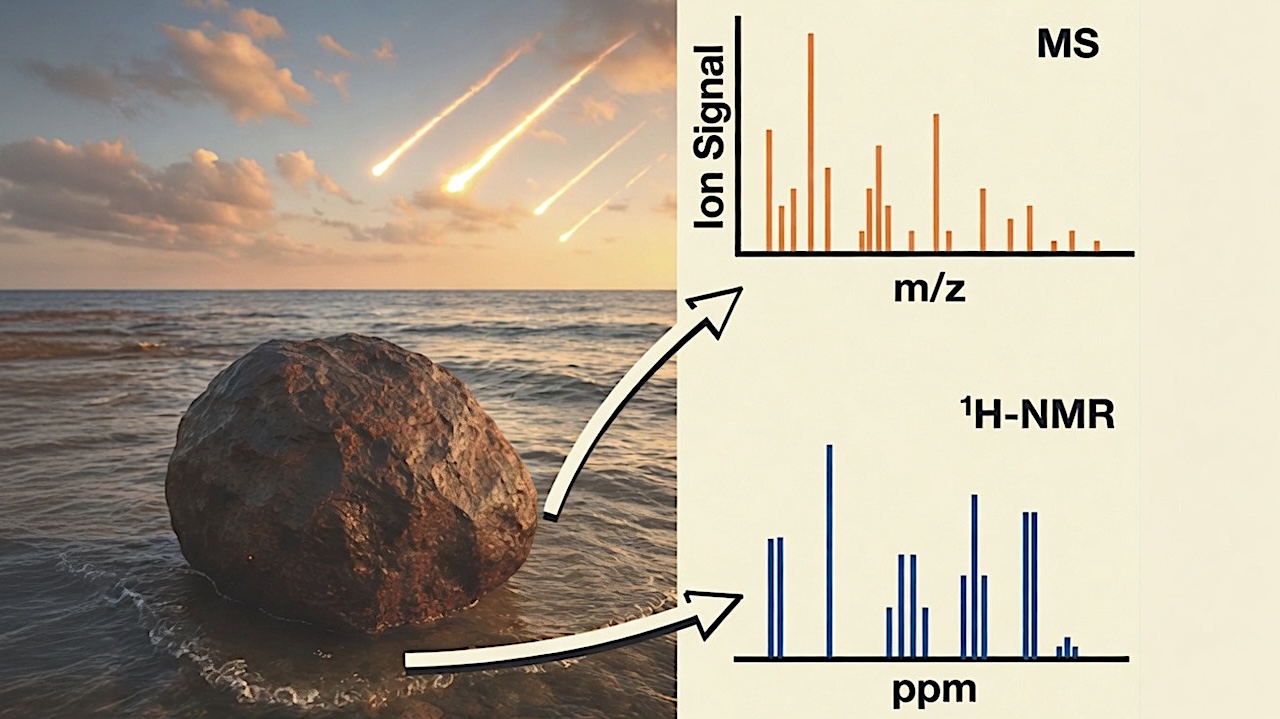
Graphical Abstract
Experiments exploring potential emergence-of-life chemistry in a laboratory setting critically depend on simulating realistic early-Earth environments. Such experimental conditions include the implementation of controlled high temperatures and pressures, anoxic gas phases, saline fluids, and diverse mixtures of low-concentration organic compounds.
Common analytical methods, such as mass spectrometry (MS) and gas chromatography (GC), often require desalting and derivatization processing steps prior to analysis. These preprocessing steps often require additional time, materials, and/or equipment and are not always amenable to nontargeted analyses or detection of low concentrations of organic compounds in complex mixtures.
Here, we explore the use of two direct-analysis methods to measure simple organic molecules in highly saline aqueous solutions (ca. 0.5 M), which were likely present in seawater-associated early-Earth environments. Specifically, Direct Analysis in Real Time (DART)-MS and NMR spectroscopy were used as independent analyses with minimal sample processing to detect and identify glycine, glycolic acid, acetone, acetic acid, propionic acid, methylsulfonic acid, and methylbutanoic acid.
Such small soluble organic compounds could have been found in concentrations below 100 μM on early Earth. The performance of each analytical method was assessed, and it was found that they can be used in conjunction to obtain semiquantitative information about each analyte of interest.
Additionally, the same techniques were applied to the analysis of a hydrothermally altered sample subjected to 150 °C and 500 bar. Results show that DART-MS and NMR have the potential to help interrogate complex samples through untargeted analyses.
Astrobiology,










Related Posts

Stay Informed With the Latest & Most Important News
Previous Post
Next Post



Advertisement
-
 01Two Black Holes Observed Circling Each Other for the First Time
 -
 02From Polymerization-Enabled Folding and Assembly to Chemical Evolution: Key Processes for Emergence of Functional Polymers in the Origin of Life
 -
 03Astronomy 101: From the Sun and Moon to Wormholes and Warp Drive, Key Theories, Discoveries, and Facts about the Universe (The Adams 101 Series)
 -
 04True Anomaly hires former York Space executive as chief operating officer
 -
 05Φsat-2 begins science phase for AI Earth images
 -
 06Hurricane forecasters are losing 3 key satellites ahead of peak storm season − a meteorologist explains why it matters
 -
 07Binary star systems are complex astronomical objects − a new AI approach could pin down their properties quickly