
Now Reading: Setting up a permanent lunar presence needs investment in biology
-
01
Setting up a permanent lunar presence needs investment in biology


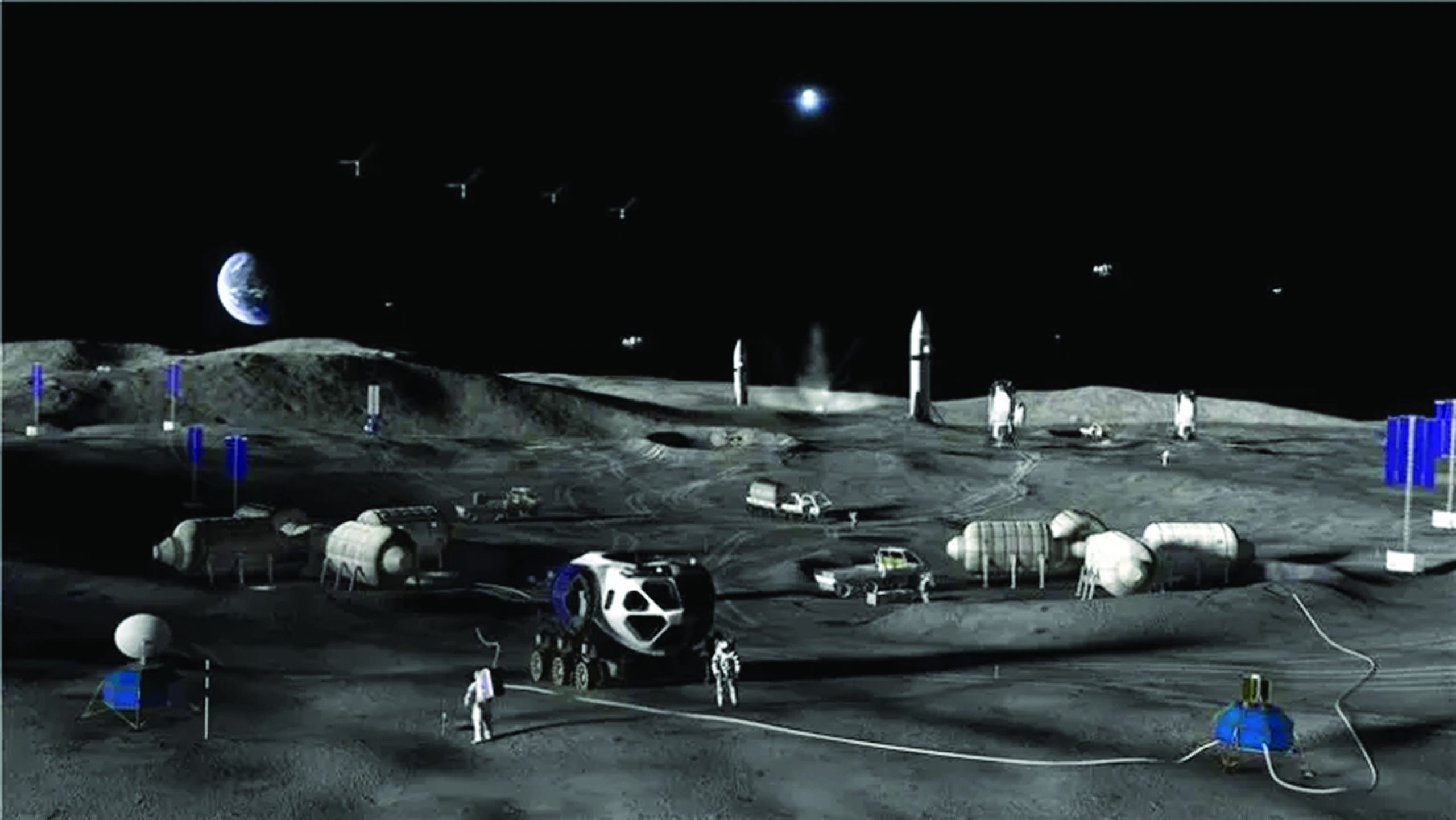

In December 1972, Gene Cernan and Harrison Schmitt spent 75 hours on the lunar surface during Apollo 17. They drove a rover, conducted three spacewalks and collected samples across the longest crewed visit to another world. When Cernan climbed back into the ascent module, he became the last human to stand on the moon. More than 50 years later, NASA intends not just to return, but to stay. In late March, the agency’s Ignition event laid out an aggressive three-phase plan to establish a permanent lunar base by 2030, alongside a new commercial framework called “Science as a Service” designed to accelerate the technologies that will make it possible.
Early robotic landings and technology demonstrations would pave the way in the first phase, followed by development of semi-habitable infrastructure buildouts in the second phase, all moving toward a continuous human presence in phase three. The plan relies on a vast coalition of commercial and international partners working in tandem with NASA, including pressurized rovers from Japan and a habitation module from Italy. The establishment of the lunar base will enable ambitious surface exploration campaigns and provide a test ground for new technologies, such as building out nuclear propulsion systems for Mars transits.
Alongside the moon base plan, Ignition prioritizes the “Science as a Service” RFI, through which NASA’s Science Mission Directorate aims to build out commercial partnerships to accelerate technology matures and transition scientific capabilities into operational use. Inherently the model makes sense: rather than develop and own the end-to-end lifecycle of technology, the agency will partner with both research institutions and industry to validate technologies, share flight infrastructures and, importantly, accelerate the timeline for these technologies to reach commercial markets faster. But notably, accelerating health and biological technologies is absent from the outlined priorities.
The RFI is scoped to Earth science, space weather and astrophysics, and although there are domains of crucial importance, urgency should also be placed on determining whether a crew member’s bones will fracture after six months at one-sixth gravity, or whether lunar dust will permanently scar their lungs. In spite of the need for the rapid creation of new technologies to improve our ability to live on the lunar surface, health and biological sciences are not included in the RFI. Supporting human life on the moon requires a deeper understanding and subsequent countermeasure development of the biological risks that have been identified across decades of spaceflight. The International Space Station in particular has enabled researchers to monitor changes in human physiology in response to microgravity, from bone mineral density loss, to immune shifts, to cardiovascular deconditioning. However, the lunar environment hosts challenges that ISS research alone cannot fully resolve. We have no long-duration human data at partial gravity, and the physiological response at one-sixth gravity over weeks or months remains an open question. The relationship between gravitational load and processes like bone remodeling is nonlinear in ways we cannot yet predict from zero-g data alone. Lunar-specific factors such as exposure to lunar regolith present their own concerns, and the long-term effects of lunar fines on respiratory systems need to be refined as well. Countermeasures and back-up countermeasures need to be created, matured and validated beyond engineering controls in habitats to reduce exposure. Researchers across academia and industry are working on these and other problems, but the gaps remain substantial and the timeline to permanent habitation has accelerated.
Every extreme and austere environment humans have ever built, from Antarctic research stations to the ISS, eventually becomes a life sciences management challenge. Closed-loop air and water recycling depends on biological and chemical processes that must function continuously. Food production over long durations requires plant biology, controlled environment agriculture and microbial management in sealed, irradiated, low-gravity environments. If the moon base is to achieve any degree of self-sufficiency rather than total dependence on Earth resupply, biomanufacturing and engineered biological systems become operational necessities, not academic interests.
The Science as a Service framework is well designed, and it creates exactly the kind of shared validation pathways, integration standards and technology transition pipelines that could accelerate progress in space health and biology. It was built by the parts of NASA that already have mature commercial partnerships, including satellite operators, telescope programs and Earth observation companies. The framework should serve as the blueprint for the biology-facing components of NASA to develop the same partnership architecture. Ignition was driven by the December 2025 Executive Order on Ensuring American Space Superiority, which specifically mandates sustained human presence on the Moon. If Science as a Service is meant to serve that objective, it should include the science without which sustained presence is market achievable.
The research and commercial community working on these problems is already growing. Biotech companies are flying microgravity experiments and developing space-based production platforms. Commercial spaceflight operators are generating health datasets from an increasingly diverse astronaut population. Academic medical centers and international space agencies are investing in radiation biology, space pharmacology, and bioregenerative life support. Neither interest or capability are missing on the part of potential partners. NASA has built the right model at Ignition, but the scope of work to be done needs to match the mission. If we are serious about having a sustained presence on the moon, biology has to be part of the plan.
Jackson Brougher, PhD, is an assistant professor of neuroscience at Baylor College of Medicine and a space health research scientist at the Translational Research Institute for Space Health (TRISH) at Baylor’s Center for Space Medicine.
SpaceNews is committed to publishing our community’s diverse perspectives. Whether you’re an academic, executive, engineer or even just a concerned citizen of the cosmos, send your arguments and viewpoints to opinion (at) spacenews.com to be considered for publication online or in our next magazine. If you have something to submit, read some of our recent opinion articles and our submission guidelines to get a sense of what we’re looking for. The perspectives shared in these opinion articles are solely those of the authors and do not necessarily represent their employers or professional affiliations.










Related Posts

Stay Informed With the Latest & Most Important News
Previous Post
Next Post




Advertisement
-
 01Two Black Holes Observed Circling Each Other for the First Time
 -
 02From Polymerization-Enabled Folding and Assembly to Chemical Evolution: Key Processes for Emergence of Functional Polymers in the Origin of Life
 -
 03Astronomy 101: From the Sun and Moon to Wormholes and Warp Drive, Key Theories, Discoveries, and Facts about the Universe (The Adams 101 Series)
 -
 04True Anomaly hires former York Space executive as chief operating officer
 -
 05Φsat-2 begins science phase for AI Earth images
 -
 06Hurricane forecasters are losing 3 key satellites ahead of peak storm season − a meteorologist explains why it matters
 -
 07Binary star systems are complex astronomical objects − a new AI approach could pin down their properties quickly