
Now Reading: A star dies in the Cat’s Eye | Space photo of the day for March 10, 2026
-
01
A star dies in the Cat’s Eye | Space photo of the day for March 10, 2026


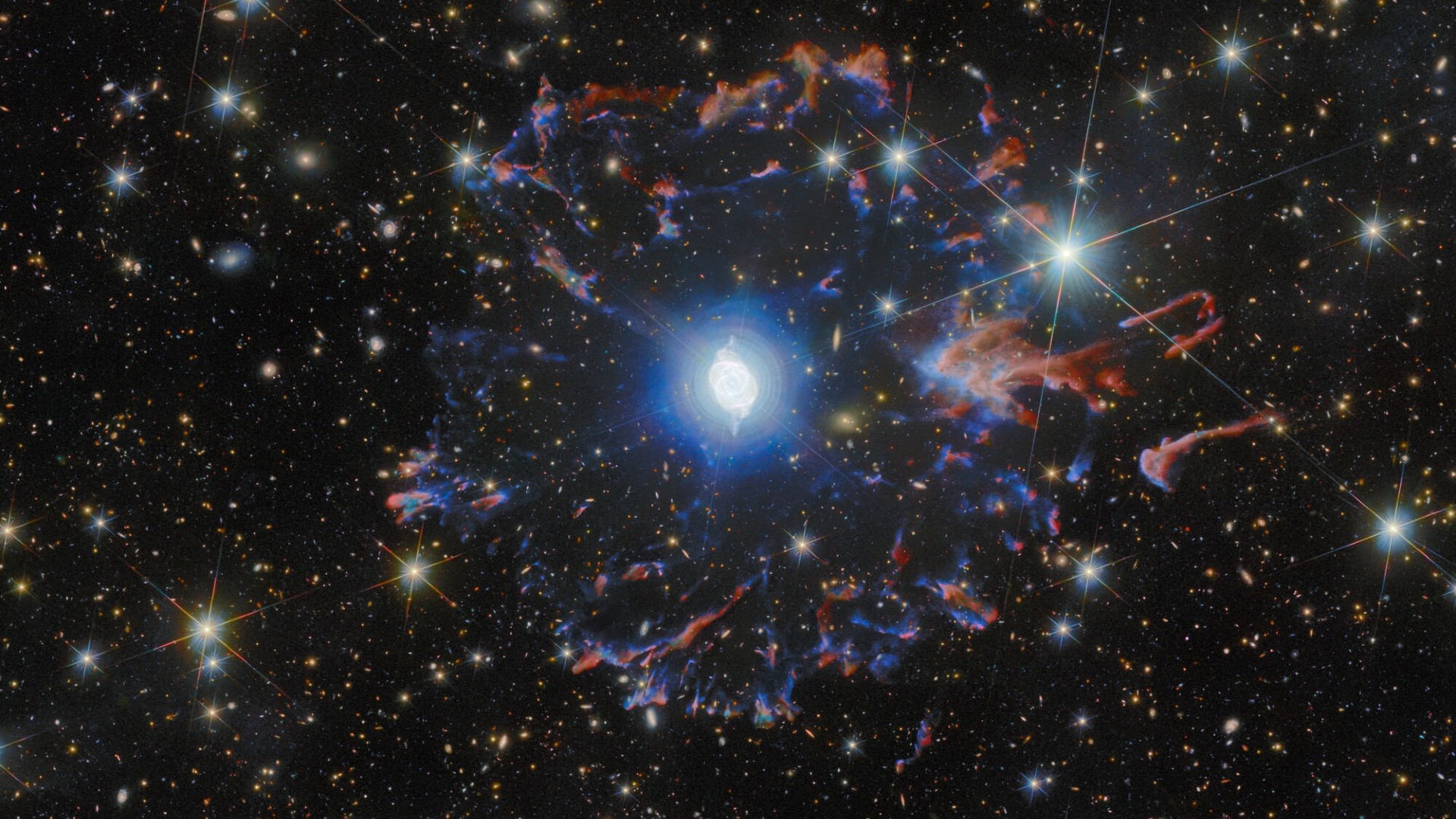

Two powerful space telescopes turned their gaze onto the Cat’s Eye Nebula, a planetary nebula 4,400 light-years away from Earth in the constellation Draco. The new images reveal stunning details about what happens as a star approaches the end of its evolutionary life cycle.
What is it?
The Cat’s Eye Nebula is known as a planetary nebula, but that name is somewhat misleading, as these clouds of ionized gas don’t have anything to do with planets. These nebulas appeared spherical through early telescopes, prompting astronomers to believe they might be similar to the gas giants in our solar system.
Today, we know these colorful objects are massive shells of gas emitted by stars in their final stages. When stars begin to run out of hydrogen, the fuel needed for nuclear fusion, the outward pressure of fusion decreases, causing the stars’ gaseous outer layers to contract. Upon contracting, the atoms in these gases begin to collide and release energy, causing them to expand outward in the colorful nebulas we see in the case of the Cat’s Eye Nebula.
Article continues below

Why is it amazing?
The combined observations of the Euclid and Hubble space telescopes help “reveal the remarkable complexity of stellar death in this object,” NASA wrote in a statement accompanying the image. While Hubble was able to zoom in for a close-up of the central shell of the nebula, Euclid captured a wider view that reveals a larger halo of gases expanding outward into space. This halo was blasted out away from the star at a much earlier stage, before the main nebula formed.
Euclid’s wide view also reveals thousands of distant galaxies in the background behind the nebula, offering a glimpse at the true vastness of space that space telescopes like Euclid and Hubble are revealing to astronomers.










Related Posts

Stay Informed With the Latest & Most Important News
Previous Post
Next Post


Advertisement
-
 01Two Black Holes Observed Circling Each Other for the First Time
 -
 02From Polymerization-Enabled Folding and Assembly to Chemical Evolution: Key Processes for Emergence of Functional Polymers in the Origin of Life
 -
 03Astronomy 101: From the Sun and Moon to Wormholes and Warp Drive, Key Theories, Discoveries, and Facts about the Universe (The Adams 101 Series)
 -
 04True Anomaly hires former York Space executive as chief operating officer
 -
 05Φsat-2 begins science phase for AI Earth images
 -
 06Hurricane forecasters are losing 3 key satellites ahead of peak storm season − a meteorologist explains why it matters
 -
 07Binary star systems are complex astronomical objects − a new AI approach could pin down their properties quickly