
Now Reading: Aalyria hits $1.3 billion valuation after raising funds for satellite mesh network
-
01
Aalyria hits $1.3 billion valuation after raising funds for satellite mesh network


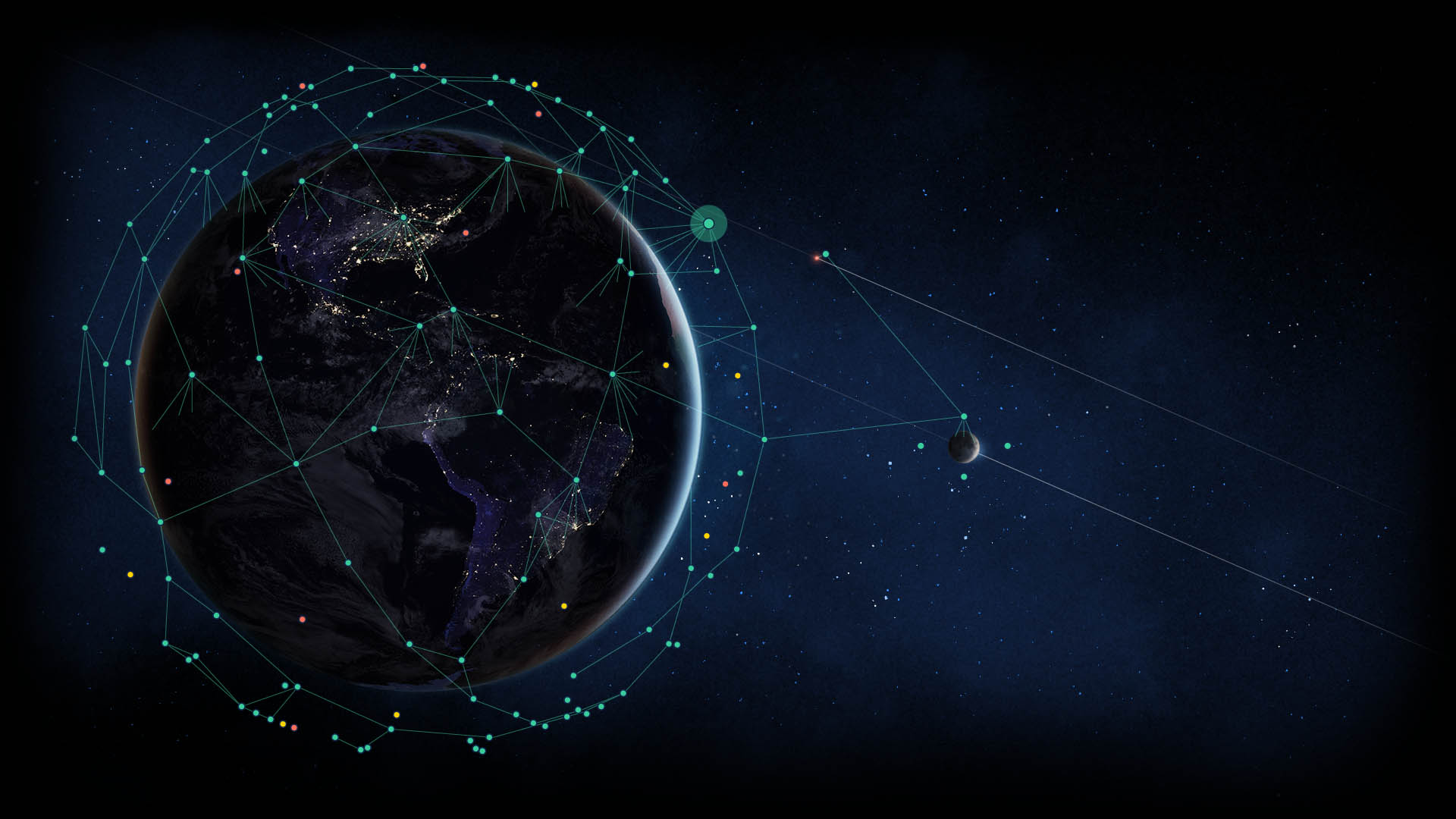
TAMPA, Fla. — Aalyria announced a $100 million funding round Feb. 23 that values the Californian venture at $1.3 billion, supporting deployment of laser terminals and software for dynamically routing data across space, air and ground networks.
The funding follows growing demand for narrow, high-throughput directional links that can improve speed and security but also add operational complexity as motion, weather and other line-of-sight constraints risk disrupting connectivity.
Aalyria, spun out of Google’s parent Alphabet four years ago, says its Spacetime platform can coordinate those links in real time, allocating capacity and routing traffic as satellites, aircraft and ground terminals move. Spacetime is also designed to help multi-orbit networks respond more quickly to disruptions, such as shifting capacity toward areas where terrestrial infrastructure has been damaged.
While Alphabet previously used the software for its scrapped Loon internet network of high-altitude balloons, Telesat’s low Earth orbit (LEO) Lightspeed constellation, which the Canadian geostationary operator aims to roll out next year, is set to be the first to use Spacetime commercially.
“Aalyria’s orchestration and network-optimization technologies are a key performance and resiliency enabler for our Telesat Lightspeed architecture,” Telesat CEO Dan Goldberg said in Aalyria’s funding news release.
“Spacetime’s dynamic routing, spectrum-aware resource management, and advanced link prediction capabilities will be integrated with our system design, strengthening end-to-end service delivery across our global LEO network.”
The U.S. government has partnered to demonstrate Spacetime under the Defense Innovation Unit’s hybrid space architecture initiative. Aalyria has also established a European arm following a 2023 European Space Agency contract.
In its funding announcement, Aalyria highlighted other previously disclosed Spacetime partnerships with Google Public Sector, NASA, Airbus, ALL.SPACE, Keysight Technologies and Logos Space.
Alongside Spacetime, the company said the funds will help expand deployment of its Tightbeam laser terminals, which also stem in part from Alphabet-era research.
Chris Taylor, Aalyria’s founder and CEO, said Tightbeam is currently proven across ground-to-ground, air-to-ground and ground-to-air links, amid ongoing tests with the U.S. Naval Research Laboratory to validate the technology for military applications.
“Our plan is to take Tightbeam into space, developing optical ground terminals and space-to-ground terminals,” he told SpaceNews via email, “extending the platform into one of the most demanding and high-value connectivity environments in the world.”
Aalyria did not provide more details on Tightbeam or an update on its 2023 partnership with Intelsat, now owned by SES, to create a bi-directional optical ground and space network capable of speeds of hundreds of gigabits per second.
Taylor also said Aalyria has now raised $135 million in total as it seeks to accelerate hiring across engineering and sales teams across both commercial and government markets.
Battery Ventures and J2 Ventures led the Series B round, with participation from DYNE and other investors.










Related Posts
Stay Informed With the Latest & Most Important News



Advertisement
-
 01Two Black Holes Observed Circling Each Other for the First Time
 -
 02From Polymerization-Enabled Folding and Assembly to Chemical Evolution: Key Processes for Emergence of Functional Polymers in the Origin of Life
 -
 03Astronomy 101: From the Sun and Moon to Wormholes and Warp Drive, Key Theories, Discoveries, and Facts about the Universe (The Adams 101 Series)
 -
 04True Anomaly hires former York Space executive as chief operating officer
 -
 05Φsat-2 begins science phase for AI Earth images
 -
 06Hurricane forecasters are losing 3 key satellites ahead of peak storm season − a meteorologist explains why it matters
 -
 07Binary star systems are complex astronomical objects − a new AI approach could pin down their properties quickly