
Now Reading: Agentic AI: the future of space warfare
-
01
Agentic AI: the future of space warfare


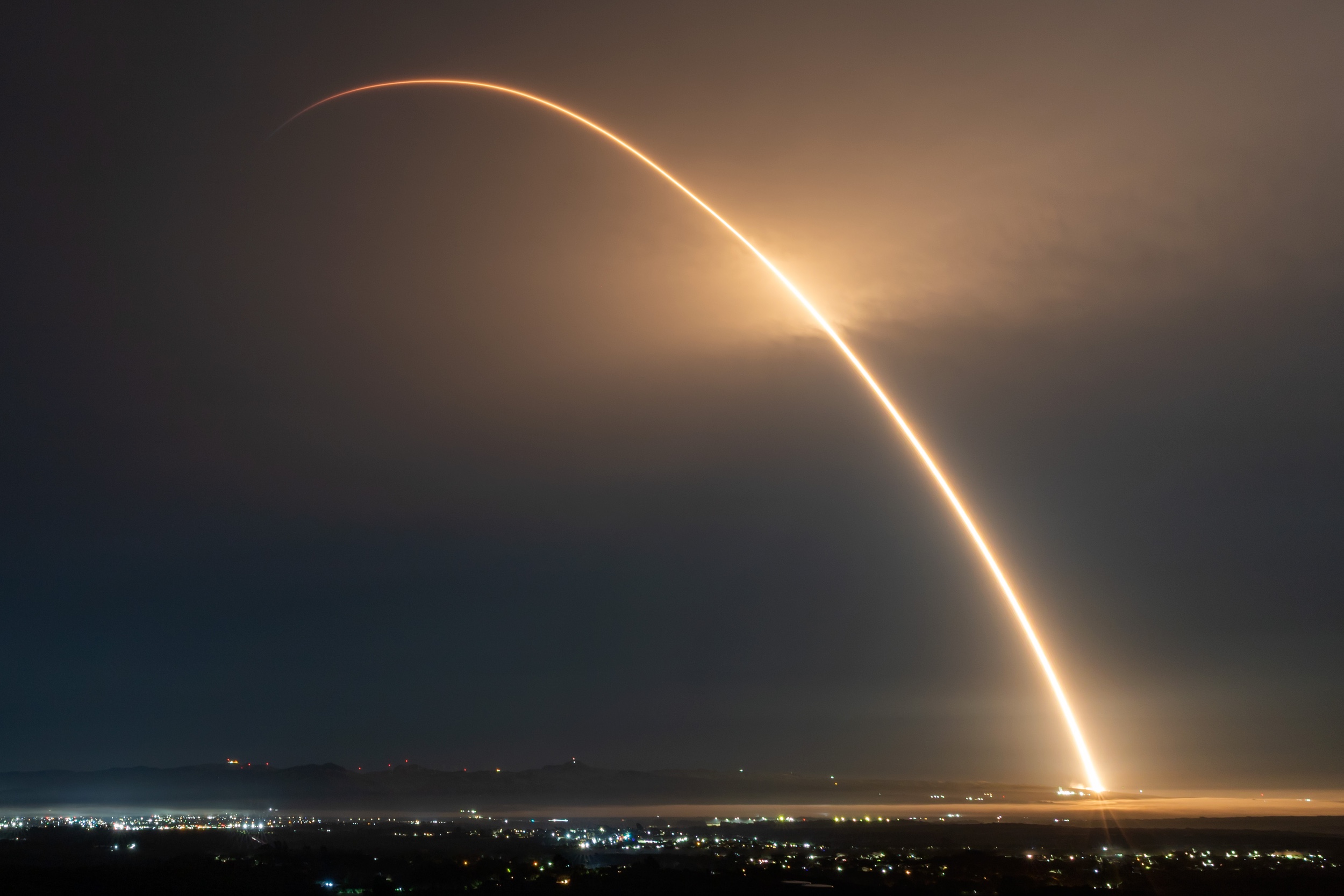

The future of space warfare will be determined by the speed of decision. As satellite constellations proliferate and adversaries field increasingly sophisticated counterspace capabilities, the ability to sense, analyze and act faster than an opponent will dictate who controls the space domain.
Artificial intelligence is already improving complex military decision-making. But agentic AI — a system of autonomous “agents” capable of independent, goal-directed decision-making behavior — represents a far more profound shift. Agentic AI can interpret complicated environments, generate courses of action and execute tasks at machine speed.
This vision aligns with the future described by General Chance Saltzman, Chief of Space Operations for the U.S. Space Force, who has emphasized that the next era of space warfighting will be driven by “artificial intelligence, autonomy and maneuver operations.” If the United States hopes to maintain space superiority, it must accelerate investment in agentic AI before it risks losing both the technological race and strategic access to the space domain itself. That means urgently building the data infrastructure and AI-enabled command-and-control needed for machine-speed operations, while scaling the innovation pipeline to rapidly transition breakthrough capabilities into the fight before competitors do.
China’s recent advances underscore the urgency. Chinese researchers reportedly developed Manus, described as the world’s first fully autonomous AI agent, in what some observers called a “Second DeepSeek Moment.” Beijing has also launched early experiments for its Three-Body Computing Constellation, which processes data directly in orbit using artificial intelligence rather than relying solely on ground infrastructure. This effort is expected to support China’s planned 2,800-satellite Star-Compute Program, a network designed to enable distributed computing and autonomous coordination among satellites. Together, these developments represent a deliberate strategy to embed AI directly into the architecture of future space operations.
Today, the Space Force is exploring AI tools to help manage the immense volumes of data generated by modern space missions. AI models can help interpret information from a vast array of sensors and systems, some of which are decades old, to dramatically improve space domain awareness, helping analysts synthesize satellite locations, ownership, mission activity and maneuver patterns across thousands of objects in orbit.
Yet even this application represents only the first step. Agentic AI is more than a better analytics software, it is a new class of AI designed to function as proactive, reasoning collaborators. Like an intelligence analyst operating at machine speed, agentic AI would be expected to continuously interpret large data streams, detect emerging threats and generate operational responses in real time.
One powerful application is the management of proliferated satellite constellations. Future architectures will involve hundreds or even thousands of satellites operating simultaneously in dynamic orbits. As these constellations maneuver, communicate and respond to threats, the complexity of managing them will quickly exceed the limits of human operators.
Agentic AI could enable each satellite to independently analyze its environment, detect threats, optimize communications, coordinate maneuvers with neighboring spacecraft and execute orders. By embedding AI within both satellites and ground command systems, space architectures could become self-aware and self-healing networks capable of maintaining operations despite jamming, cyberattacks or kinetic threats. In a domain where milliseconds can determine mission success or failure, agentic AI will become indispensable to the Space Force guardian.
Human judgment will remain essential. The supervision and ultimate decision authority of humans within the kill chain must be preserved. Effective human–machine teaming, supported by rigorous testing and verification of AI models, will ensure that agentic systems accelerate decision cycles while maintaining accountability and strategic intent.
Agentic AI, however, is only as powerful as the data that fuels it. A recent study found that some U.S. commercially developed large language models, a key component to agentic AI capability, refused up to 98% of military-related queries. This study highlights the challenge of adapting commercial AI systems to national security missions and underscores the need for secure, operationally relevant data infrastructures capable of supporting military AI development.
The U.S. must therefore move decisively. The Space Force must expand investment in the operational data infrastructure required to power agentic AI, ensuring that machine-speed analytics can draw from trusted, real-time data across satellite sensors, commercial sources and joint warfighting networks.
The service must also accelerate funding for AI-enabled command-and-control architectures, particularly Rapid Resilient Command and Control and advanced space battle management systems. These capabilities will allow guardians to manage proliferated constellations, coordinate satellite maneuvering and execute protect-and-defend missions at machine speed.
Finally, Congress must also strengthen the innovation pipeline that turns AI breakthroughs into operational capability. Programs such as SpaceWERX’s Strategic Funding Increase and Tactical Funding Increase are essential for transitioning promising technologies from startups and small businesses into deployable systems. Without sustained investment, many of the most innovative AI capabilities will never reach operational units.
China is not waiting. Beijing is committing billions in state-directed investment to build the data infrastructure, AI-enabled command networks and autonomous satellite systems required for machine-speed warfare in space. Through this coordinated push, China is positioning itself to field agentic AI-enabled space operations faster than the U.S.
The U.S. must act now. Agentic AI is the future of space warfare and the race to operationalize agentic AI in space is already underway.
Space superiority will belong to the nation that fields it first.
Lt. General (Ret.) Nina Armagno was the first Director of Staff of the United States Space Force and is an Executive Partner at Elara Nova.
Major General (Ret.) Kim Crider was the first Chief Technology and Innovation Officer for the United States Space Force and is a Founding Partner at Elara Nova.
SpaceNews is committed to publishing our community’s diverse perspectives. Whether you’re an academic, executive, engineer or even just a concerned citizen of the cosmos, send your arguments and viewpoints to opinion (at) spacenews.com to be considered for publication online or in our next magazine. If you have something to submit, read some of our recent opinion articles and our submission guidelines to get a sense of what we’re looking for. The perspectives shared in these opinion articles are solely those of the authors and do not necessarily represent their employers or professional affiliations.










Related Posts

Stay Informed With the Latest & Most Important News
Previous Post
Next Post
Previous Post
Next Post


Advertisement
-
 01Two Black Holes Observed Circling Each Other for the First Time
 -
 02From Polymerization-Enabled Folding and Assembly to Chemical Evolution: Key Processes for Emergence of Functional Polymers in the Origin of Life
 -
 03Astronomy 101: From the Sun and Moon to Wormholes and Warp Drive, Key Theories, Discoveries, and Facts about the Universe (The Adams 101 Series)
 -
 04True Anomaly hires former York Space executive as chief operating officer
 -
 05Φsat-2 begins science phase for AI Earth images
 -
 06Hurricane forecasters are losing 3 key satellites ahead of peak storm season − a meteorologist explains why it matters
 -
 07Binary star systems are complex astronomical objects − a new AI approach could pin down their properties quickly