
Now Reading: Air Force lab awards BlackSky contract worth up to $99 million for large optical satellite payload
-
01
Air Force lab awards BlackSky contract worth up to $99 million for large optical satellite payload

Air Force lab awards BlackSky contract worth up to $99 million for large optical satellite payload

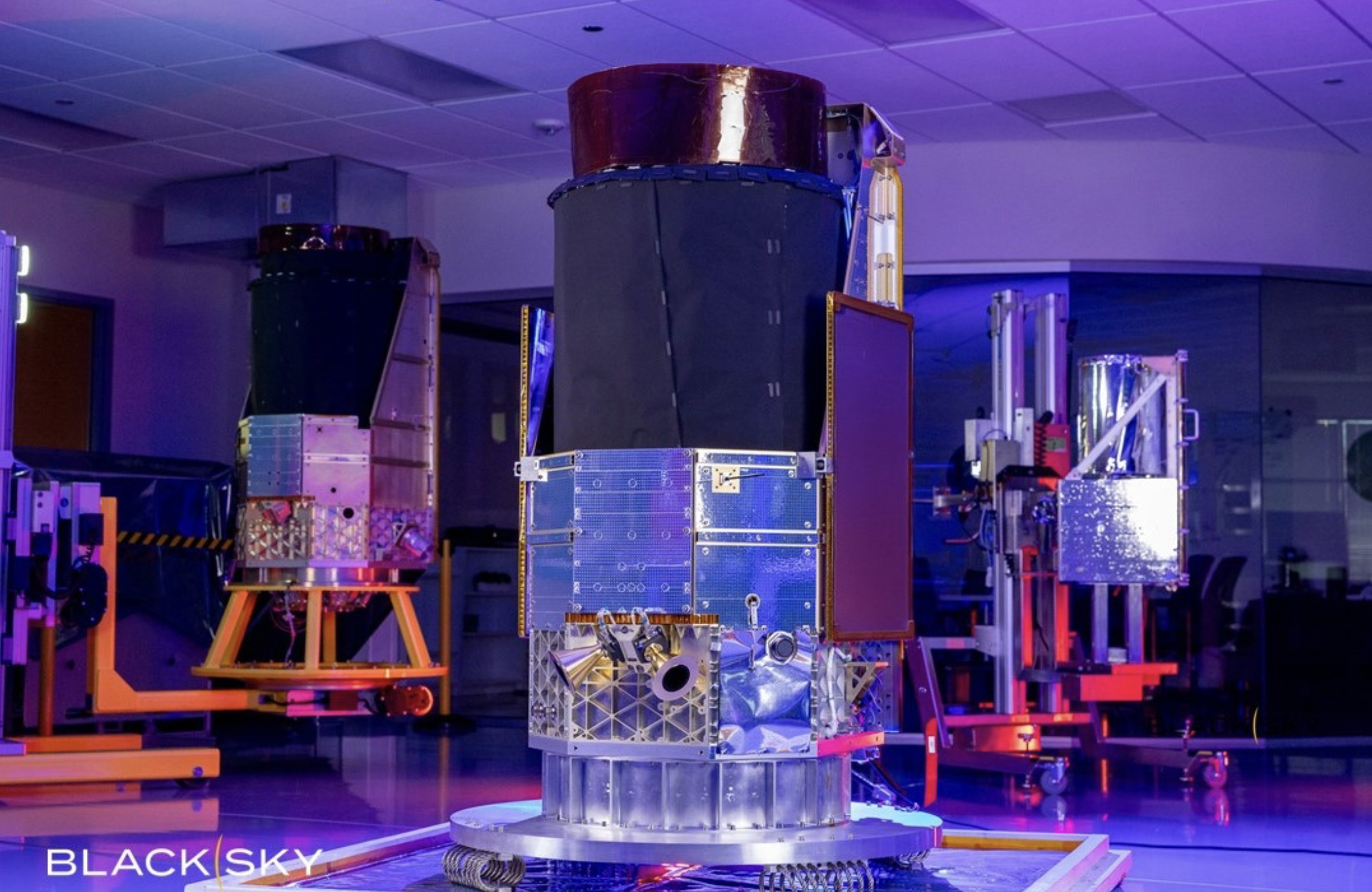

WASHINGTON — The Air Force Research Laboratory has awarded BlackSky a contract worth up to $99 million to develop a large optical imaging payload intended for future space-based intelligence systems.
The contract, announced March 6, is an indefinite-delivery, indefinite-quantity Small Business Innovation Research Phase 3 agreement that runs through 2032. The deal was issued by the laboratory’s Center for Rapid Innovation.
Herndon, Virginia-based BlackSky is a publicly traded satellite imaging company that builds and operates Earth-observation satellites and sells analytics based on their imagery.
Under the contract, the company will develop and test a large-aperture optical imaging system designed around a segmented mirror architecture. Segmented optical systems use multiple mirror panels that deploy and align in orbit to form a single large telescope, allowing satellites to achieve larger imaging apertures and wider coverage than conventional cameras.
“This contract provides for the development of a low-cost, precision, large aperture optical imaging system testbed using a segmented primary mirror, precision laser metrology and mirror positioning, and large format focal plane arrays,” according to the announcement.
Such technologies could support wide-area surveillance missions, enabling satellites to scan large geographic regions while still identifying relatively small objects such as vehicles, ships, aircraft or equipment movements.
The agreement sets a maximum value of $99 million, though the government initially obligated about $2.1 million. Under the IDIQ structure, additional work would be funded through task orders as the technology matures.
Wide-area satellite imaging
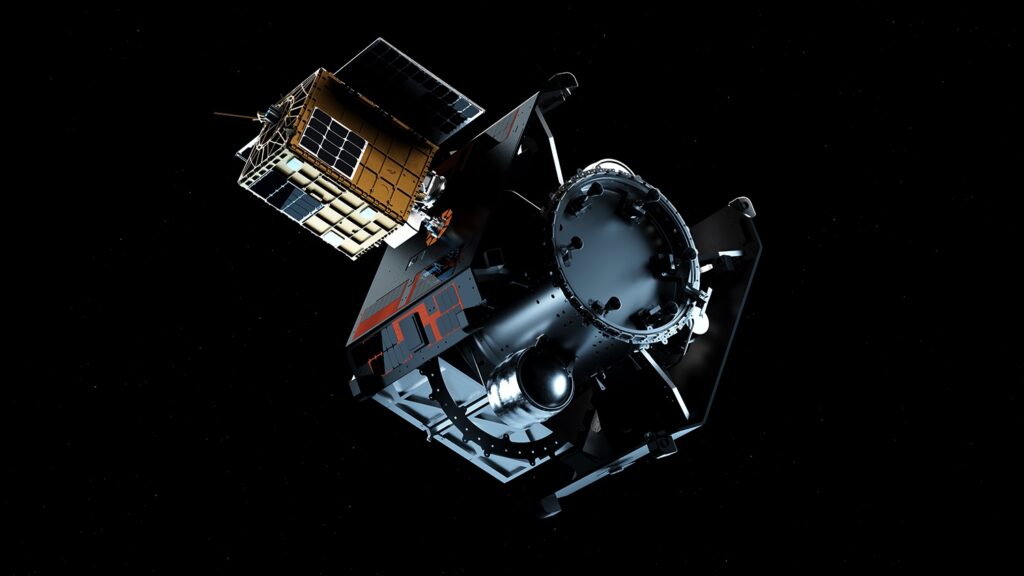
BlackSky has been exploring similar capabilities as part of its own satellite roadmap. The company last year said it plans to develop a wide-area Earth observation satellite designed to capture large regions of the planet for applications such as country-scale mapping and maritime monitoring.
The spacecraft, called Aros, is projected to launch in 2027. BlackSky has said the wide-area satellites would operate alongside its existing constellation, which focuses on high-frequency monitoring of specific locations.
In that architecture, the broad-coverage satellites would scan large areas to identify changes or points of interest and then cue higher-resolution satellites to capture detailed imagery of those locations. The approach could support applications such as missile detection and tracking.
“For the last two years BlackSky has been developing innovative leap-ahead technologies as part of our long-term constellation roadmap that will advance next generation space-based intelligence solutions,” BlackSky chief executive Brian O’Toole said in a statement following the AFRL contract award.
“The payload and satellite technology developed under this effort will be highly disruptive compared to traditional Earth observation systems, taking advantage of emerging advancements in segmented optical systems and space-based communications,” he said.
O’Toole added that government sponsorship would allow the company to accelerate development and demonstration of the technologies as part of a multi-year program.










Related Posts


Stay Informed With the Latest & Most Important News
Previous Post
Next Post





Advertisement
-
 01Two Black Holes Observed Circling Each Other for the First Time
 -
 02From Polymerization-Enabled Folding and Assembly to Chemical Evolution: Key Processes for Emergence of Functional Polymers in the Origin of Life
 -
 03Astronomy 101: From the Sun and Moon to Wormholes and Warp Drive, Key Theories, Discoveries, and Facts about the Universe (The Adams 101 Series)
 -
 04True Anomaly hires former York Space executive as chief operating officer
 -
 05Φsat-2 begins science phase for AI Earth images
 -
 06Hurricane forecasters are losing 3 key satellites ahead of peak storm season − a meteorologist explains why it matters
 -
 07Binary star systems are complex astronomical objects − a new AI approach could pin down their properties quickly