
Now Reading: Amazon buys 10 more Falcon 9 launches
-
01
Amazon buys 10 more Falcon 9 launches


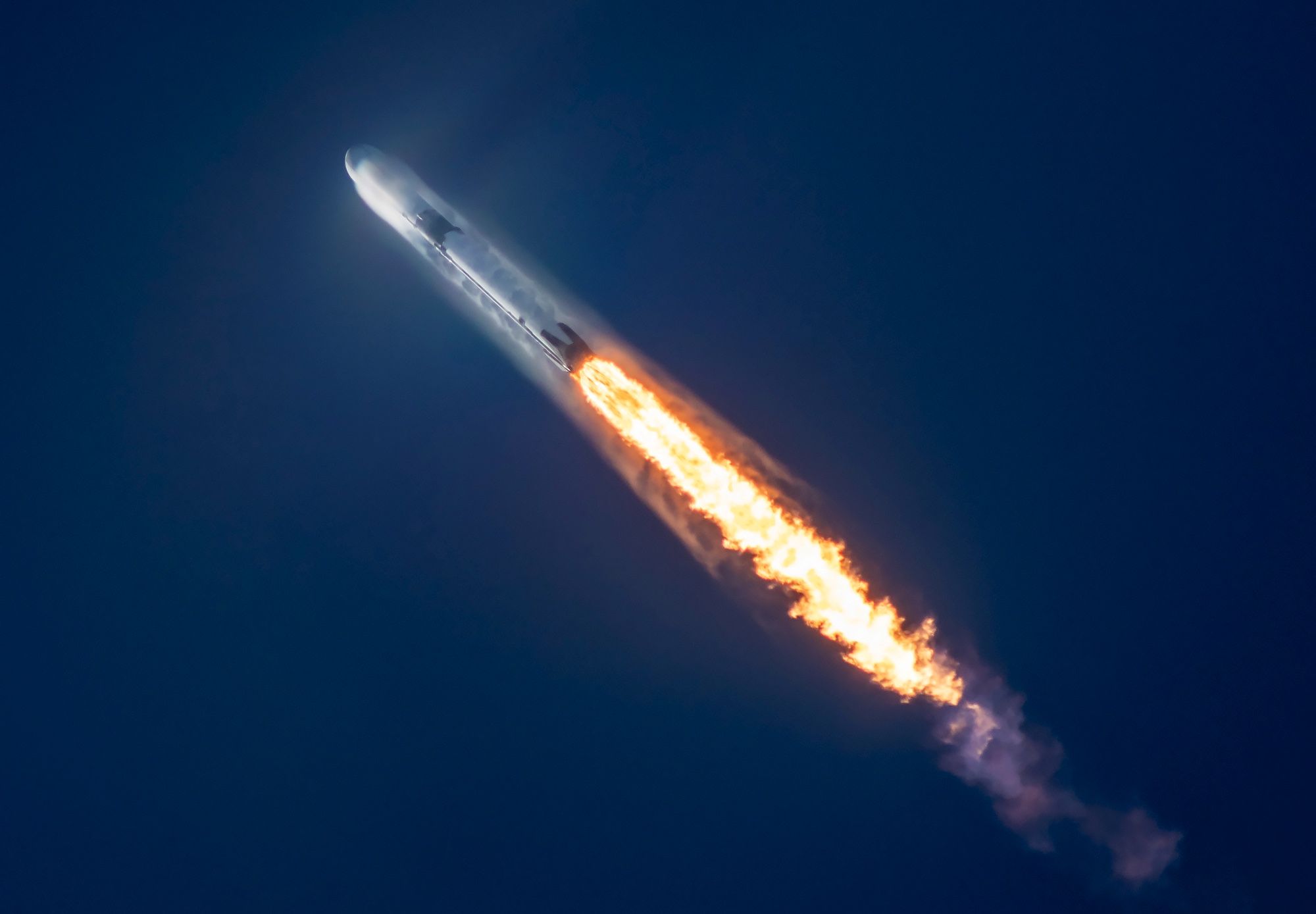

WASHINGTON — Amazon has purchased an additional 10 Falcon 9 launches from SpaceX as part of its efforts to accelerate deployment of its broadband satellite constellation.
The deal, which neither Amazon nor SpaceX previously announced, was disclosed in an Amazon filing with the Federal Communications Commission on Jan. 30 seeking an extension of a July deadline to deploy half of its Amazon Leo constellation.
Under the FCC authorization granted in 2020, Amazon has until July 30, 2026, to launch half of its planned 3,232 satellites, with the remainder required to be deployed three years later. As of late January, six months before the first deadline, the company had launched only 180 spacecraft.
In its filing, Amazon asked the FCC to either extend the deadline for deploying half of the constellation by two years or waive it entirely, citing progress in satellite manufacturing and launch contracting. The company did not request an extension of the 2029 deadline for full deployment, stating it expects to have the entire constellation in orbit by then.
“Amazon Leo’s efforts to deploy in the face of a near-term shortage in launch capacity go far beyond any example cited by the Commission in granting an extension or waiver of its buildout milestones,” the company said. “Amazon Leo has continued to secure near-term launch capacity wherever available — augmenting its already large launch manifest with launch options that collectively provide the fastest possible path to deployment.”
That effort includes working with SpaceX, whose Starlink constellation directly competes with Amazon Leo. In 2023, the companies announced a contract for three Falcon 9 launches of Amazon satellites, then branded as Project Kuiper. Those launches took place in July, August and October 2025, each carrying 24 satellites.
“In late 2025, Amazon Leo added to its already historic purchase of launch capacity by securing 10 additional Falcon 9 launches from SpaceX,” Amazon stated in the FCC filing. The company did not disclose further details, including the launch schedule. An appendix to the filing that includes a deployment schedule was redacted in the public version.
Amazon also said it converted options for Blue Origin New Glenn launches into firm orders. When Amazon announced its major launch agreements in 2022, it said it had purchased 12 New Glenn launches with options for 15 more. The filing states that Amazon now has 24 New Glenn launches under contract.
When Amazon announced its launch procurement in 2022, it notably bypassed SpaceX in favor of New Glenn, Arianespace’s Ariane 6 and United Launch Alliance’s Vulcan Centaur, even though none of those vehicles had flown at the time.
That decision prompted a 2023 lawsuit from a pension fund that is an Amazon investor, arguing the company’s board acted in bad faith by excluding SpaceX from the procurement process. The lawsuit cited a potential conflict of interest because Amazon founder Jeff Bezos is also the founder of Blue Origin. A Delaware court dismissed the case last year, though the plaintiff has appealed to the state’s supreme court.
All 180 Amazon Leo satellites launched to date have been placed in orbit by Falcon 9 or United Launch Alliance’s Atlas 5 under an earlier contract between Amazon and ULA. The first Ariane 6 launch carrying Amazon Leo satellites is scheduled for Feb. 12, with 32 satellites flying on the rocket’s sixth mission. That will also be the first flight of the more powerful Ariane 64 configuration, which uses four solid rocket boosters.
“From the launch of its initial production satellites onward, unexpected slips and scrubs of scheduled launch dates have extended Amazon Leo’s deployment timeline,” the company said in the filing, noting it completed only seven of 20 planned launches in 2025. Those included three Falcon 9 and four Atlas 5 launches.
“The rest were delayed for a variety of reasons, all beyond Amazon Leo’s control — including weather, prioritization of government launches, range constraints, technical issues with contracted launch vehicles requiring further evaluation and repair, and issues involving rideshare payloads from other operators,” the company said.
Amazon said that trend is now reversing. “Recent months have brought a noticeable shift in momentum for Amazon Leo’s long-delayed launch vehicles,” the company said, citing progress with Ariane 6, New Glenn and Vulcan.
In the filing, Amazon said it expects to have about 700 satellites in orbit by July and can manufacture up to 30 satellites per week. While the launch schedule remains redacted, the company said it shows “full deployment of the Amazon Leo system well before” the July 2029 deadline for complete deployment.










Related Posts


Stay Informed With the Latest & Most Important News
Previous Post
Next Post



Advertisement
-
 01Two Black Holes Observed Circling Each Other for the First Time
 -
 02From Polymerization-Enabled Folding and Assembly to Chemical Evolution: Key Processes for Emergence of Functional Polymers in the Origin of Life
 -
 03Astronomy 101: From the Sun and Moon to Wormholes and Warp Drive, Key Theories, Discoveries, and Facts about the Universe (The Adams 101 Series)
 -
 04True Anomaly hires former York Space executive as chief operating officer
 -
 05Φsat-2 begins science phase for AI Earth images
 -
 06Hurricane forecasters are losing 3 key satellites ahead of peak storm season − a meteorologist explains why it matters
 -
 07Binary star systems are complex astronomical objects − a new AI approach could pin down their properties quickly