
Now Reading: America must stop treating China’s lunar plans as a footrace
-
01
America must stop treating China’s lunar plans as a footrace


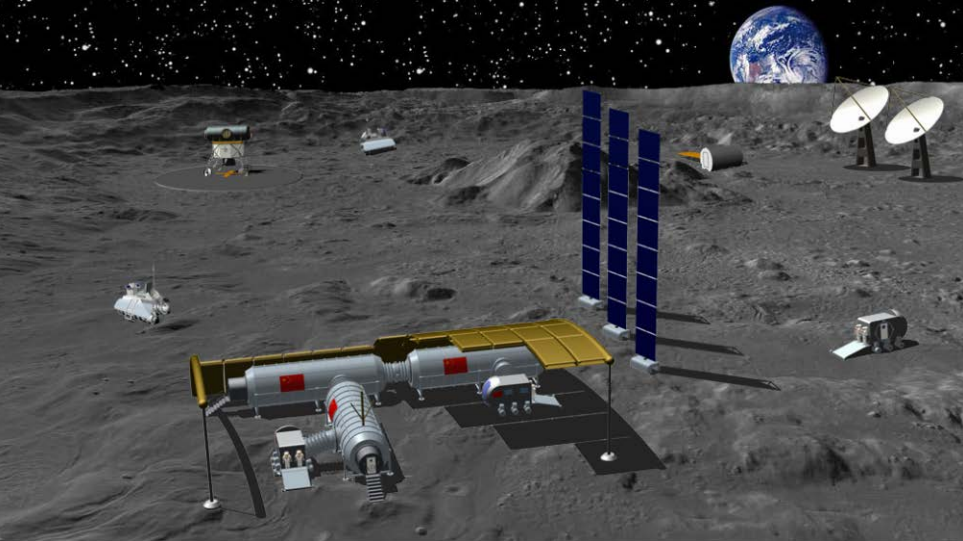

It has become conventional wisdom that China’s rise is driven by a coordinated strategy across three fronts here on Earth: dominating critical industries, controlling critical resources and occupying strategically important locations. This is explicit in the Chinese Communist Party’s own planning documents, speeches and industrial policies.
We now face the same strategy pointed upward.
Beijing openly intends to replicate its terrestrial model in space-not merely to plant a flag on the moon but to shape, control and eventually dominate the high frontier. Chinese officials have said so repeatedly and publicly. They view the cislunar region, lunar pole, and the broader Solar System as the next arena for geopolitical advantage, resource access and regime-defining prestige.
Yet some in Washington continue to completely misread the moment.
A human Chinese landing on the moon — whether in 2026, 2028 or 2030 — is treated as a symbolic challenge to be countered by a symbolic response. Commentators and important Committee Chairs frame it as a “new moon race,” and aerospace contractors encourage that framing because it supports expensive, urgent sprints to plant American boots back on the surface first.
But a replay of Apollo is not a strategy. And a short-term “race to the next footprint” is not the competition we are in.
China’s first lunar landing with taikonauts will be a powerful propaganda moment. It will be perceived globally as a sign of technological ascendancy and American hesitation. But that moment is a red herring. The real contest is not over who repeats in 2026 what the U.S. did in 1969. The real contest is over who builds the lasting presence, controls the critical regions between Earth and moon and on the lunar surface and who establishes the infrastructure that enables long-term economic and strategic advantage.
Beating China to get that first “look what we did” flag and footprints selfie is as short-sighted as any other Tik-Tok moment.
The Chinese Communist Party understands this. Their lunar program is the first move of a decades-long plan, not an isolated stunt. China intends to:
- Access and control critical resources at the lunar poles, including water ice that can be converted into fuel.
- Construct long-duration surface habitats and power systems.
- Establish transportation and logistics lines extending from Earth orbit into deep space.
- Shape the norms and expectations for how the Solar System will be used for the next century and beyond.
This is not a “race.” It is a campaign of long-term strategic positional advantage.
And the United States must respond with a strategy suited to that campaign, not to another unsustainable dead-end Cold War rematch.
If China plants its flag on the moon while the U.S. continues to fly one-off missions and treat the lunar surface as an occasional destination, it will undermine our standing. The world will see a rising China with a clear plan and a self-distracted America unwilling to commit to the future.
But the opposite is also true.
If the U.S. announces and initiates a coordinated, all-of-government and all-of-industry strategy to establish the first democracy-led large-scale industrial presence beyond Earth, the context changes entirely. A Chinese landing becomes another “been there, done that” imitation of American initiative. The global narrative flips.
The foundation for such a strategy already exists. The U.S. is leading the most profound transformation in space since Apollo — but we have not yet connected the dots or articulated the larger vision.
Consider what is emerging:
- Large scale and cheap access to orbit driven by American commercial launch companies.
- Multiple commercial space stations are already funded and in development.
- A thriving science program exploring the Solar System and uncovering new resources along the way to expanding our knowledge of our place in the universe.
- Breakthrough concepts like Golden Dome, which are driving creative solutions to long-faced space logistical challenges, and envision scalable, permanent lunar infrastructure.
- The beginnings of a more flexible, economically grounded blueprint for Artemis — an “Artemis 2.0” centered on industrial development, scientific leadership and long-term operations at the lunar poles.
- Private plans to begin Martian exploration
Individually, these are promising. Together, they form the outline of a strategy China cannot match: a free-market, innovation-driven tidal wave of creative genius and market development into space, guided by democratic values and executed by a dynamic partnership between government and private enterprise.
An American-led lunar industrial community — featuring nuclear and solar power sources, human and AI leveraged robotics, mining, manufacturing, research and growth oriented habitation — would reshape global expectations, strengthen alliances, and define the rules of the road in the high frontier. It would affirm that the future of space reflects the values of open societies, not authoritarian control.
If that were underway, really underway, visibly underway — the arrival of a Chinese crew on the lunar surface would be seen for what it is: a symbolic milestone, important but not decisive. The strategic initiative would already belong to the U.S.
We may still land Americans on the moon before China. But if we build the long-term architecture, it will no longer matter.
If we don’t, it also won’t matter — because a single flag placement is irrelevant next to a decades-long plan for presence and control. Been there. Done that.
The U.S. must choose whether we want a moment, or a future.
The choice is clear.
We must stop treating China’s lunar ambitions as a footrace for headlines and pork barrel profiteers and start treating them as what they are: a challenge to American leadership, economic strength and the values that will guide humanity into the Solar System.
That requires a national commitment — not to beat China to the next picture-perfect landing, but to ensure that the next great chapter of human expansion reflects the principles that made America the essential pioneering nation.
The implications will last not for years, but for centuries.
It is time to start acting like it.
Rick Tumlinson Founded the EarthLight Foundation and SpaceFund, a venture capital firm. He Co-founded The Space Frontier Foundation, was a founding board member of the XPrize, and hosts “The Space Revolution” on iRoc Space Radio, part of the iHeart Radio Network.
SpaceNews is committed to publishing our community’s diverse perspectives. Whether you’re an academic, executive, engineer or even just a concerned citizen of the cosmos, send your arguments and viewpoints to opinion@spacenews.com to be considered for publication online or in our next magazine. The perspectives shared in these opinion articles are solely those of the authors.










Related Posts

Stay Informed With the Latest & Most Important News
Previous Post
Next Post



Advertisement
-
 01Two Black Holes Observed Circling Each Other for the First Time
 -
 02From Polymerization-Enabled Folding and Assembly to Chemical Evolution: Key Processes for Emergence of Functional Polymers in the Origin of Life
 -
 03Astronomy 101: From the Sun and Moon to Wormholes and Warp Drive, Key Theories, Discoveries, and Facts about the Universe (The Adams 101 Series)
 -
 04True Anomaly hires former York Space executive as chief operating officer
 -
 05Φsat-2 begins science phase for AI Earth images
 -
 06Hurricane forecasters are losing 3 key satellites ahead of peak storm season − a meteorologist explains why it matters
 -
 07Binary star systems are complex astronomical objects − a new AI approach could pin down their properties quickly