
Now Reading: Applied lessons for NASA’s science programs
-
01
Applied lessons for NASA’s science programs


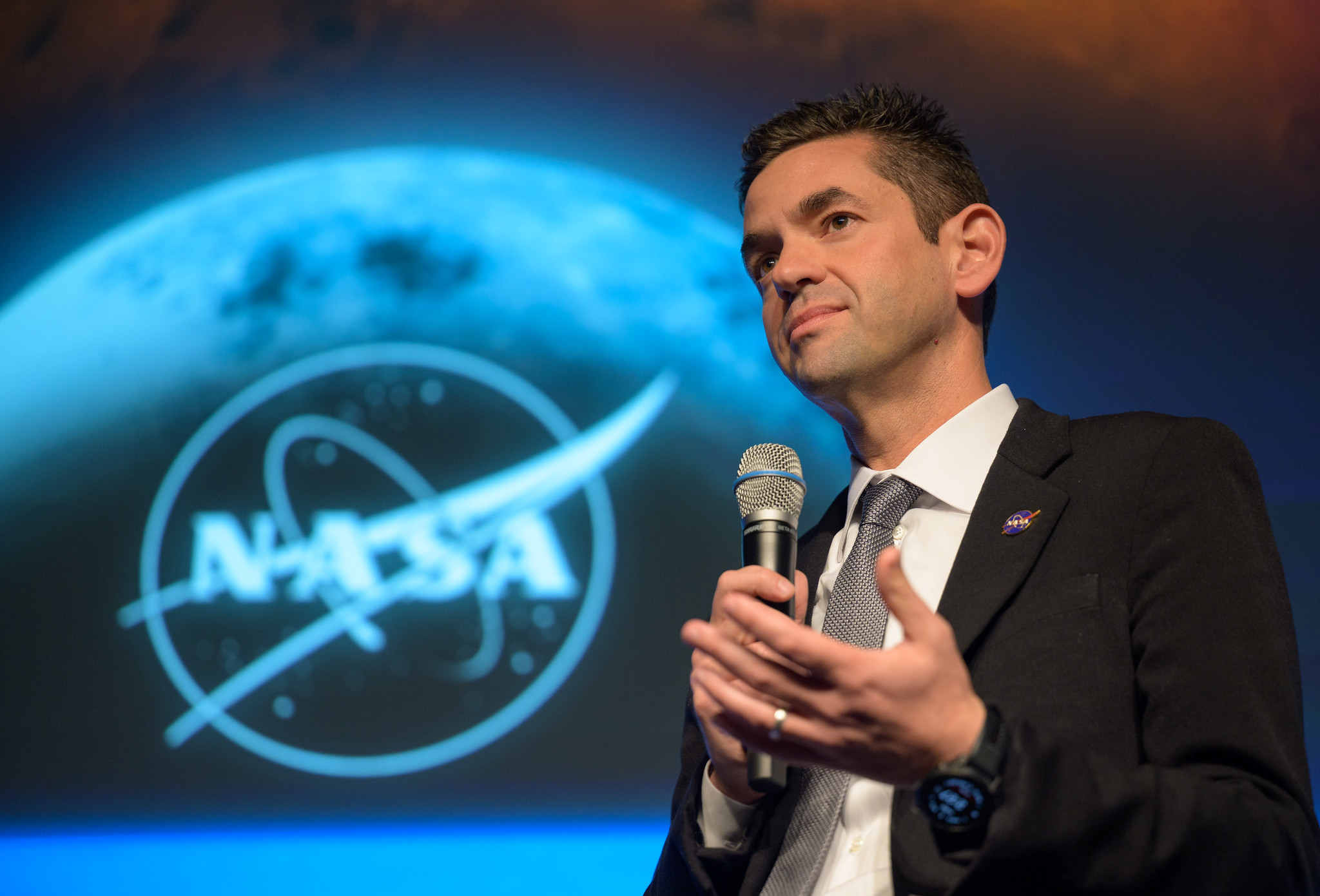

It took a year, but the Jared Isaacman era at NASA finally started.
Sworn in Dec. 17, the new administrator spoke at a NASA town hall the next day to take questions about his plans for the agency.
He offered few specifics about those plans, saying he had to learn about agency activities. But he argued the general theme — one of urgency given the race to the moon with China as well as a desire to reduce bureaucracy — made his overall intent clear.
“Between two hearings, a few podcasts, a document that circulated a little wider than expected, there should really be no mystery as to how I’m thinking about things,” he said.
The document he referred to was “Project Athena,” which he crafted during his first confirmation process last spring to outline his plans for the agency.
A focus at his first town hall was Artemis, but employees sought insights into other plans he had for NASA, including for science. During his second confirmation hearing in early December, Isaacman dodged questions about a proposed budget cut of nearly 50% for science in the administration’s 2026 budget proposal.
“This is something that, if I am confirmed, I’d love to get my arms around,” he said at the hearing, an answer that may reflect political tact more than a lack of information about a budget proposal released more than six months ago.
Asked at the town hall if his comments about wanting to be a “force multiplier for science” extended beyond research that supports Artemis, Isaacman said it did. “We’re here to answer the questions that went through every kid’s mind when they looked up at the stars at night and wondered what’s out there.”
While the Senate was considering Isaacman, thousands of Earth and space scientists met in New Orleans for the American Geophysical Union’s annual conference, where NASA hosted sessions to discuss programs and budgets.
Those meetings made clear that some parts of the agency’s science program are thinking, given the uncertainty about the agency’s new leadership and budgets, how to move beyond basic research.
“I want to prioritize the work that we’re doing as far as societal benefit: science in action and immediacy,” said Joe Westlake, director of NASA’s heliophysics division. “The work that scientists are doing is only as good as its application, and our ability to turn that into value for the American taxpayer is paramount.”
The next day, NASA’s Earth science division offered a similar message. “There are no great applications without great basic research. At the same time, though, we want to take basic research and turn it into exceptional applications,” said Tom Wagner, associate director of the division.
Such efforts are not new, but for some scientists at the conference, the tradeoff appeared like a push for applied science at the expense of basic research, particularly given steep budget cuts proposed for science. At the Earth science town hall, one official said the proposed cuts raised doubts that NASA could honor multi-year research grants it had previously awarded.
During a National Academies meeting earlier in the month, Robyn Millan, a Dartmouth professor who co-chaired the latest heliophysics decadal survey, noted the NASA budget proposal for heliophysics appeared to favor space weather work over basic research.
“In order to make progress in either area, you need to make progress in both,” she said. “If we just focus on space weather outcomes, it’s a shortsighted view, in my opinion.”
At his town hall, Isaacman told NASA employees there was bipartisan support for Earth science.
“Everybody is interested in the data, maybe for slightly different reasons,” he said, and committed to “get to the science as quickly and as affordably as we can.”
That could include, he said, using data from commercial satellites. In Project Athena, he made several references to making use of commercial Earth observation satellites — something NASA already does, buying data from several companies to augment that from his own missions.
But, as he said, he has a lot to learn about the agency he now leads.
This article first appeared in the January 2026 issue of SpaceNews Magazine.










Related Posts
Stay Informed With the Latest & Most Important News
Previous Post
Next Post


Advertisement
-
 01Two Black Holes Observed Circling Each Other for the First Time
 -
 02From Polymerization-Enabled Folding and Assembly to Chemical Evolution: Key Processes for Emergence of Functional Polymers in the Origin of Life
 -
 03Astronomy 101: From the Sun and Moon to Wormholes and Warp Drive, Key Theories, Discoveries, and Facts about the Universe (The Adams 101 Series)
 -
 04True Anomaly hires former York Space executive as chief operating officer
 -
 05Φsat-2 begins science phase for AI Earth images
 -
 06Hurricane forecasters are losing 3 key satellites ahead of peak storm season − a meteorologist explains why it matters
 -
 07Binary star systems are complex astronomical objects − a new AI approach could pin down their properties quickly