
Now Reading: April’s full ‘Pink Moon’ rises tonight — just as NASA readies its Artemis 2 moon mission
-
01
April’s full ‘Pink Moon’ rises tonight — just as NASA readies its Artemis 2 moon mission

April’s full ‘Pink Moon’ rises tonight — just as NASA readies its Artemis 2 moon mission

Get ready stargazers! The April full moon rises tonight, bringing a spectacular natural light show to the early spring sky as NASA’s Artemis 2 rocket sits on the pad ready to launch four astronauts on a 10-day mission to the far side of the natural satellite.
This month’s full moon phase will occur at 10:12 p.m. EDT on April 1 (0211 GMT on April 2), as the lunar disk glows opposite the sun in Earth‘s sky, fully lit by the light of our parent star, mere hours after the launch window opens for the Artemis 2 launch. Moonrise and moonset times vary depending on your viewing location. April’s full moon is also known as the “Pink Moon”, in reference to the ground-covering phlox that blooms around this time in parts of North America.
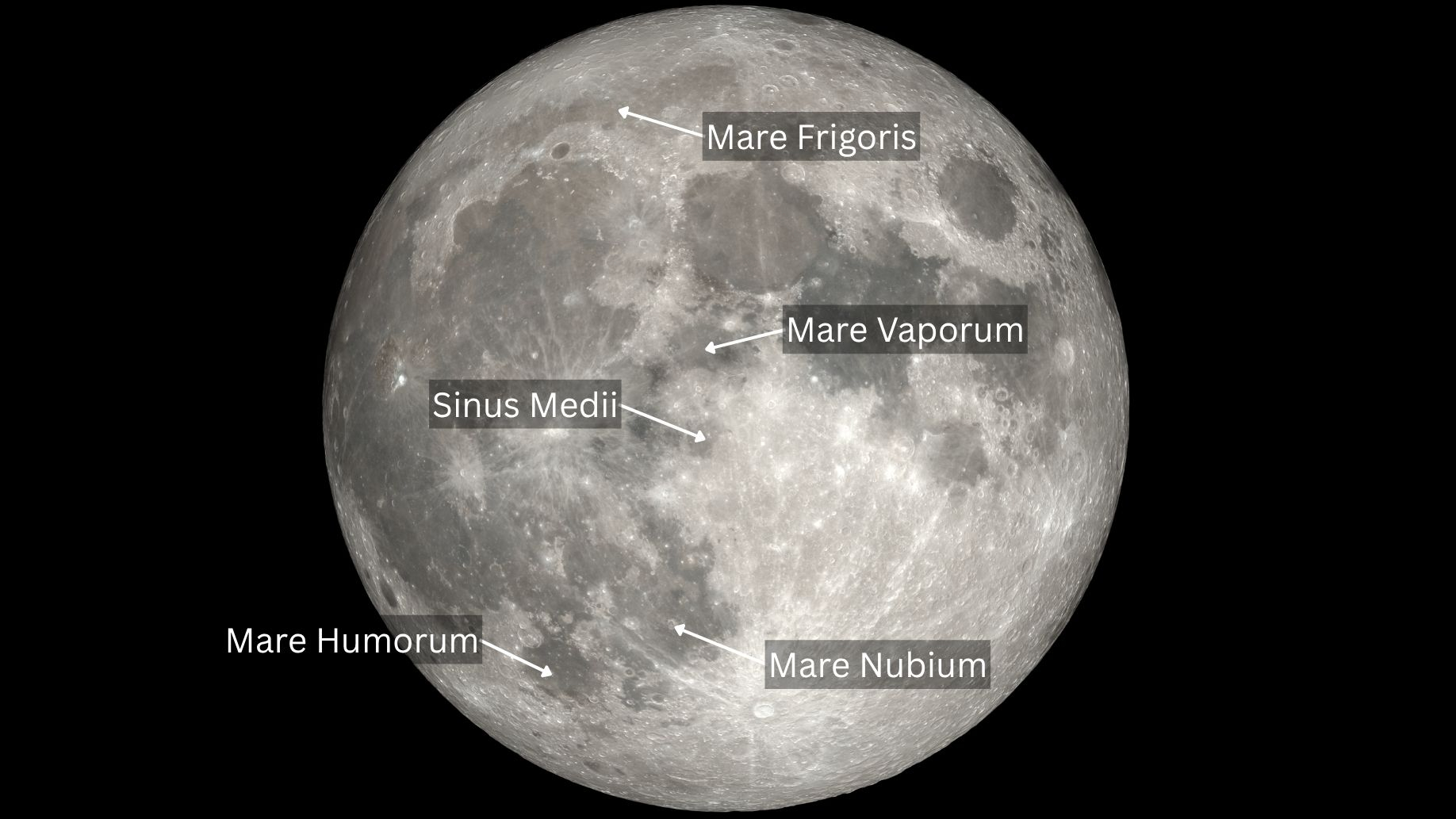
A telescope with an aperture of 4-6 inches will help reveal the long dark smear of Mare Frigoris (the Sea of Cold) snaking across the northern extreme of the lunar disk. The small mare at the very centre of the moon is known, fittingly, as Sinus Medii, the Bay of the Center, while the 150-mile-wide (242-kilometer) expanse of Mare Vaporum (the Sea of Vapors) is visible 15 degrees directly above it, with the large Manilius Crater on its eastern border.

Next, sweep your scope southwest to find Mare Nubium (the Sea of Clouds), with Mare Humorum (the Sea of Humours) to its left, relative to the moon’s north pole.
NASA astronauts Reid Wiseman, Victor Glover, Christina Koch and Canadian Space Agency astronaut Jeremy Hansen will be treated to an up-close and personal view of the moon over the course of their 10-day Artemis 2 mission.
You can stay up to date with the latest Artemis 2 action with our Artemis 2 live blog.
During their brief stay in Earth orbit — and during Orion’s days-long transfer to lunar space — the crew will witness the waning gibbous phase, as the line separating night from day sweeps right-to-left across the moon’s surface. Their distant trajectory will then see them join the ranks of the 24 Apollo-era astronauts who remain the only humans to ever see the far side of the moon, though only a small part of the far side will be lit at the time of their passage.

Lego
Lego Icons NASA Artemis Space Launch System (10341)
The most detailed Artemis SLS Lego set, this adult-aimed model has 3,601 pieces and stands 28-inches (71 cm) tall. We thought “Lego has knocked it out of the park” in our full build review. Don’t forget about the newer, more compact and much cheaper Lego Technic SLS set, only $60, also ‘launches’ with some clever Technic moving parts.
Want to get a closer look at Earth’s moon? Then be sure to check out our guide to viewing the lunar surface, along with our picks of the best telescopes and binoculars for exploring the night sky.
Editor’s Note: If you would like to share your photos of the Pink Moon with Space.com’s readers, then please send your image(s), comments, and your name and location to spacephotos@space.com.










Related Posts

Stay Informed With the Latest & Most Important News
Previous Post
Next Post



Advertisement
-
 01Two Black Holes Observed Circling Each Other for the First Time
 -
 02From Polymerization-Enabled Folding and Assembly to Chemical Evolution: Key Processes for Emergence of Functional Polymers in the Origin of Life
 -
 03Astronomy 101: From the Sun and Moon to Wormholes and Warp Drive, Key Theories, Discoveries, and Facts about the Universe (The Adams 101 Series)
 -
 04True Anomaly hires former York Space executive as chief operating officer
 -
 05Φsat-2 begins science phase for AI Earth images
 -
 06Hurricane forecasters are losing 3 key satellites ahead of peak storm season − a meteorologist explains why it matters
 -
 07Binary star systems are complex astronomical objects − a new AI approach could pin down their properties quickly