
Now Reading: Astronomers Confirm Asteroid 2024 YR4 Will Safely Pass Moon in 2032
-
01
Astronomers Confirm Asteroid 2024 YR4 Will Safely Pass Moon in 2032


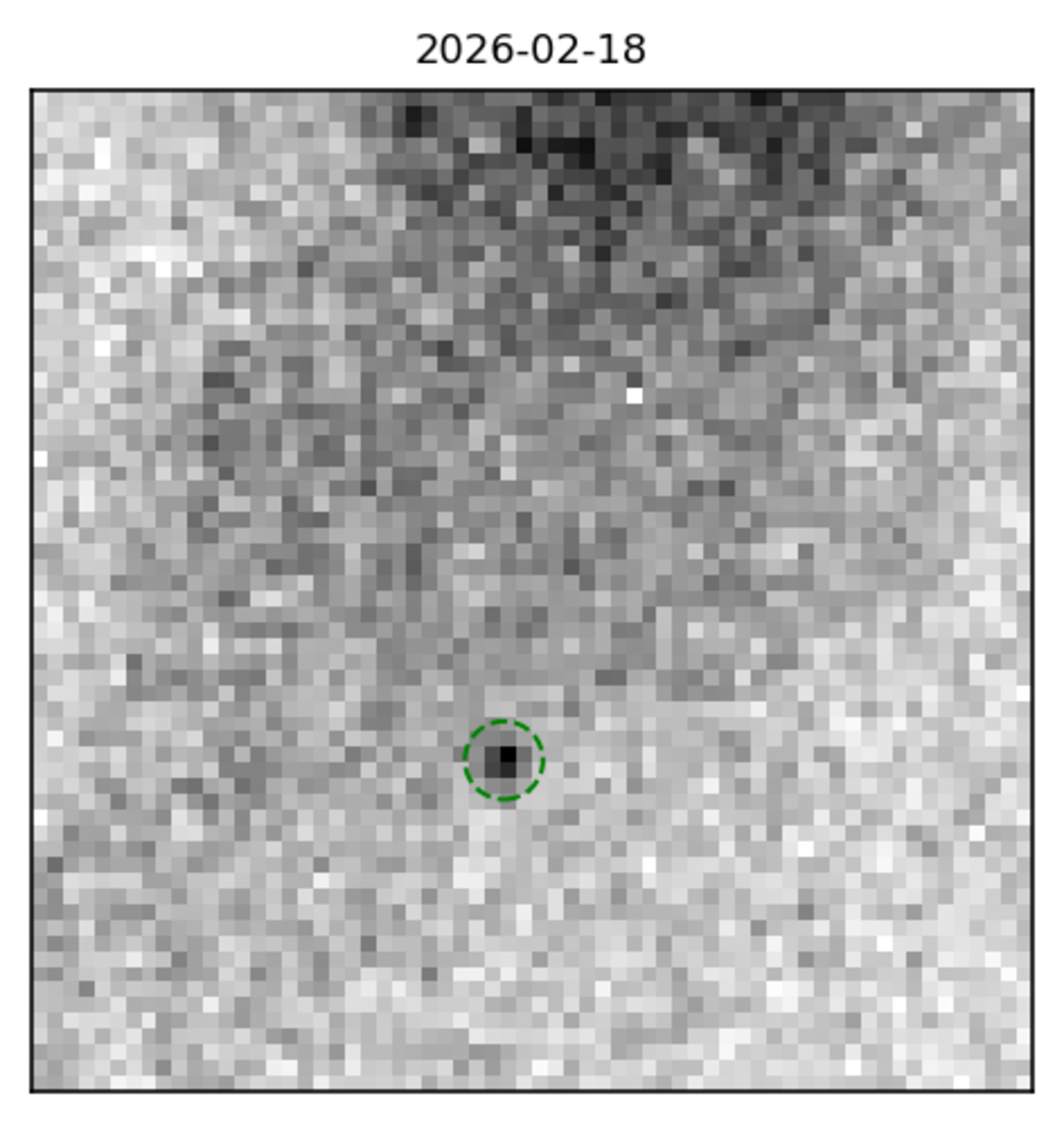

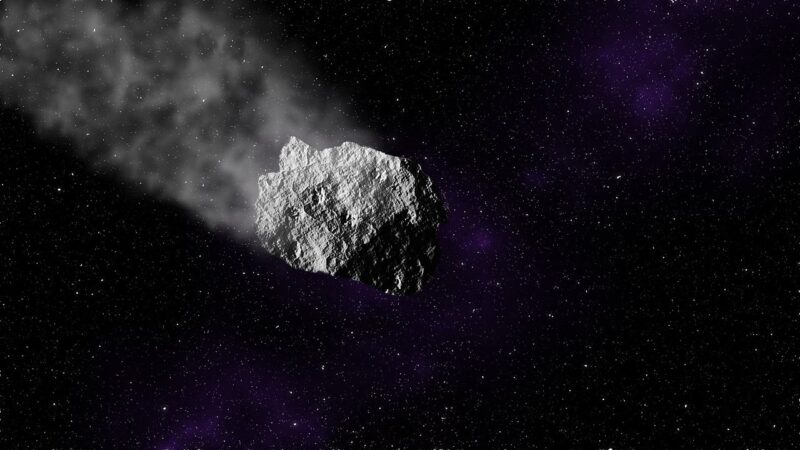
In a significant development for planetary safety, astronomers have confirmed that asteroid 2024 YR4 will not collide with the Moon, eliminating concerns about a potential impact on December 22, 2032. This conclusion comes after a thorough observation using the Near-Infrared Camera (NIRCam) on the James Webb Space Telescope, a collaboration between NASA, the European Space Agency (ESA), and the Canadian Space Agency (CSA).
Last year, asteroid 2024 YR4 made headlines when it was labeled the most hazardous near-Earth object discovered in two decades, briefly raising alarms about its trajectory. Although early assessments ruled out any threat to Earth, a 4% chance of the asteroid striking the Moon lingered until recent observations clarified its path. The asteroid will instead safely pass the Moon at a distance exceeding 20,000 kilometers.
The asteroid, which measures about 60 meters, had previously become difficult to track as it moved away from Earth, with astronomers initially predicting it would not be visible until 2028. However, an international consortium of scientists pinpointed two narrow opportunities in February 2026 for the Webb telescope to observe the faint object against well-mapped background stars, thanks to the extensive data provided by ESA’s Gaia mission.
The task was formidable due to the complexity of Webb, designed primarily for exploring distant galaxies billions of light-years away. Its small field of view posed challenges in detecting such a faint asteroid. Through meticulous planning and collaborative efforts involving ESA’s Near-Earth Object Coordination Centre and NASA’s Center for Near-Earth Object Studies, the team executed their observations successfully.
By analyzing the asteroid’s position against the stars, the astronomers were able to calculate its orbit with enough precision to dismiss the risk of a lunar impact. This achievement marks a significant milestone in the ongoing efforts of international teams dedicated to tracking near-Earth objects.
As the asteroid is confirmed to be no threat, the focus remains on vigilance. The Planetary Defence team within ESA’s Space Safety Programme continues its mission to monitor and study near-Earth objects, ensuring preparedness against any future threats that might arise. For more information on their ongoing activities, interested parties can reach out to ESA’s media relations.










Related Posts
Stay Informed With the Latest & Most Important News
Previous Post
Next Post



Advertisement
-
 01Two Black Holes Observed Circling Each Other for the First Time
 -
 02From Polymerization-Enabled Folding and Assembly to Chemical Evolution: Key Processes for Emergence of Functional Polymers in the Origin of Life
 -
 03Astronomy 101: From the Sun and Moon to Wormholes and Warp Drive, Key Theories, Discoveries, and Facts about the Universe (The Adams 101 Series)
 -
 04True Anomaly hires former York Space executive as chief operating officer
 -
 05Φsat-2 begins science phase for AI Earth images
 -
 06Hurricane forecasters are losing 3 key satellites ahead of peak storm season − a meteorologist explains why it matters
 -
 07Binary star systems are complex astronomical objects − a new AI approach could pin down their properties quickly