
Now Reading: Astronomers unveil rapid X-ray flare and wind phenomenon from supermassive black hole in NGC 3783
-
01
Astronomers unveil rapid X-ray flare and wind phenomenon from supermassive black hole in NGC 3783

Astronomers unveil rapid X-ray flare and wind phenomenon from supermassive black hole in NGC 3783

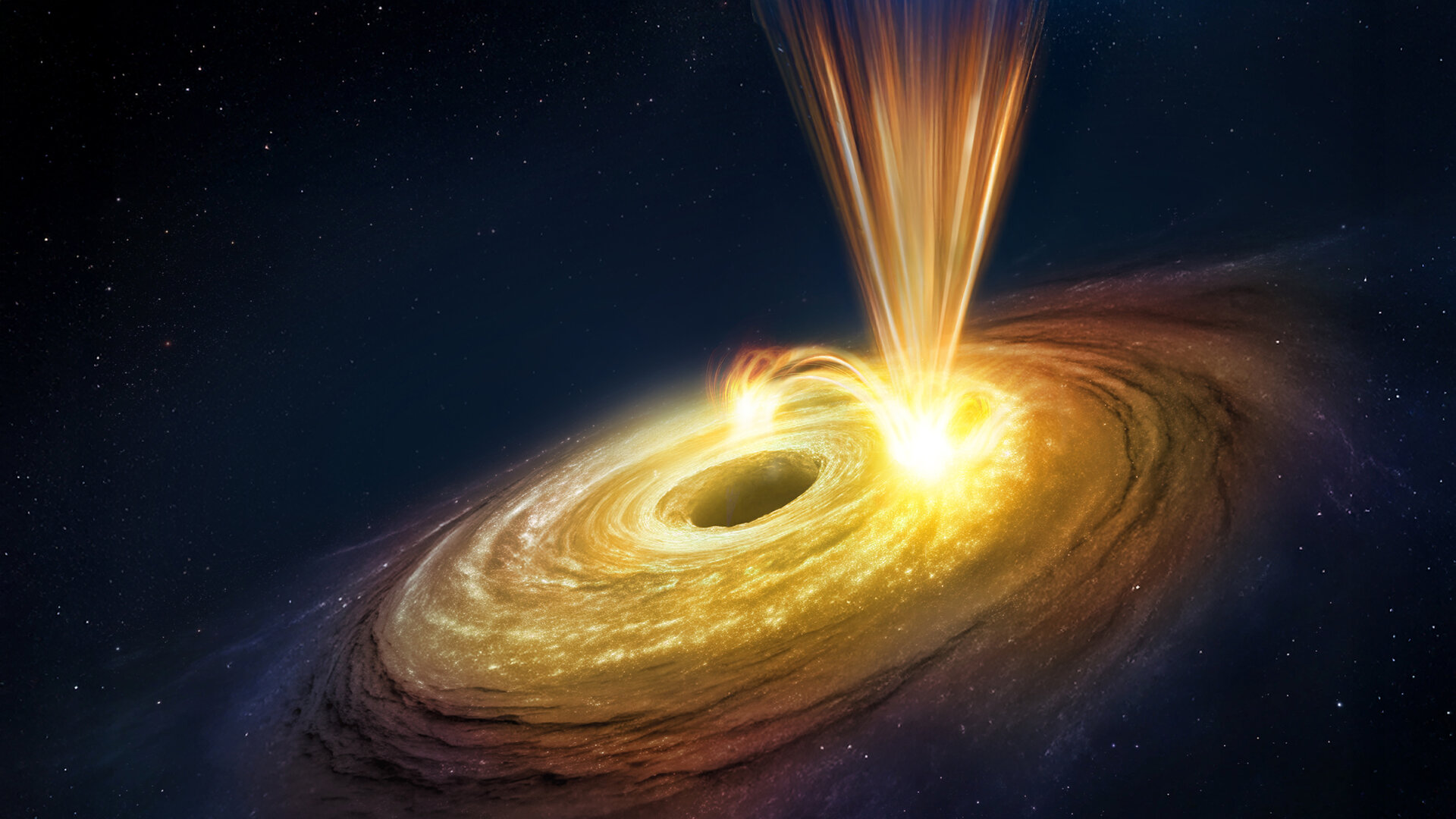

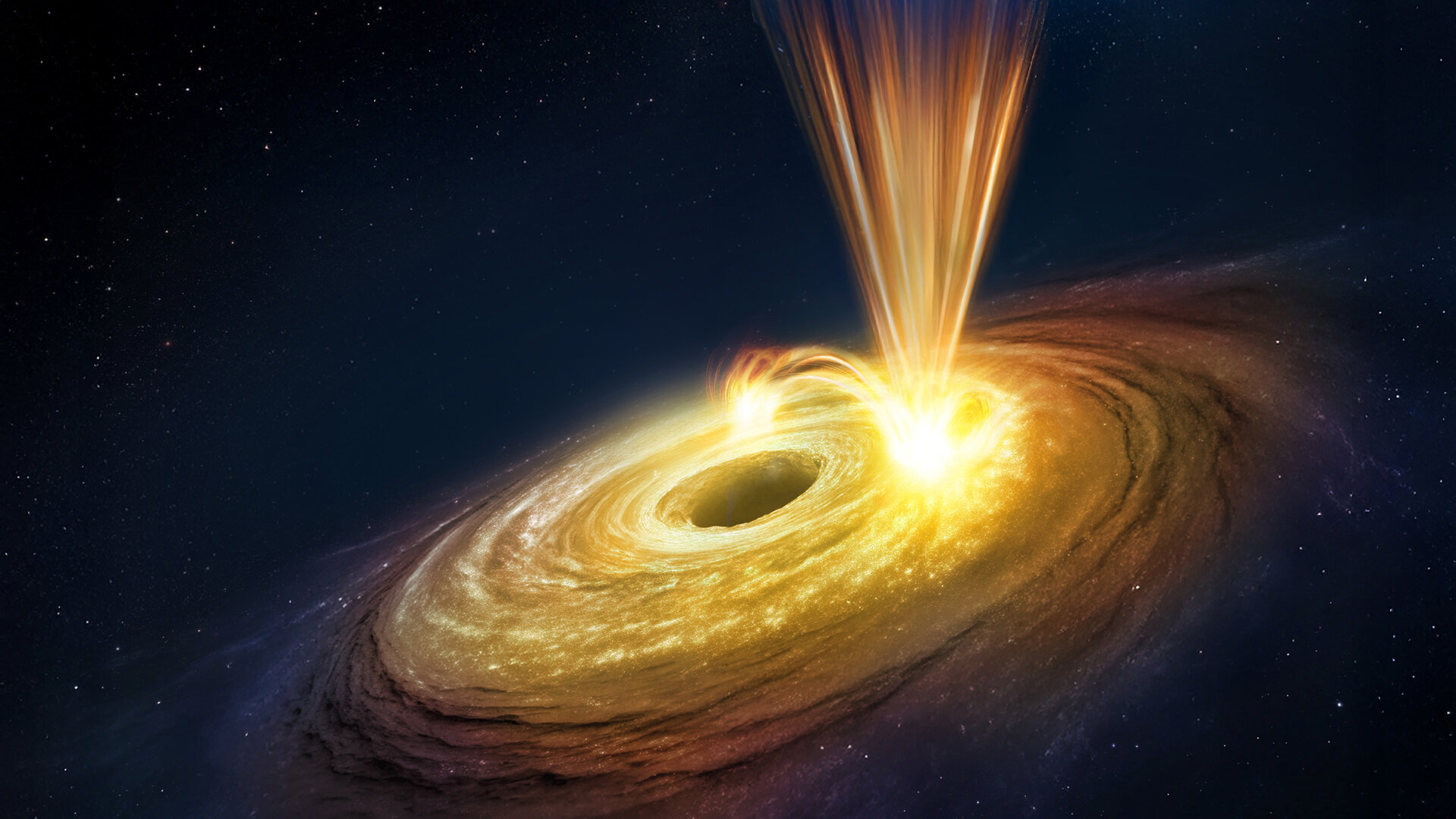
Recent observations from the XMM-Newton and XRISM space telescopes have unveiled a striking event involving a supermassive black hole located in the spiral galaxy NGC 3783. This black hole, with a mass equivalent to 30 million suns, generated an astonishing X-ray flare, which quickly dissipated as thundering winds surged outward at a remarkable velocity of 60,000 kilometers per second.
Astronomers detected the flare and the subsequent winds which emerged within a mere 24 hours, marking a significant breakthrough in our understanding of black hole behavior. “This is the first time we’ve observed such swift wind generation following an X-ray burst from a black hole,” stated Liyi Gu, the lead researcher from the Space Research Organisation Netherlands. The rapid transition from flare to wind formation reinforces the connection between these cosmic phenomena.
Using the XMM-Newton telescope, which has been studying intense cosmic phenomena for over 25 years, in tandem with the recently launched XRISM mission, the research team was able to analyze both the flare and the wind characteristics in unprecedented detail. XMM-Newton monitored the initial flare’s evolution while XRISM used its specialized Resolve instrument to assess the winds’ speed and structure as they were ejected into the cosmos.
The winds produced by this supermassive black hole exhibit similarities to the coronal mass ejections from our Sun, providing scientists with a relatable context for understanding these distant cosmic events. Matteo Guainazzi, ESA’s XRISM Project Scientist, likened the black hole’s magnetic field dynamics to solar flares, suggesting that the mechanisms at play in these extreme environments might operate on principles familiar to solar physics.
This discovery not only highlights the dynamic nature of active galactic nuclei—regions powered by supermassive black holes—but also signifies how winds from these entities can influence the evolution of their host galaxies and star formation processes over time. “Understanding the magnetism of AGNs and their wind production is key to deciphering galaxy evolution throughout the universe,” noted Camille Diez, an ESA Research Fellow involved in the study.
By employing two advanced X-ray observatories in a concerted effort, the researchers showcased the power of collaborative science. This joint effort emphasizes a pivotal aspect of European Space Agency missions and enhances our comprehension of high-energy astrophysical phenomena that extend far beyond our Solar System. As Erik Kuulkers, the project scientist for XMM-Newton, highlighted, the findings provide a glimpse into potential parallels between solar and cosmic physics, suggesting that our understanding of the universe’s mechanisms may be broader and more intertwined than previously thought.










Related Posts


Stay Informed With the Latest & Most Important News
Previous Post
Next Post


Advertisement
-
 01Two Black Holes Observed Circling Each Other for the First Time
 -
 02From Polymerization-Enabled Folding and Assembly to Chemical Evolution: Key Processes for Emergence of Functional Polymers in the Origin of Life
 -
 03Astronomy 101: From the Sun and Moon to Wormholes and Warp Drive, Key Theories, Discoveries, and Facts about the Universe (The Adams 101 Series)
 -
 04True Anomaly hires former York Space executive as chief operating officer
 -
 05Φsat-2 begins science phase for AI Earth images
 -
 06Hurricane forecasters are losing 3 key satellites ahead of peak storm season − a meteorologist explains why it matters
 -
 07Binary star systems are complex astronomical objects − a new AI approach could pin down their properties quickly