
Now Reading: Australia Space Innovation Institute applies space technologies to address terrestrial challenges
-
01
Australia Space Innovation Institute applies space technologies to address terrestrial challenges

Australia Space Innovation Institute applies space technologies to address terrestrial challenges

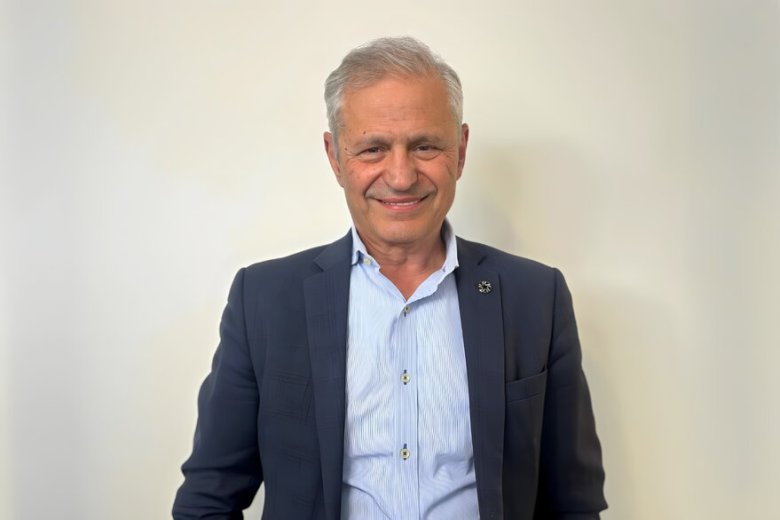
MOUNTAIN VIEW, Calif. – Australia is applying space-related products and services to national and regional challenges through an independent not-for-profit organization, the Australasian Space Innovation Institute (ASII).
ASII, which began operations in January, builds on the work of the SmartSat Cooperative Research Centre, a consortium established in 2019 to bolster research and development of space technologies including satellites, artificial intelligence, advanced communications and data analytics. With $270 million in Australian government funding over six years, SmartSat funded research and development for a consortium of 170 universities and research organizations.
Since the SmartSat initiative ends in June, SmartSat collaborators created ASII “to activate and unify Australia’s sovereign space research and development capabilities, while serving the national space industry in line with government priorities,” Andy Koronios, ASII and SmartSat CEO and managing director, told SpaceNews. “ASII will be an enduring space innovation organization, ideally forming a backbone for the Australasian space ecosystem to flourish and create significant impact on the challenges our region faces.”

Establishing ASII
In the next few months, SmartSat intellectual property with promising commercial or research applications, will be transferred to ASII.
“SmartSat has promising technologies that require further development to achieve greater impact, which is a key driver for establishing the ASII,” Koronios said.
Flagships
Through Flagship Programs of Impact, ASII will harness space and ground-based assets for precision agriculture, space-based maritime surveillance, disaster management and community resilience. Through another Flagship Program, called Indo-Pacific Space Research & Applications Network, ASII will apply space-related research, development and technology to priorities including climate monitoring, security, disaster management and workforce mobility in the Indo-Pacific region.
Through the Maritime Space-Based Surveillance program, for example, ASII will work with New Zealand to establish a constellation of formation-flying synthetic aperture radar satellites to reduce “reliance on foreign systems, strengthening regional leadership, and enhancing responses to illegal fishing, natural disasters, and grey-zone threats in the Indo-Pacific,” Koronios said.
Regional Partnerships
Further collaborative campaigns with partners in Singapore, Malaysia, Thailand and South Korea are under discussion, Koronios said.
At the same time, ASII will build on relationship SmartSat established with the European Space Agency, NASA Jet Propulsion Laboratory, NASA Goddard Space Flight Center and the New Zealand Space Agency, while pursuing new opportunities with organizations in Greece, Singapore and other nations, Koronios said.
Key Performance Indicators
ASII is more focused on harnessing space-based data than launching satellites.
“That doesn’t mean we’re not going to be involved in tech development, but we’ll be focused much more at the downstream,” Koronios said. “Have we made sure miners work more safely, more sustainably? Have we increased the productivity of agriculture? Have we made it easier for emergency services to respond faster and helped governments plan better?”










Related Posts
Stay Informed With the Latest & Most Important News
Previous Post
Next Post

Advertisement
-
 01Two Black Holes Observed Circling Each Other for the First Time
 -
 02From Polymerization-Enabled Folding and Assembly to Chemical Evolution: Key Processes for Emergence of Functional Polymers in the Origin of Life
 -
 03Astronomy 101: From the Sun and Moon to Wormholes and Warp Drive, Key Theories, Discoveries, and Facts about the Universe (The Adams 101 Series)
 -
 04True Anomaly hires former York Space executive as chief operating officer
 -
 05Φsat-2 begins science phase for AI Earth images
 -
 06Hurricane forecasters are losing 3 key satellites ahead of peak storm season − a meteorologist explains why it matters
 -
 07Binary star systems are complex astronomical objects − a new AI approach could pin down their properties quickly