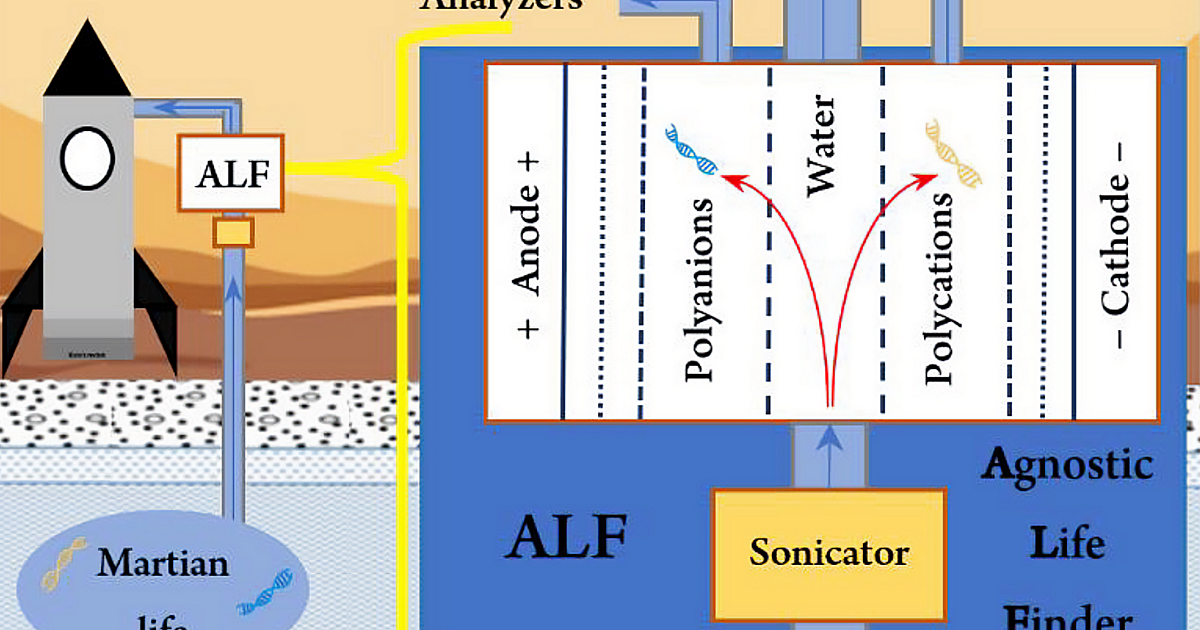
Mars still holds the promise of being one of the first places in the solar system humanity will colonize. However, if there was evolutionarily distinct, extant life on the planet,


Mars still holds the promise of being one of the first places in the solar system humanity will colonize. However, if there was evolutionarily distinct, extant life on the planet,
Rising concentrations of carbon dioxide in the upper atmosphere will change the way geomagnetic storms impact Earth, with potential implications for thousands of orbiting satellites, according to new research led
Mars still holds the promise of being one of the first places in the solar system humanity will colonize. However, if there was evolutionarily distinct, extant life on the planet,
In the not-too-distant future, the search for signs of life on Mars and the moon could see the next generation of robots exploring a new frontier: subsurface lava tubes. These
Old satellites and debris pose a danger to space travel. An international research team with participation from Würzburg is working on a satellite that cleans up space—inspired by the animal
Using NASA’s Chandra and ESA’s XMM-Newton space observatories, Indian astronomers have explored the population of ultraluminous X-ray sources in the galaxy NGC 5813, which resulted in the detection of a
For just over two years, a scalar magnetometer developed by Graz University of Technology (TU Graz) and the Space Research Institute (IWF) of the Austrian Academy of Sciences has been
The exoplanet TRAPPIST-1 d intrigues astronomers looking for possibly habitable worlds beyond our solar system because it is similar in size to Earth, rocky, and resides in an area around
What do many baked goods and the planet Mercury have in common? They shrink as they cool. Evidence suggests that since it formed about 4.5 billion years ago, Mercury has
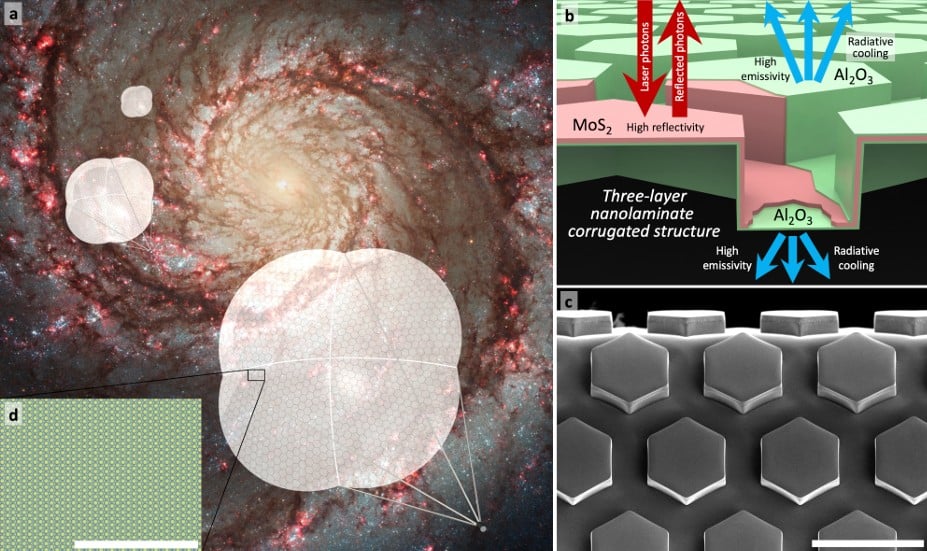
Any material used as a light sail is bound by very restrictive physical requirements. It has to be extremely light , can’t melt from the energy applied to it, and